
The Evolving Dynamics of Pakistan’s Geopolitical Landscape
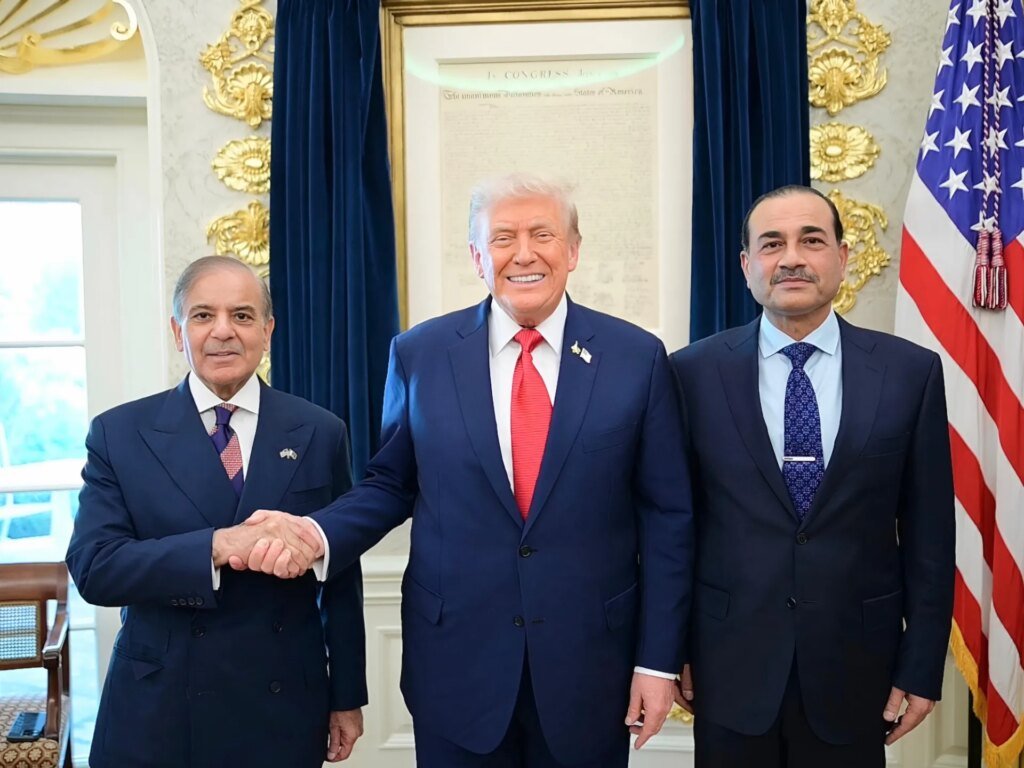
The landscape of global politics is constantly shifting, and the interplay between Pakistan and the United States is no exception. In December 2022, during a conference at his Mar-a-Lago residence, former U.S. President Donald Trump weighed in on the ongoing conflict in Ukraine, asserting that he has successfully mediated several international disputes, including tensions between Pakistan and India. This discussion not only highlighted Trump’s engagement with Pakistani leaders but also the evolving geopolitical role of Pakistan under the leadership of Field Marshal Asim Munir.
Trump’s Claims and Pakistan’s Military Leadership
In his remarks, Trump claimed, “We have stopped a potential nuclear war between Pakistan and India,” and expressed confidence in his ability to resolve the war in Ukraine, despite previous failures to do so. He mentioned his interactions with Pakistan’s military leadership, notably praising Field Marshal Munir, stating that he had “saved” millions of lives.
Since assuming office for a second term, Trump has openly expressed admiration for Munir on numerous occasions. At the Sharm el-Sheikh Peace Summit, he acknowledged the contributions of Munir and Pakistani Prime Minister Shehbaz Sharif, referring to Munir as “my favorite field marshal.” This consistent recognition underscores Munir’s rising prominence on the global stage and suggests he plays a crucial role in enhancing Pakistan’s diplomatic standing.
The Impact of Recent Conflicts
The deteriorating relationship between India and Pakistan reached a critical point with conflicts in May 2025, triggered by an attack in Indian-administered Kashmir that resulted in civilian casualties. Both nations engaged in military skirmishes, with Pakistan asserting it shot down Indian aircraft. The hostilities subsided only after intense diplomatic efforts led to a ceasefire, a resolution that Trump claimed credit for numerous times.
Many analysts argue that the conflict was pivotal in elevating Munir’s standing within the international community. Khurram Dastgir Khan, a former Pakistani minister, echoed this sentiment, stating that the military chief’s prominence significantly grew following the conflict, especially through his interactions with Trump.
Shifting Alliances and Diplomatic Engagements
The historical context of U.S.-Pakistan relations reveals a complex narrative, often marred by mistrust and conflicting interests. However, recent months have seen a rekindling of this partnership, driven by shared security interests and economic discussions, including emerging topics like crypto mining.
Moves towards reconciliation took shape not only due to the recent conflict but also as a result of Trump’s shifting stance towards Pakistan, which diverged from his earlier criticism of the nation during his first term. The arrest of a suspect connected to the Abbey Gate bombing in Kabul marked a significant moment, as Trump publicly thanked Pakistan for its cooperation, setting the stage for a renewed focus on counterterrorism collaboration.
Field Marshal Asim Munir’s Strategic Maneuvering
Since his elevation to field marshal—a rare honor in Pakistan’s military history—Munir has effectively leveraged his position to drive diplomatic initiatives. His recent engagements with regional powers, including Saudi Arabia and various Gulf states, illustrate his strategic approach to balancing relationships across the Middle East while simultaneously nurturing ties with Central Asian countries.
Some observers highlight how Munir has utilized military diplomacy to position Pakistan as a relevant player beyond South Asia. By seizing opportunities presented by international conflicts and shifting U.S. interests, he has underscored Pakistan’s strategic importance to Washington, aligning Islamabad’s interests with U.S. objectives.
Domestic Challenges Amid Diplomacy
Despite reaching new heights on the diplomatic front, Pakistan faces significant internal challenges. The surge in violence, particularly in regions bordering Afghanistan, raises concerns about stability. Critics point to issues such as democratic erosion, restrictions on civil liberties, and the controversial 27th constitutional amendment that granted the military extended powers.
The political landscape remains turbulent, with opposition parties voicing concerns over the tightening grip of military influence amid rising political violence. Since the May crisis, former Prime Minister Imran Khan has been incarcerated, with debates over human rights abuses intensifying as international attention is drawn to Pakistan’s internal affairs.
Conclusion
The current geopolitical climate reflects a nuanced interplay between military strategy and diplomatic engagement in Pakistan. As the country reinvigorates its international relations, particularly with the United States, the implications on regional stability and internal politics remain critical. The leadership of Field Marshal Munir will be a determining factor in navigating these complexities.
- Trump’s claims of influence over Pakistan-India tensions highlight the evolving nature of U.S.-Pakistan relations.
- Field Marshal Asim Munir is central to Pakistan’s diplomatic resurgence and international engagement.
- Despite diplomatic gains, Pakistan faces significant internal challenges linked to violence and political repression.
- The interplay between military influence and democratic governance continues to shape Pakistan’s political landscape.