
Trump’s Energy Strategy: A Shift Towards Fossil Fuels and Its Implications
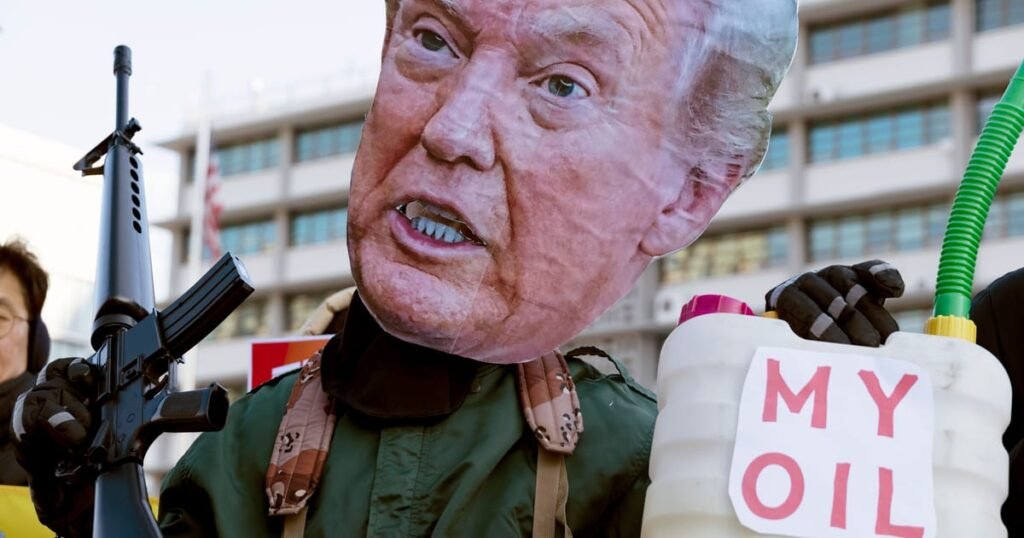
During his reelection campaign, former President Trump made it clear that he intended to prioritize domestic oil production. The phrase “Drill, baby, drill” became integral to his energy agenda, similar to his military stance of “take the oil.” He urged oil executives to contribute a staggering $1 billion to his campaign, assuring them that his administration would be highly favorable for their industry, even declaring that the U.S. was poised to profit significantly from its oil reserves.
However, these weren’t merely election slogans. Once he returned to office, Trump mobilized the U.S. government to markedly enhance both domestic oil production and exports. He created a National Energy Dominance Council, opened protected areas in Alaska and the Arctic National Wildlife Refuge for oil exploration, and enacted measures to expedite offshore drilling leases. Additionally, he accelerated permitting processes for pipeline expansions and liquefied natural gas exports.
Environmental Policies and Fossil Fuel Reliance
Simultaneously, Trump criticized initiatives aimed at reducing greenhouse gas emissions, dismissing them as part of a climate change “hoax.” He withdrew the U.S. from the Paris Climate Agreement and took numerous actions that hindered the transition from fossil fuels to renewable energy sources. This included abolishing incentives for residential solar power and electric vehicle purchases, halting offshore wind production by citing national security, and ceasing grants for renewable energy projects.
In a bold proclamation, he stated that following the capture of Nicolás Maduro, the U.S. would “run the country” to gain access to its oil resources.
The Challenge of a Fossil Fuel Future
Despite these aggressive strategies, the reality is that the U.S. is increasingly reliant on fossil fuels just as their global viability declines. Currently, oil production in the U.S. surpasses consumption, with projections indicating that global demand will reach its peak in the near future. Over the past year, oil prices have plummeted by more than 23 percent, making further exploration and production less economically viable.
On the other hand, renewable energy sources are becoming much more affordable. The future appears to hinge upon renewables for transportation, heating, cooling, and powering our homes, data centers, and various industries that sustain our daily lives.
Countries like China are investing heavily in sustainable energy, harnessing sunlight, wind, and geothermal power. As China forges ahead, the U.S. risks falling back on finite fossil resources.
Choosing the Path Forward
Trump seems to be banking on the U.S. becoming the largest, and potentially the last, petrostate, while China aims to establish itself as a leading electrostate. Which direction would you prefer to see the future take?
Conclusion
In summary, Trump’s energy policy is heavily centered on fossil fuel dependency amidst a global shift towards renewables. As the dynamics of energy consumption evolve, the U.S. and other nations will need to reconsider their strategies to adapt to this changing landscape.
- Trump’s campaign emphasized a significant increase in oil production.
- Multiple legislative actions aimed at bolstering fossil fuel exploration and production.
- Criticism of renewable energies and withdrawal from international climate agreements.
- A growing shift toward renewable energy could alter the global energy landscape.