
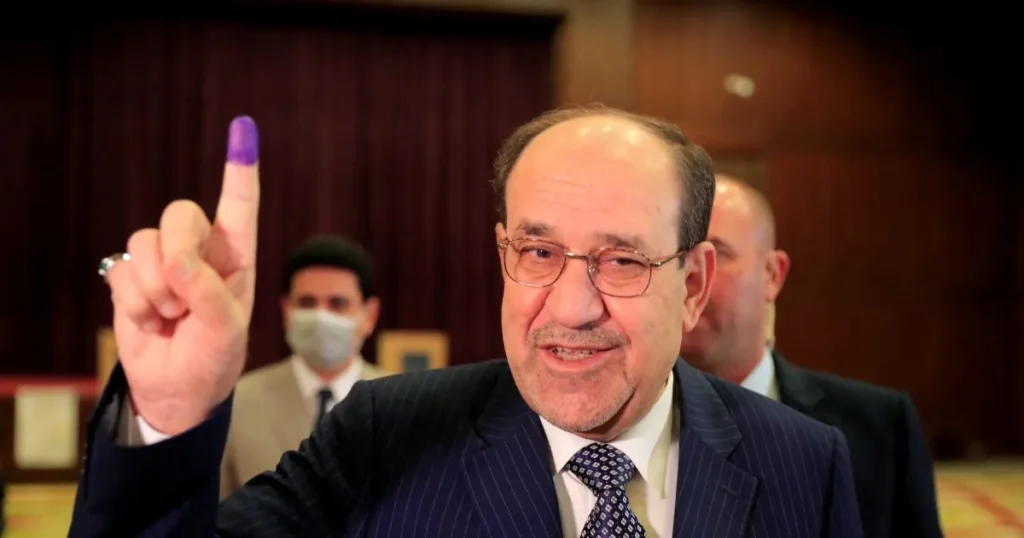
Al-Maliki’s Potential Return and Its Implications for Iraq
Two weeks ago, Iraqi Prime Minister Mohammed Shia al-Sudani announced his decision to withdraw from the race for the premiership. This significant move comes amid ongoing political dialogues following the elections in November, effectively clearing the path for former Prime Minister Nouri al-Maliki to reclaim power. This situation isn’t merely a case of recycling old political figures; rather, it underscores the challenges in state-building that have plagued Iraq since the 2003 U.S. invasion. Under al-Maliki’s leadership, there’s a real danger of reverting to the detrimental policies that previously led to the rise of ISIL (ISIS).
Sectarian Politics
To understand the potential implications of al-Maliki’s return, it’s essential to consider his track record. When he first took office in 2006, he was supported by the administration of U.S. President George W. Bush, supposedly in the interest of stability. Yet, concerns about his capability to manage the violence against Sunni populations were already being voiced within months of his leadership.
The U.S. backing of al-Maliki, despite the warnings, reflects a history of misaligned policies borne from a lack of understanding of the region and its complexities. This support inadvertently contributed to the chaos that the Bush administration sought to prevent.
During his two terms, al-Maliki created a governance model that dismantled the vision of inclusive politics that followed the 2003 invasion. He systematically excluded Sunni individuals from political and social realms, using the process of de-Baathification as a sectarian weapon rather than a tool for justice. For instance, in 2010, he banned nine political parties and over 450 candidates, predominantly from the Sunni community, from participating in elections.
Al-Maliki’s regime also targeted moderate Sunni politicians, arresting many on fabricated terrorism charges and violently suppressing peaceful protests. The tragic events of 2013 in al-Hawija serve as a stark example. Following weeks of protests against discriminatory policies, security forces launched a brutal crackdown, resulting in the deaths of at least 44 peaceful demonstrators.
Furthermore, al-Maliki’s administration oversaw the forced displacement of many Sunnis, consolidating Shia-dominated areas and engaging in demographic engineering with state support. The resulting sectarian tensions fragmented Iraqi society, driving divisions that are still evident today and facilitating the rise of extremist groups like al-Qaeda and ISIL.
Corruption and Mismanagement
The scale of corruption during al-Maliki’s tenure is staggering. By 2018, Iraq’s own transparency commission estimated that about $320 billion had been lost to corruption since the U.S. invasion, a significant portion of which occurred while al-Maliki was in office. Funds intended for national development were instead used to sustain lavish lifestyles for those close to him, including investments in real estate and hidden bank accounts.
Despite extensive documentation by Iraq’s Federal Commission of Integrity, accountability remains elusive, as judicial independence was significantly undermined under al-Maliki’s rule.
Corruption also extended to the military. The army had been paying salaries to “ghost soldiers,” leading to an estimated annual cost of $380 million by 2014. Al-Maliki’s grasp on power was such that he maintained his own prison and commanded a loyal force of 3,000 soldiers. This extensive mismanagement and corruption within the military contributed to the disastrous events of 2014, when security forces collapsed in the face of ISIL’s advance.
Al-Maliki’s Comeback
Despite not holding the premiership for over a decade, al-Maliki has remained an influential figure in Iraqi politics, positioning himself for a possible return with the tacit support of successive U.S. administrations. If he were to secure a third term, it could further deepen sectarian divides and entrench the corruption that has plagued Iraqi governance.
Regionally, al-Maliki’s return would have significant ramifications. With changes in Syria and a decline in Hezbollah’s strength, Iraq has become a pivotal asset for Iran. Al-Maliki’s leadership could hinder Iraq’s ability to pursue an independent path away from Tehran, impacting domestic and foreign policies alike.
His third term could also impede normalization efforts with Syria, given his vocal opposition to engaging with the new leadership. Additionally, a government led by al-Maliki could challenge U.S. interests, especially as Washington seeks to curb Iranian influence in the region and requires integration of the pro-Iranian Popular Mobilization Forces into the Iraqi Army—actions al-Maliki is unlikely to endorse as he is a principal architect of these groups.
The core issue remains that Iraq is stuck in a destructive political cycle, with elite leaders seemingly learning nothing from past crises. The reliance on sectarian mobilization and corrupt politics remains a viable strategy. The Iraqi youth have repeatedly taken to the streets, demanding an end to this flawed system. Without significant reforms to accountability, power distribution, and governance, Iraq risks repeating the grave mistakes of its past.
Conclusion
Al-Maliki’s potential return poses a real threat to Iraq’s political stability and governance, bringing with it the risk of deepening sectarian tensions and continuing a legacy of corruption. The situation is precarious, and change is needed to pave the way for genuine progress in Iraq.
- Al-Maliki’s return could lead to a revival of sectarian division in Iraq.
- Corruption experienced under his previous leadership raised significant financial concerns.
- The ongoing political cycle suggests a lack of learning from past crises.
- Youth movements continue to oppose the entrenched political elite in Iraq.