
Violence Erupts in Bangladesh Amidst Political Turmoil
The recent turmoil in Bangladesh has escalated to alarming levels, as violence erupted following the assassination of a prominent pro-democracy leader. This situation has left journalists and civil society members grappling with the ramifications of political instability just 15 months after a change in leadership sparked hope for a new political landscape.
Fury in the Streets
The chaotic night began when Zyma Islam, a journalist for the Daily Star, sent out her article. As she stepped outside, she was met by the overwhelming sounds of a mob. Rioters had gathered in response to the brutal killing of Sharif Osman Hadi, a key figure in the movement that overthrew former Prime Minister Sheikh Hasina in August 2024. Authorities implicated Hasina’s loyalists in Hadi’s assassination, igniting further outrage among the populace.
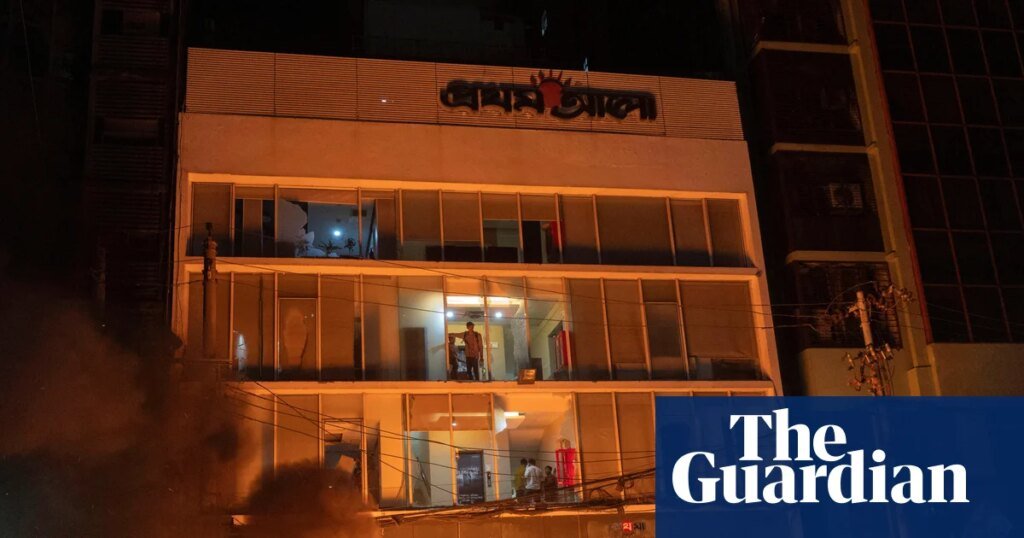
Despite being well-known targets of hostility under Hasina’s regime, both the Daily Star and Prothom Alo found themselves under siege. The anger of the mob escalated quickly, resulting in the destruction of not just media offices but also cultural institutions, raising significant concerns about the future of Bangladesh’s democratic freedoms.
“We all knew this mob was not going to stop at trashing this office – it was going to set fire to it,”
Rising Casualties
The violence has taken a grim toll, with reports indicating that 184 individuals have lost their lives to mob violence in 2025 alone, a steep rise from 51 the previous year. Disturbing incidents include the lynching of a Hindu garment worker based on unverified accusations of blasphemy. It’s an alarming signal of the growing lawlessness in the region.
On that fateful night of December 18, Islam and her colleagues sought refuge on the roof of their building, aware of the potential for destruction. As the situation worsened, she shared a harrowing message on social media, expressing her despair and fear for her life amid thick smoke and chaos.
Government Response or Lack Thereof?
The attacks on both newspaper offices highlighted a troubling lack of state intervention to protect its citizens and media personnel. When firefighters attempted to rescue trapped journalists, they were met with hostility from the crowd. Military backup finally arrived hours later, but the delayed response raised serious questions about the interim government’s ability to maintain order.
Shafiqul Alam, the press secretary for Bangladesh’s interim leader, Muhammad Yunus, expressed his frustration on social media, lamenting the failed attempts to seek help amidst the chaos. A journalist from Prothom Alo, witnessing the turmoil from above, reflected on how far the country has regressed from the initial optimism that followed the ousting of Hasina.
Under Hasina’s lengthy rule, the opposition was thoroughly suppressed, and the media silenced. Many believed that after her removal, a new era—termed “Bangladesh 2.0″—was on the horizon. However, the recent events suggest that this vision is fading, raising alarm bells among activists and journalists alike.
Fear and Anxiety Take Root
As a reporter, Zia Chowdhury expressed feelings of vulnerability amidst this rise in aggression. Glaring fears of mob reprisals have now sown doubt among journalists who once felt liberated to report critiquing conditions. The excitement over a potentially brighter political landscape has quickly waned.
Islam emphasized that while violent mob rule should not lead to hardline government crackdowns, a middle ground is desperately needed to protect journalists. There is an urgent call for genuine action against the perpetrators of violence rather than the usual sweeping arrests that disproportionately target innocent citizens.
Looking ahead, Islam maintains a cautious hope that constructive paths could emerge from these violent incidents, urging the government to learn from the past and break the cycle of retaliation and violence. Acknowledging the complexity of the political climate, she remains optimistic that the people of Bangladesh can still forge a safer, more just future.
- Violence erupted in Bangladesh following the assassination of pro-democracy leader Sharif Osman Hadi.
- Journalists faced significant risks as mobs targeted media offices in a violent outburst.
- There has been a marked increase in mob violence, raising alarms about public safety and state efficacy.
- Despite the chaos, some maintain hope for a new political trajectory in Bangladesh, advocating for constructive governmental action.