
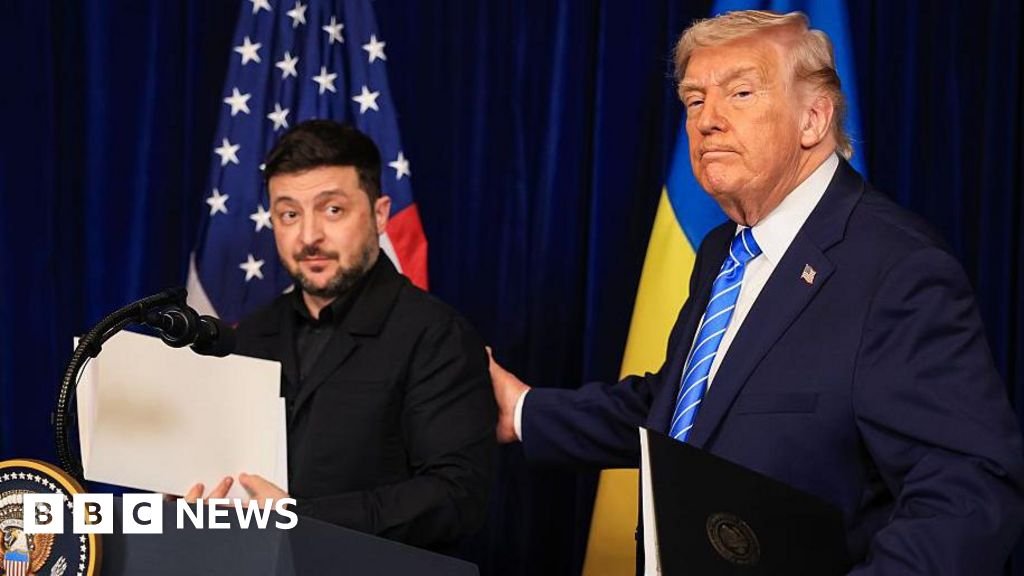
Negotiating Peace: Ukraine and Russia’s Complex Path Forward
In the ongoing dialogue surrounding the conflict between Russia and Ukraine, significant progress appears to be within reach. However, as President Donald Trump noted, several “thorny issues” remain unresolved, particularly concerning territorial disputes and the future of Europe’s largest nuclear facility.
The Stalemate Over Territory
President Vladimir Putin continues to assert his claims over Ukraine’s industrial Donbas region, signaling a steadfast attitude in negotiations. Although Ukraine’s President Volodymyr Zelensky has proposed compromises, including a potential demilitarized zone, Putin’s demands have not softened. Currently, Russian troops occupy about 75% of Donetsk, and Putin seeks control over vital cities like Sloviansk and Kramatorsk.
Zelensky has emphasized the importance of not losing these areas, stating, “We can’t just withdraw; it’s out of our law. People live there—300,000 people…” He suggests that both sides could establish a demilitarized zone, monitored by international forces. However, achieving agreement seems increasingly unlikely as Russia continues to make territorial gains, with officials claiming rapid advances.
If Ukraine’s leadership does not favor a peaceful resolution, Putin has threatened to pursue military solutions instead. Analysts predict that it could take until August 2027 for Russian forces to fully capture the rest of Donetsk at their current pace, although that outcome isn’t assured.
Nuclear Power Plant Controversies
Since March 2022, Russia has maintained control over the Zaporizhzhia nuclear plant, located on the Dnipro River. Despite this occupation, the plant has been non-operational for over three years, requiring external energy supplied by Ukraine to avoid a catastrophe. Zelensky advocates for a demilitarized status and the transformation of the area into a free economic zone.
Discussions are complicated by U.S. proposals for shared management of the plant with Russia and Ukraine, a notion Ukraine finds impractical. Instead, Zelensky suggests a 50-50 joint management with the U.S. determining the distribution of electricity, which inherently favors Russia.
Russia firmly maintains that it is the only entity capable of operating the plant safely, complicating potential compromises, particularly given the current mistrust between the nations.
Amidst Distrust, Progress Seems Elusive
Trust issues permeate the negotiations extensively. Zelensky expressed skepticism regarding Trump’s assertion that Putin is interested in Ukraine’s success. “I don’t trust Russians… I don’t trust Putin,” he stated. Conversely, Russia has accused Ukraine of conducting attacks without substantiating evidence, highlighting a mutual lack of confidence that complicates any forward movement.
Sticking Points in the Peace Deal
- Ukraine desires security guarantees akin to NATO commitments in case of further Russian aggression.
- Financial reparations have been a contentious topic, with Ukraine estimating losses of around $800 billion, prompting discussions about Russian contributions.
- Russia remains opposed to Ukraine’s NATO aspirations, which could further complicate negotiations.
- Public sentiment in Ukraine indicates a desire for peace but also a strong reluctance to give up territory, raising questions about the legitimacy of any potential deal.
The Path Forward: Public Opinion and Possible Referendums
Zelensky refers to polling data indicating that 87% of Ukrainians are in favor of peace while 85% oppose conceding control of Donbas. He argues that any decision regarding Donetsk or the broader agreement can only be made through a referendum, necessitating a 60-day ceasefire to facilitate this. Yet, the Kremlin warns that a temporary ceasefire could prolong the conflict, raising further complications.
Conclusion
As the landscape of negotiations shifts, the complexities surrounding territorial control and nuclear safety remain key hurdles. Until each party can navigate trust issues and address the public’s concerns, a lasting resolution seems distant.
Key Takeaways
- Territorial disputes over Donbas are a major sticking point in peace talks.
- Occupying the Zaporizhzhia nuclear plant complicates negotiations, reflecting the broader trust deficits at play.
- Public sentiment supports peace but resists territorial concessions, highlighting the need for a referendum.
- Financial reparations and security guarantees remain critical issues yet to be resolved.