
Thailand and Cambodia Reach Ceasefire Agreement and Release Soldiers
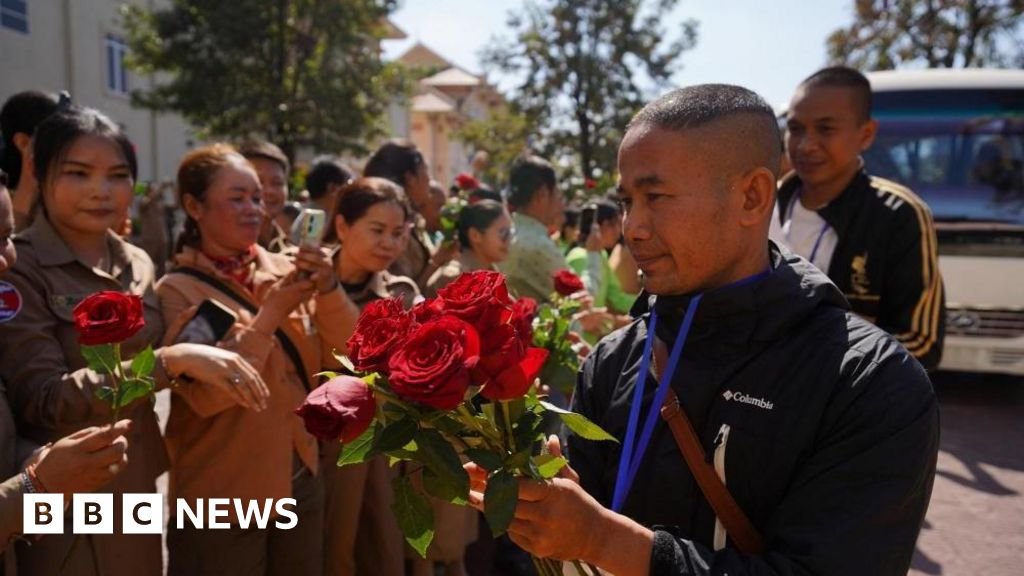
In a significant development, Thailand has released 18 Cambodian soldiers who were captured during intense border conflicts in July. This decision is part of a ceasefire agreement reached over the weekend between the two nations, aimed at easing tensions that have recently flared up.
Details of the Ceasefire Agreement
The handover of the Cambodian soldiers was delayed by a day due to Thailand’s concerns regarding alleged ceasefire violations. However, following persistent diplomatic pressure from China, the agreement was ultimately fulfilled. The renewed hostilities near the Thailand-Cambodia border had dislocated nearly one million residents in the region, escalating the situation between the two countries.
The ceasefire terms include a freeze on the current front lines, a ban on troop reinforcements, and provisions for civilians in border areas to safely return home. As the 18 soldiers, dressed in civilian attire, crossed the border checkpoint, they received a warm welcome from supporters and were handed over to Cambodian authorities.
National Sentiments and Government Actions
The detention of these soldiers since July had intensified nationalist feelings within Cambodia, making their release one of the top demands during the ceasefire discussions. In a statement released on Wednesday, Thailand’s foreign ministry described the handover as a “demonstration of goodwill,” expressing hopes that Cambodia would reciprocate in meaningful ways.
Cambodia’s defense ministry confirmed the soldiers’ return, expressing optimism that this gesture could foster “mutual trust and confidence” moving forward. Notably, the agreement stipulated that the soldiers should be transferred within 72 hours post-ceasefire—by noon local time on Tuesday. This timeline was complicated when Bangkok accused Phnom Penh of violating the truce by deploying over 250 unmanned aerial vehicles into Thai airspace shortly before the handover.
The Underlying Tensions
Despite the recent agreement, concerns remain. The ceasefire seems to be holding for now, but the historical disputes over the border stretch back more than a century. Tensions flared earlier this year after a group of Cambodian women performed patriotic songs at a temple located in the contested area. A Cambodian soldier lost his life in a confrontation in May, and a subsequent five-day conflict in July resulted in numerous casualties among both soldiers and civilians, further displacing thousands.
Previously, a fragile ceasefire was established in July and formalized in October with U.S. mediation; however, it deteriorated when new tensions erupted early this month. Both countries exchanged accusations over the collapse of the ceasefire, highlighting the fragile nature of the situation.
Looking Ahead
The recent developments mark a hopeful step towards stabilizing relations between Thailand and Cambodia. As both sides navigate the complexities of their history and ongoing tensions, the hope remains that diplomatic efforts will continue to prevail.
- Thailand released 18 Cambodian soldiers as part of a ceasefire agreement.
- The handover followed diplomatic pressure from China and was initially delayed due to alleged truce violations.
- The ceasefire terms aim to freeze front lines and allow safe civilian returns.
- Tensions between the two countries remain, rooted in historical disputes and recent violent clashes.