
Thailand and Cambodia Reach Immediate Ceasefire Amid Ongoing Conflict
In a significant development, Thailand and Cambodia have announced an immediate ceasefire aimed at halting weeks of intense and deadly clashes along their border, which have resulted in over 100 fatalities and displaced more than half a million inhabitants. This agreement marks a crucial step towards stabilizing the volatile situation between the two Southeast Asian nations.
Details of the Ceasefire Agreement
As part of their joint statement, officials from both countries specified that the ceasefire will commence on Saturday at noon local time. The ceasefire will encompass all forms of weaponry, prohibiting attacks on civilians, civilian structures, and military targets across all areas.
The defense ministers of both nations emphasized their commitment to maintaining current troop levels without any further movement, reflecting a cautious approach to easing tensions. According to Cambodia’s defense ministry, any troop reinforcement could exacerbate the situation and hinder long-term resolutions.
Collaborative Efforts and Background
Beyond the ceasefire, the nations agreed to collaborate on demining initiatives and combatting cybercrime—two critical areas that require joint efforts in ensuring regional stability.
The agreement, signed by Thai Defense Minister Natthaphon Narkphanit and Cambodian Defense Minister Tea Seiha, brings to an end 20 days of fierce fighting. This protracted conflict has seen the use of fighter jets and significant artillery exchanges.
Continued Reporting of Hostilities
Even as the ceasefire discussions were taking place, tensions were evident. Reports emerged that Thailand conducted an airstrike in Cambodia’s northwest region, specifically targeting a location in Serei Saophoan. On the morning of the ceasefire announcement, F-16 fighter jets allegedly dropped bombs, adding to the previous day’s aerial assault which involved 40 bombs in the same general area—an action that Thailand’s military has confirmed.
Root Causes of the Conflict
The origins of this conflict lie in longstanding territorial claims along the border. Open combat flared up in late July, despite a fragile ceasefire that had been previously brokered by the Malaysian prime minister, Anwar Ibrahim, with additional pressures from the U.S. administration. Unfortunately, renewed skirmishes resumed in early December, undermining earlier peace efforts.
Casualty figures paint a grim picture: Thailand has reported the loss of 26 soldiers and one civilian. Additionally, it has recorded 44 civilian deaths attributed to the conflict. On the Cambodian side, while official military casualties remain unreported, the nation has confirmed that 30 civilians have died and 90 others sustained injuries.
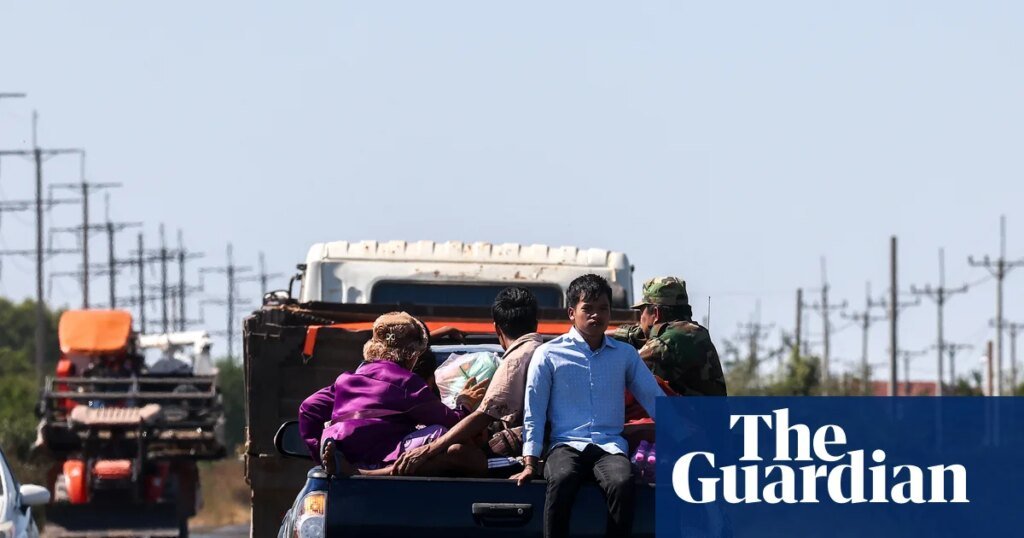
As the conflict continues, significant numbers of people have been evacuated from the affected regions on both sides of the border, illustrating the dire humanitarian impact of this ongoing situation.
Conclusion
The ceasefire agreement between Thailand and Cambodia offers a glimmer of hope for stability in a conflict-ridden area. However, the severity of the ongoing military actions and the historical context of territorial disputes underline the complex challenges that lie ahead.
- Thailand and Cambodia have agreed to an immediate ceasefire to end weeks of violent clashes.
- The ceasefire will include all forms of weaponry and prohibit attacks on civilians.
- Both nations will work together on demining and cybercrime efforts.
- Casualties have been significant, with hundreds of thousands displaced from their homes.