
Defending Taiwan’s Sovereignty Amidst Rising Tensions
In a determined stance against China’s aggressive posturing, Taiwan’s President Lai Ching-te has reaffirmed his commitment to protect the island’s independence. His New Year’s address came just after China concluded military exercises around Taiwan, emphasizing the island’s significance in the context of regional stability.
President Lai’s Commitment to National Sovereignty
During his address, President Lai highlighted the need for Taiwan to stand vigilant against China’s increasing expansionist ambitions. He remarked, “The international community is closely observing whether the Taiwanese people can assert their right to defend themselves.” Lai underscored that his administration remains dedicated to preserving Taiwan’s national sovereignty while enhancing its defense mechanisms and societal resilience. He stated, “My position has always been clear: to firmly safeguard our national sovereignty and to develop an effective deterrent and democratic defense strategy.”
Rising Tensions with China
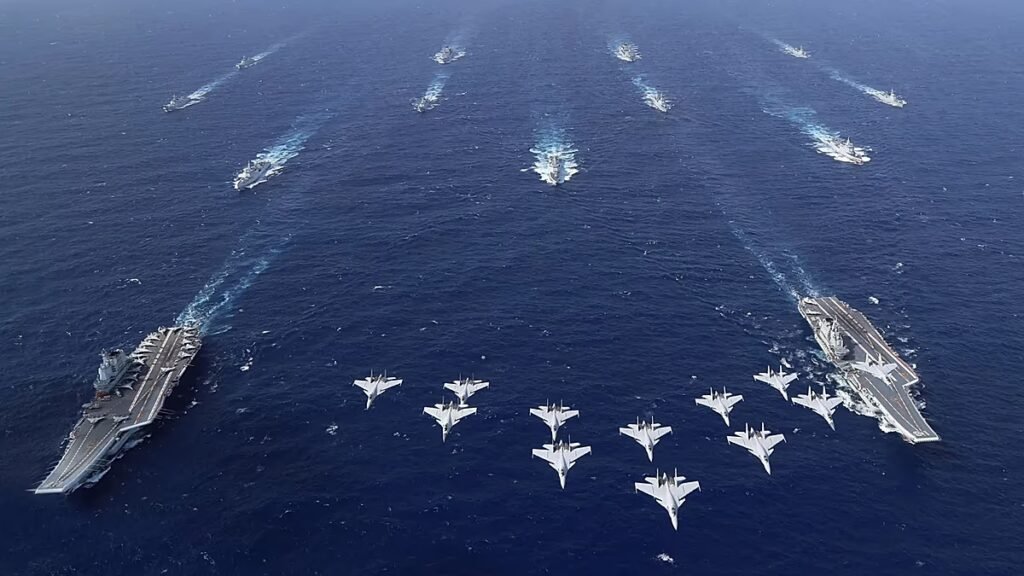
These comments from President Lai followed a series of two-day military drills conducted by China, which included missile launches and naval operations near Taiwan. This show of force was partly a reaction to a recent proposed arms sale from the United States to Taiwan and remarks from Japan’s Prime Minister regarding potential intervention if China were to attack Taiwan.
Historically, Taiwan has functioned independently since 1949, following the civil war between the Nationalist Party and the Chinese Communist Party, which resulted in the Nationalists retreating to the island. To this day, China maintains that Taiwan is a breakaway province that will eventually be unified with the mainland, with the threat of military action looming.
Beijing’s Response
The President’s remarks were met with strong condemnation from Beijing. A spokesperson from the Taiwan Affairs Office characterized Lai as “a saboteur of peace, a troublemaker, and a warmonger,” reinforcing the Chinese narrative that Taiwan’s existence as an independent entity is untenable. Chen Binhua stated, “No matter what Lai and the Democratic Progressive Party authorities assert, they cannot alter the fact that Taiwan is part of China.”
In a parallel address, Chinese leader Xi Jinping claimed that the annexation of Taiwan is “unstoppable,” signaling a continuation of Beijing’s firm stance on the issue.
US Support and Arms Sales
The United States plans to provide Taiwan with a substantial arms package, estimated to exceed $11 billion. This sale, which is the largest of its kind, encompasses missiles, drones, artillery systems, and military software. US law mandates that Washington offer Taiwan defensive capabilities to maintain its self-defense.
Moreover, Taiwan has allocated a dedicated budget of $40 billion over the next eight years for defense enhancements, aiming to develop a robust air defense system dubbed the Taiwan Dome, which promises advanced detection and interception capabilities. President Lai has expressed urgency in bolstering military readiness in light of Chinese threats, stating, “Facing China’s serious military ambitions, Taiwan has no time to wait.”
Conclusion
The situation surrounding Taiwan continues to evolve, with heightened military activity and rhetoric from both sides. As President Lai emphasizes a proactive approach to defense, international dynamics surrounding the island remain crucial to its sovereignty and security.
Key Takeaways
- President Lai affirms Taiwan’s commitment to sovereignty amid Chinese threats.
- Recent Chinese military exercises highlight rising tensions in the Taiwan Strait.
- The US is set to deliver a significant arms package to bolster Taiwan’s defense.
- Taiwan allocates a $40 billion budget for enhanced military capabilities over the next eight years.