
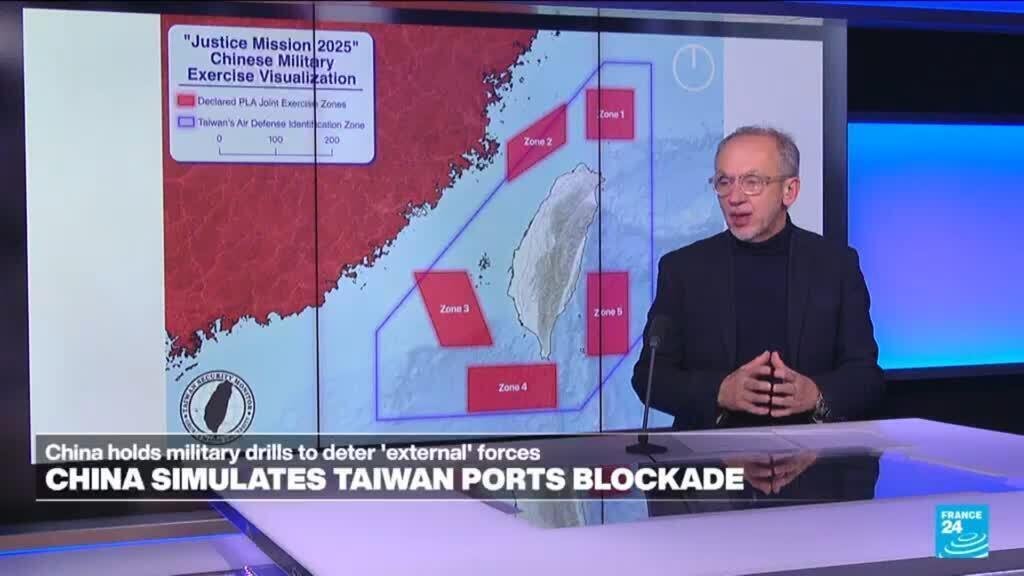
Understanding China’s Military Drills Around Taiwan
China has begun conducting military exercises in the vicinity of Taiwan, which it describes as a necessary measure to counter what it perceives as separatist activities. The timing of these drills raises important questions about the underlying motivations, particularly in light of recent geopolitical developments involving the United States.
Motivations Behind the Exercises
The military drills are primarily a response to a significant arms deal between the United States and Taiwan, valued at several billion dollars. This agreement comes at a time when the Trump administration is making efforts to strengthen trade relations with China. However, the complex dynamics of U.S.-China relations mean that Taiwan’s security remains a pivotal issue.
The U.S. Commitment to Taiwan
The United States is legally obligated to assist Taiwan in its defense, a commitment that has been reiterated through various military agreements over the years. Despite this obligation, the current U.S. administration appears to view Taiwan as a potential leverage point in broader negotiations with China. The arms deal not only aims to bolster Taiwan’s defensive capabilities but also serves as a signal of U.S. support amidst increasing Chinese military assertiveness in the region.
Implications of the Drills
China’s military exercises are not merely a show of force; they are strategically aimed at reinforcing its claims over Taiwan, which it regards as a breakaway province. The drills serve multiple purposes: they send a clear message to Taipei regarding the consequences of pursuing greater independence, and they demonstrate to the international community Beijing’s capability and readiness to defend its territorial claims.
Regional and Global Context
The situation around Taiwan is particularly sensitive, as it has implications for regional stability and international relations. China’s military actions often elicit strong reactions not only from Taiwan but also from other nations in the region and beyond, all while the U.S. continues to navigate its role as a counterbalance to China’s influence.
Conclusion
As tensions around Taiwan continue to escalate, the implications of China’s military drills are far-reaching. The intersection of U.S. foreign policy, the defense commitments to Taiwan, and China’s regional aspirations contribute to a complicated geopolitical landscape. Observers will be keen to see how these developments unfold in the wider context of U.S.-China relations.
- China’s military drills around Taiwan are a response to recent U.S. arms deals.
- The U.S. maintains a legal commitment to assist Taiwan amid rising tensions.
- China aims to reinforce its claims over Taiwan through these exercises.
- The situation reflects broader geopolitical dynamics between the U.S. and China.