
Concerns Emerge Over Tunnel Construction in Raqqa Amid Uncertain Political Climate
Raqqa, situated on the eastern bank of the Euphrates River in northeast Syria, has undergone significant turmoil throughout the Syrian war. This city was the first major urban center to join the uprising against former President Bashar al-Assad in 2013. In 2014, it fell under the control of the Islamic State, becoming their makeshift capital. Following a major offensive led by an international coalition, the Kurdish-led Syrian Democratic Forces (SDF) regained control in October 2017. However, recent developments have left many residents uneasy.
Growing Concerns and Mysterious Activities
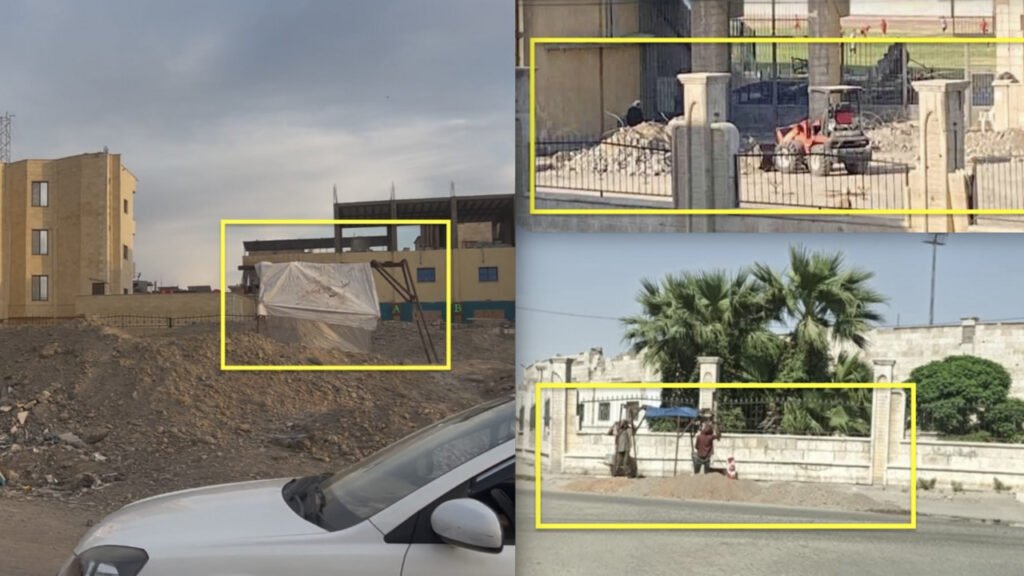
Since the beginning of 2025, reports and images have emerged depicting heavy machinery digging entrances to tunnels in several neighborhoods. Local authorities, affiliated with the SDF, have yet to provide a clear explanation for this activity. This construction coincides with the rapid approach of a March 31 deadline related to an agreement signed on March 10, 2025, designed for the gradual integration of Kurdish civil and military structures into the central Syrian government.
Two Potential Outcomes
Experts suggest two possible scenarios: the agreement could be extended to facilitate further integration of the SDF into the national government, or the Syrian government could initiate a military campaign to reclaim territories held by the SDF.
Recent clashes in Aleppo on December 22 have resulted in casualties, heightening tensions between SDF and Syrian government forces.
Residents Speak Out
Salamah (a pseudonym) is one of Raqqa’s residents who has been observing these unsettling activities. He states, “Ever since the deal was signed last March, I’ve noticed a rise in tunnel entrances across the city. The sound of digging is relentless; it can be heard even inside my home since these tunnels extend beneath residential areas.”
Impact on Local Communities
He adds that the construction has driven many families from neighborhoods like al-Firdous, particularly because of collapses, such as one that occurred on al-Wadi Street. “This area is essential as it sits above the city, making it strategic,” he notes.
Tunnel Excavation Activity Documented
Social media posts, particularly those from April 2025, show significant excavation work near critical facilities like Raqqa’s National Hospital. Video footage reveals workers operating a winch, supplying evidence of active tunnel construction.
Construction Sites Near Key Locations
In addition to the work near the National Hospital, similar construction sites have been reported near Al-Mawasi Hospital and residential districts. Numerous images, verified by local sources, confirm this ongoing activity.
Infrastructure and Reinforcement
A photo from June 2025 depicts a truck transporting concrete supports, intended to reinforce the tunnels. Notably, a concrete block manufacturing center operated by the SDF has been reported in Al-Aqtan Place, furthering suspicions about the nature of these constructions.
Analyst Insights
Experts familiar with the region suggest that this excavation is part of a longstanding strategy adapted by the SDF. Initially adopted by the YPG (People’s Protection Units) during the Turkish bombardment in 2014, this strategy involves tunneling to fortify positions against attacks.
Prepping for Urban Conflict
Analysts believe these tunnels serve multiple purposes, including military mobility and providing cover during urban combat. They describe a comprehensive subterranean network designed to facilitate troop movement, accommodate vehicles, and function as command centers. The interconnected design poses risks where the collapse of one tunnel could lead to widespread destruction and civilian trauma.
Uncertainty Looms Over Raqqa
Locals like Salamah feel a pervasive sense of unease regarding the potential for renewed conflict. “I’m sensing preparations for resistance,” he shares. Another resident, Qassem (also a pseudonym), echoes these fears, expressing concern for the structural integrity of buildings situated above tunnel networks.
Safety Concerns Amplified
Raqqa’s sandy soil, coupled with its proximity to groundwater and susceptibility to seismic activity, exacerbate these worries. Instances of collapses are common, leading residents to question the safety of their homes. Recently, reports of tunnel-related structures collapsing have further fueled anxiety among the population.
Conclusion
The ongoing tunnel construction in Raqqa raises critical questions about the future of the city amidst shifting political dynamics and potential military conflicts. Residents are left grappling with uncertainty and fear as these developments unfold.
Key Takeaways
- Raqqa has seen significant turmoil throughout the Syrian war, including the rise and fall of ISIS.
- Recent tunnel construction raises concerns among residents amid an unaddressed political agreement with the Syrian government.
- Experts warn that these tunnels may be part of preparations for potential urban conflict.
- Local infrastructure and the safety of buildings are at risk due to ongoing excavation activities.