
Sudan’s Prime Minister Unveils Peace Plan Amid Ongoing Conflict
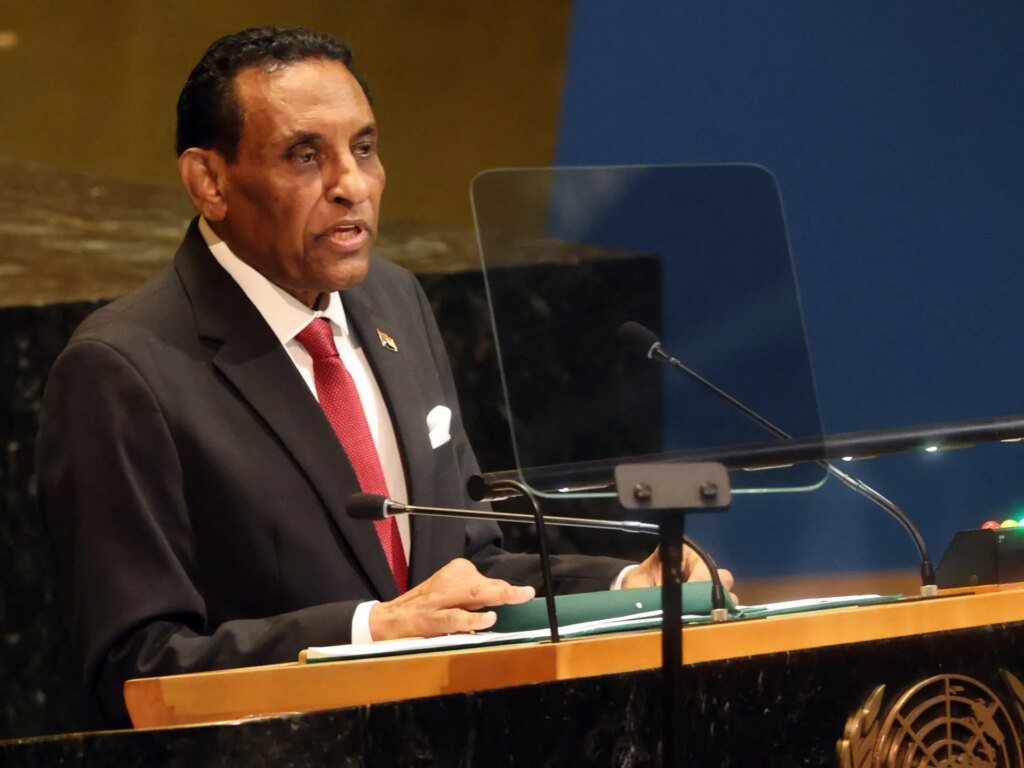
Sudan’s Prime Minister has made a significant appeal to the United Nations Security Council (UNSC), presenting a comprehensive peace plan aimed at halting the brutal war ravaging his nation. Prime Minister Idris urged council members to stand “on the right side of history” by supporting this initiative, even as clashes persist in Kordofan and North Kordofan States.
Details of the Peace Proposal
During his address to the UNSC, Idris outlined a detailed strategy designed to put an end to the devastating conflict that has engulfed Sudan since April 2023. The plan includes a ceasefire that would be monitored by the United Nations, the African Union, and the Arab League, along with the withdrawal of the Rapid Support Forces (RSF) from the territories they currently occupy.
The proposal further stipulates that the RSF, which has been involved in fierce confrontations against the Sudanese military, should be placed in camps and disarmed. Idris emphasized that such measures are crucial for any chance of success in achieving a lasting truce.
In addition to this, he committed to organizing free elections following a transition period to facilitate “inter-Sudanese dialogue.” The plan also envisions the reintegration of RSF fighters who are not implicated in war crimes back into society.
“This is not about winning a war,” Idris stated. “It’s about breaking the cycle of violence that has plagued Sudan for decades.”
He implored the council’s 15 members to back the initiative, asserting it could signify a pivotal moment for Sudan and the international community as they unite to transition away from conflict.
As Idris delivered his address, fighting continued unabated, with the Sudanese army announcing the recapture of a town southwest of al-Rahad in North Kordofan State.
Casualties and Ongoing Struggles
The conflict has had devastating consequences, with the RSF seizing the city of el-Fasher in October, resulting in over 1,500 deaths. The war, driven by a power struggle between Sudanese Armed Forces (SAF) chief Abdel Fattah al-Burhan and RSF chief Mohamed Hamdan “Hemedti” Dagalo, has left approximately 14 million individuals displaced and taken more than 40,000 lives, according to UN reports. However, aid groups suggest actual figures could be much higher.
Recent statistics show that around 1,700 internally displaced individuals—predominantly women and children—have sought refuge in a displacement camp near Kosti, in White Nile State. Local officials report that the camp is struggling to accommodate the influx, lacking essential supplies such as food and tents.
Competing Initiatives and Humanitarian Efforts
In response to the crisis, the US Ambassador, Jeffrey Bartos, presented an alternative plan focused primarily on alleviating the humanitarian situation. He urged both the Sudanese government and the RSF to accept a humanitarian truce proposed by a coalition of key mediators, including the US, Saudi Arabia, Egypt, and the United Arab Emirates, collectively referred to as the Quad.
Bartos emphasized the importance of this alternative path, saying, “We urge both belligerents to accept this plan without preconditions immediately.” In September, the Quad had called for a three-month truce aimed at facilitating humanitarian access, ultimately leading to a permanent ceasefire and a political transition.
While the RSF acknowledged the Quad’s humanitarian truce earlier this month, fighting continued, particularly in Kordofan, where the death toll for civilians has been rising.
Homegrown Solutions vs. External Proposals
Idris stressed that his government’s peace plan is “homemade – not imposed on us,” indicating a desire for local ownership of the peace process. However, during the meeting, it remained uncertain how much support his proposal garnered from UNSC members.
In discussions on the sidelines, when asked about the realism of his initiative, Idris expressed confidence, saying, “I think so. It is realistic, it is doable, it is possible.” In contrast, UAE Ambassador Mohamed Abushahab endorsed the Quad’s humanitarian truce, calling it a critical opportunity to provide aid to civilians in urgent need.
Abushahab warned that unilateral actions from either of the warring parties would not lead to sustainable solutions and would only prolong the duration of the conflict.
Conclusion
The situation in Sudan remains dire as the prime minister’s peace initiative faces challenges from ongoing violence and competing proposals. However, the hope for a resolution lies in collaborative efforts among international stakeholders and a commitment to lasting peace for Sudanese citizens.
- Prime Minister Idris presented a peace plan at the UN to end the ongoing conflict in Sudan.
- The proposal includes a monitored ceasefire and disarmament of the RSF for a chance at peace.
- The conflict has claimed over 40,000 lives and created a massive humanitarian crisis.
- Competing proposals for a humanitarian truce are being discussed among international mediators.