
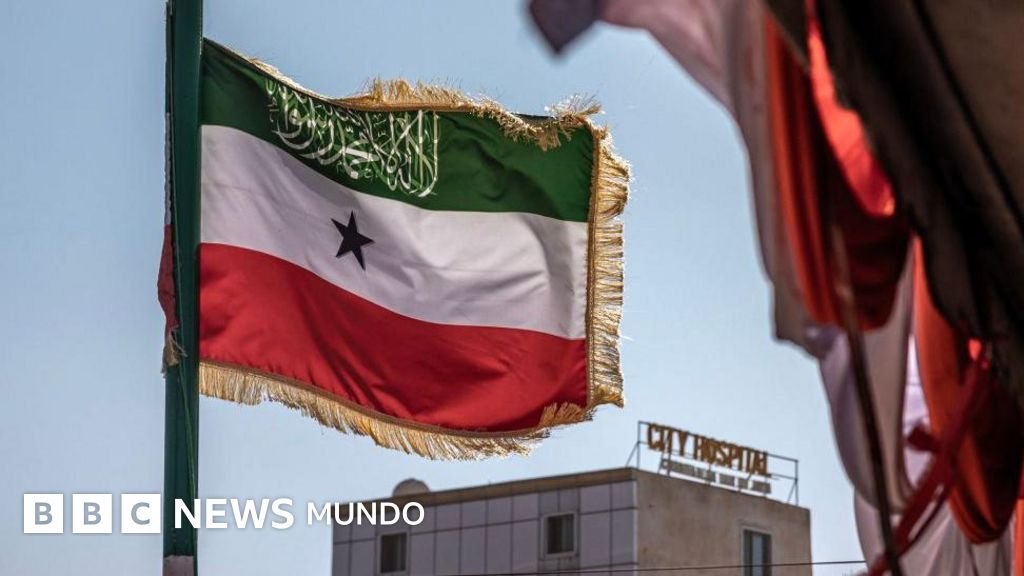
Somaliland’s Quest for Independence: A Historic Shift
After over three decades of striving for international recognition, Somaliland received formal acknowledgment from Israel as an independent nation. This significant moment could pave the way for further recognitions from other countries, bolstering Somaliland’s standing on the global stage.
A Brief History of Somaliland
Somaliland, spanning an area comparable to Nicaragua, declared its independence from Somalia in 1991. Historically, it was a British protectorate until it gained independence on June 26, 1960. Just five days later, it united with Italian Somaliland, a decision that soon left many residents regretting the merger.
Following the formation of the Republic of Somalia, longstanding differences surfaced almost immediately, exacerbating tensions between Somaliland and its southern neighbors. A referendum held on July 20, 1961, approving a new constitution faced rejection from a significant portion of Somaliland’s population, yet it was enacted regardless.
The turmoil led to the rise of Siad Barre, whose military regime further fueled resentment in Somaliland, ultimately culminating in a revolution. Barre’s infamous quote, “When I leave Somalia, I will leave buildings, but not people,” reflects the severity of the situation during his rule. Reports later revealed that his regime had perpetrated genocide against the Isaaq people between 1987 and 1989, marked by aerial bombardments in Hargeisa, which resulted in massive civilian casualties and destruction.
The Unilateral Declaration of Independence
After Barre was ousted in 1991, Somaliland declared its independence unilaterally, establishing itself as a relatively stable region amid the chaos that engulfed Somalia. Over the past three decades, it has developed its own political system, legislative body, law enforcement, currency, and even issues its own passports.
Despite its functioning independence, Somaliland faces significant challenges in gaining international recognition. Additional complications arose after a recent agreement with Ethiopia, granting Addis Ababa maritime access through the port of Berbera, an act Somalia viewed as a violation of its sovereignty.
International Recognition Challenges
Although Israel made a landmark decision by recognizing Somaliland this week, the broader international community, including the UN, Arab League, and African Union, continues to regard Somaliland as an integral part of Somalia. This lack of recognition complicates Somaliland’s ambitions, even as it holds itself as an independent entity.
Parallels with Taiwan
Comparisons between Somaliland and Taiwan are common, as both territories assert their independence despite pressures from larger neighboring countries insisting on their inclusion as part of their states. In fact, Somaliland and Taiwan strengthened diplomatic relations in 2020, evoking strong reactions from their respective neighbors.
According to Allen Chenhwa Lou, Taiwan’s representative in Somaliland, both entities share a common plight for recognition in a world that largely overlooks their sovereignty.
A Beacon of Stability
Beyond political recognition, Somaliland offers a contrasting picture of stability compared to the rest of Somalia. It is seen as a model of democracy, where leaders are elected through competitive processes, and electoral outcomes are respected. Despite facing high poverty and unemployment rates, Hargeisa stands out as one of the safest cities in the region.
As remarked by BBC journalist Mary Harper, the peace and stability in Somaliland are evident when juxtaposed with the turmoil in Somalia. Local governance efforts initiated in the 1990s emphasized community cooperation and mediation, contributing significantly to the region’s relative calm.
The Somali Perspective
From the standpoint of Somalia, Somaliland is an inseparable part of the nation. Peace talks have been undertaken, yet Mogadishu remains steadfast in its belief that national integrity is non-negotiable. Although the Somali federal government has strengthened its hold in major cities, ongoing threats from groups like Al Shabaab underscore the persistent challenges Somalia faces.
The argument for Somaliland’s independence often hinges on the need for Somalia to first address its internal issues before any serious discussions on secession can take place. While the path toward lasting independence remains complex, history suggests that any final resolution will likely involve negotiations between the two regions, similar to the eventual agreement reached in South Sudan.
Conclusion
The recent acknowledgment by Israel marks a pivotal moment in Somaliland’s long journey toward independence. While the road ahead is fraught with diplomatic hurdles, the ongoing evolution of Somaliland—as a region that champions stability, governance, and independence—will continue to intrigue observers around the world.
Key Takeaways
- Somaliland declared its independence in 1991 but has long faced challenges in achieving international recognition.
- Israel has formally acknowledged Somaliland as an independent nation, potentially encouraging others to follow suit.
- The situation in Somaliland draws comparisons to Taiwan, highlighting shared aspirations for sovereignty.
- Despite its lack of formal recognition, Somaliland exemplifies stability and democratic governance in a tumultuous region.