
Somalia Condemns Israel’s Recognition of Somaliland
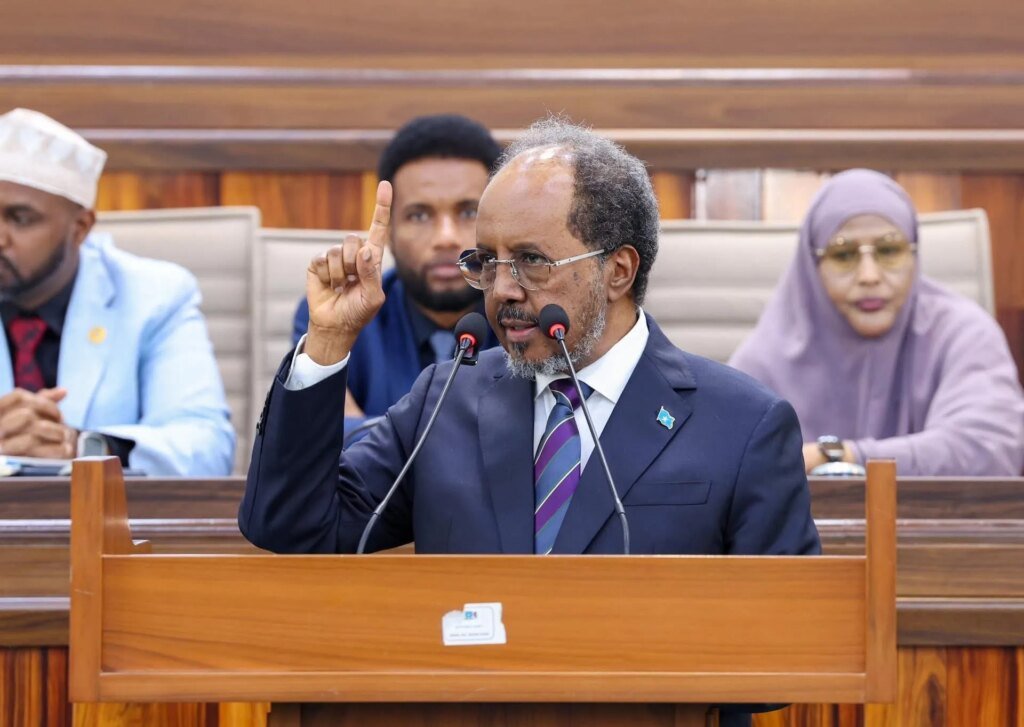
Somalia’s President Hassan Sheikh Mohamud has vocally condemned Israel’s recent acknowledgment of Somaliland, labeling it a “naked invasion.” He cautioned that this action could potentially ignite separatist movements in other regions. During an emergency joint parliamentary session, Mohamud characterized Israeli Prime Minister Benjamin Netanyahu’s actions as a severe breach of Somalia’s sovereignty.
Emergency Parliamentary Session
In an impassioned address, President Mohamud told lawmakers, “I am encouraging the Somali people to remain calm and to defend the unity and independence of our country, which is facing this naked invasion.” All members of parliament supported a resolution declaring Israel’s recognition of Somaliland as “null and void.” However, given Somaliland’s self-declared independence since 1991, which Somalia has consistently contested, the resolution is largely symbolic.
Legal Ramifications and Diplomatic Efforts
The resolution highlighted that any individuals or entities infringing upon Somalia’s sovereignty could face legal repercussions under both national and international laws. Additionally, it instructed the government to address this issue with various international bodies, including the United Nations, African Union, and Arab League.
Netanyahu’s Announcement
On Friday, Netanyahu made the announcement that Israel had formed diplomatic relations with Somaliland, framing it within the context of the Abraham Accords that facilitated normal relations between Israel and several Arab nations. This move makes Israel the first UN member to officially recognize Somaliland, a territory seeking global acknowledgment for over three decades without success.
Concerns over Regional Stability
Mohamud accused Netanyahu of attempting to import Middle Eastern conflicts into Somalia and reiterated his commitment to ensuring that Somali territory would not be used for military actions against other nations. “We need to combine our wisdom and strengths to defend our existence and sovereignty,” he declared, encouraging Somaliland’s leaders to engage in meaningful dialogue aimed at maintaining Somalia’s territorial integrity.
Reactions from Somaliland and the International Community
Somali Prime Minister Hamza Barre stated that Israel was “searching for a foothold in the Horn of Africa” and urged the nation to instead recognize a Palestinian state. Somaliland’s President Abdirahman Mohamed Abdullahi (Cirro) defended Israel’s recognition as “not a threat or a hostile action” against neighboring countries, highlighting Somaliland’s commitment to Islamic values of moderation and coexistence.
The Israeli decision prompted swift international backlash. A coalition of 21 Arab and African nations, along with the Organisation of Islamic Cooperation, issued a joint statement condemning the recognition as a violation of international law and the UN Charter. Additionally, the Palestinian Ministry of Foreign Affairs expressed support for Somalia, while regional leaders, including the presidents of Kenya, Uganda, Tanzania, and Djibouti, reached out to reaffirm their support for Somalia’s territorial integrity.
Global Implications and Ongoing Conflicts
The European Union called for respect for Somalia’s sovereignty, encouraging dialogue between Mogadishu and Hargeisa. Notably, Israel’s acknowledgment of Somaliland occurred amidst a protracted and devastating war in Gaza, where over 70,000 Palestinians have reportedly lost their lives. The International Court of Justice is currently investigating Israel over allegations of genocide, while Netanyahu faces an arrest warrant from the International Criminal Court for purported war crimes and crimes against humanity.
Historical Context of Somaliland
Somaliland has functioned as a self-declared republic since its secession from Somalia in 1991 following a civil war. It has its own constitution, currency, and flag but holds only part of the territory it claims as former British Somaliland, with some regions still under the control of rival factions loyal to Somalia.
When asked about recognizing Somaliland, U.S. President Donald Trump stated “no,” but indicated the subject was still under consideration. The UN Security Council is set to discuss Israel’s recognition of Somaliland in an upcoming session.
Conclusion
In summary, the recognition of Somaliland by Israel has sparked significant geopolitical tensions, drawing responses from Somalia’s leadership, neighboring countries, and international organizations. This situation highlights the complexities of territorial integrity and regional stability in the Horn of Africa.
- Somalia condemns Israel’s recognition of Somaliland as a “naked invasion.”
- Parliament passes a symbolic resolution declaring the recognition “null and void.”
- International backlash emerges from Arab and African nations.
- Somaliland defends its decision, emphasizing values of moderation and coexistence.