
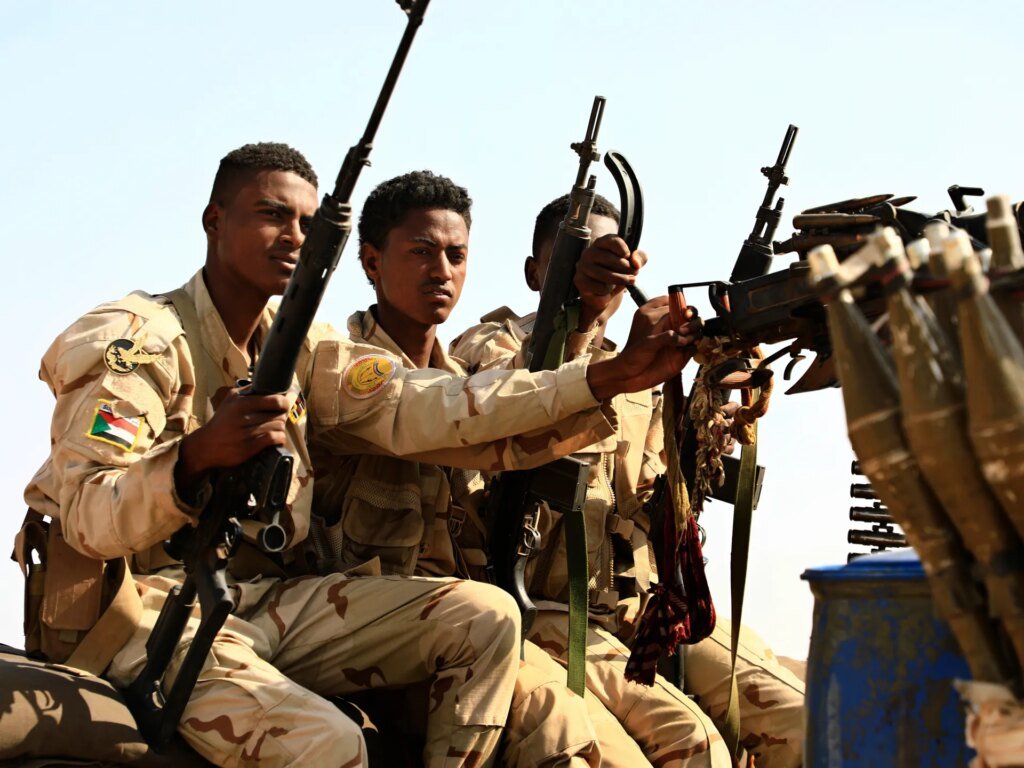
Sudan’s Continued Conflict: A Firm Stance Against RSF Negotiations
The ongoing turmoil in Sudan has led to a significant statement from a top official concerning the country’s conflict with the paramilitary group, Rapid Support Forces (RSF). As the government looks to put an end to nearly three years of warfare, this article explores the current status of negotiations, the humanitarian impact of the conflict, and the government’s strategy moving forward.
Government’s Firm Stance
Malik Agar Ayyir, deputy chairman of Sudan’s Transitional Sovereignty Council (TSC), declared that there will be no negotiations with the RSF while violence continues to ravage the nation. In a statement released by the Ministry of Culture, Media and Tourism, he emphasized the absence of any truce, asserting that true peace can only be achieved through a path defined by the people and their government.
Rejecting the Idea of Democracy
During a recent address to ministers and state officials in Port Sudan, where the government is currently based, Agar dismissed suggestions that the conflict is about paving the way for democracy. Instead, he characterized it as a struggle over resources and a manipulation of Sudan’s demographic landscape, stressing the need for enhanced national unity.
Plan for Peace Amidst Ongoing War
In a significant move, Prime Minister Kamil Idris recently presented a plan aimed at ending the prolonged conflict to the United Nations Security Council. This plan aligns with the Sudanese army’s stance, which demands the withdrawal of RSF fighters from territories they have seized throughout western and central Sudan. These militants would then be required to relocate to camps and disarm, with those without war crime allegations having a chance for reintegration into civilian life.
RSF’s Rejection of Withdrawal
The RSF has firmly opposed the notion of relinquishing territory. Al-Basha Tibiq, a senior advisor to RSF commander Mohamed Hamdan “Hemedti” Dagalo, labeled the withdrawal proposal as more fantasy than feasible political action.
The Humanitarian Crisis Deepens
As the conflict drags on, the humanitarian crisis has reached alarming levels, with approximately 14 million people displaced. The RSF continues to solidify its grip on captured territories while intensifying assaults. Reports from international aid organizations indicate that RSF fighters have committed heinous acts, including mass killings and systematic sexual violence, particularly in the Darfur region, as they attempt to cover up evidence of their war crimes over the past months. The situation worsened significantly after the RSF captured el-Fasher, the capital of North Darfur, in October.
Recent Developments
On Thursday, the RSF announced it has taken control of the Abu Qumra area in North Darfur. They proclaimed to have achieved complete liberation of the Um Buru region as they push forward in their campaign. Despite the mounting evidence of atrocities committed in western Sudan, the RSF insists that their primary mission is to safeguard civilians and eradicate remnants of armed groups and mercenary factions. They also released videos showcasing their armed units advancing toward el-Obeid, a crucial city in North Kordofan state.
Conclusion
The current situation in Sudan remains complex and fraught, as fierce hostilities continue and the prospect for peace negotiation appears dim. The TSC maintains a resolute position against the RSF, advocating for a vision that prioritizes national stability and unity over conflict-induced chaos.
- Sudan’s TSC rules out negotiations with the RSF amid ongoing fighting.
- The government frames the conflict as a struggle for resources, not democracy.
- Prime Minister Idris presented a plan to the UN for RSF withdrawal and disarmament.
- The humanitarian crisis escalates with millions displaced and atrocities reported.