
Key Developments in the Ongoing Conflict in Ukraine
In this article, we delve into the latest updates regarding the ongoing conflict in Ukraine as it approaches day 1,392 amidst escalating tensions and military actions from both sides.
Current Conflict Status
On December 17, significant military activity was reported in Ukraine’s capital. Kyiv Mayor Vitalii Klitschko urged residents to remain in shelters as air defense systems worked diligently to counter a Russian attack that resulted in noticeable explosions across the city.
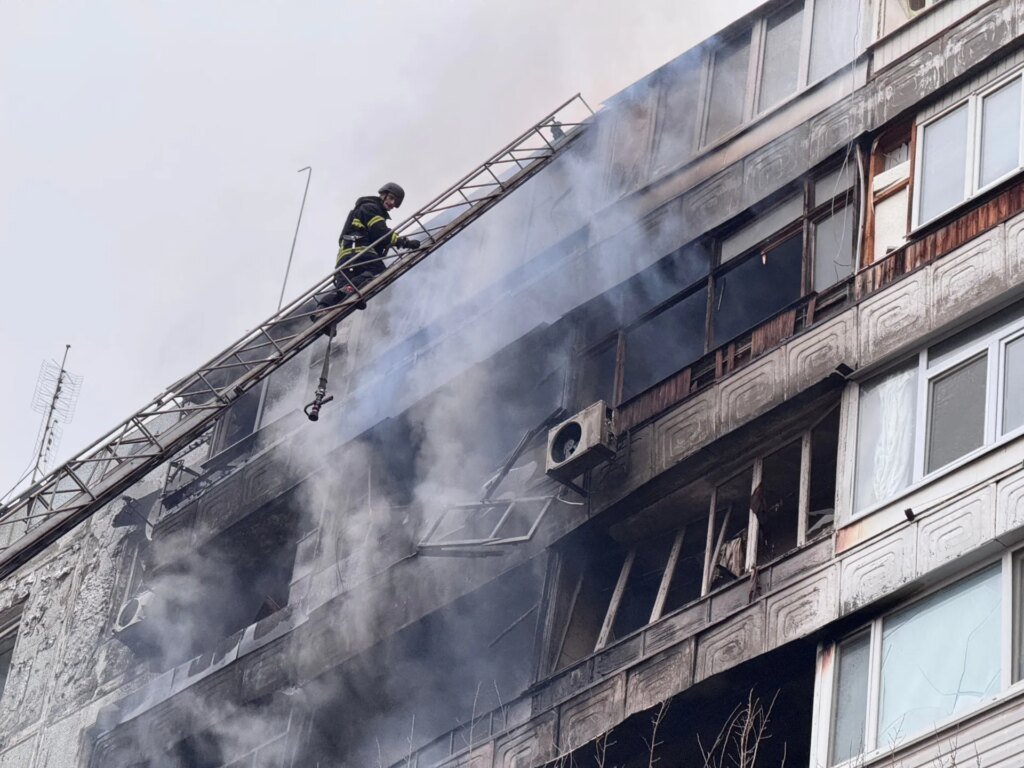
In a separate incident, Russian forces executed a large-scale drone strike in the Sumy region, targeting vital energy infrastructure and leading to widespread power outages, as reported by Governor Oleh Hryhorov on Telegram. Additionally, power disruptions were confirmed in the Donetsk region, according to Ukrainian Deputy Minister of Energy Mykola Kolisnyk.
Moreover, an assault on electrical substations in the Odesa region left approximately 280,000 homes without power. Governor Oleh Kiper later stated that efforts had restored electricity to 220,000 of those homes; however, substantial repair work remains underway to fully restore the electrical network.
The Russian-controlled Zaporizhzhia nuclear power plant is operating with power supplied through just one of its two external lines after military actions forced the disconnection of the other line. In a statement, Russian officials reported that their defense forces downed 180 Ukrainian drones in a single day.
Additionally, Rodion Miroshnik, a representative from the Russian Foreign Ministry, claimed that Ukrainian actions had resulted in the deaths of 14 civilians and injuries to nearly 70 others within the Russian-occupied areas, including Kherson and Zaporizhia, during the past week.
Ceasefire Discussions
In terms of diplomatic efforts, German Chancellor Friedrich Merz provided insight into a European-led multinational force that is currently being deliberated as part of security guarantees for Ukraine. He noted the intention to establish a demilitarized zone to prevent further hostilities and stated that while discussions are ongoing, a concrete agreement has yet to be reached.
Regional Security Insights
A joint statement issued by Bulgaria, Estonia, Finland, Latvia, Lithuania, Poland, Romania, and Sweden underscored that “Russia poses the most significant and enduring threat to our security and stability in the Euro-Atlantic region.” This statement followed the Eastern Flank Summit held in Helsinki, where Polish Prime Minister Donald Tusk mentioned discussions regarding an “anti-drone wall,” a project anticipated to require substantial financial investment.
On another front, Germany concluded its deployment of Patriot missile systems and personnel to Poland as part of a scheduled mission. UK Secretary of State for Defence John Healey announced a £600 million investment in air defense systems, including missiles and automated drone interceptors for Ukraine, during a virtual meeting with the Ukraine Defence Contact Group.
Additionally, Germany’s Defence Minister Boris Pistorius confirmed that a considerable number of AIM-9 Sidewinder missiles would be transferred to Ukraine in the coming year.
Reparations Efforts
In a notable development, leaders from 34 European nations convened in The Hague to establish an International Claims Commission aimed at pursuing compensation for the extensive damages caused by Russian aggression, totaling hundreds of billions of dollars. Ukrainian President Volodymyr Zelenskyy emphasized the importance of accountability for Russian war crimes, asserting that “every Russian war crime must have consequences.”
Dutch Foreign Minister David van Weel reiterated the commission’s objective, stating that the goal is to ensure validated claims are ultimately addressed by Russia, highlighting the expectation for restorative actions.
Conclusion
The situation in Ukraine continues to evolve, with military actions and international diplomatic efforts being closely monitored as the conflict progresses. The structural approaches being put in place for security and reparations signify a collective response to the ongoing hostilities.
- Intensified military activity noted in Kyiv and the Sumy region.
- Efforts to restore electricity following significant damage to energy infrastructure.
- Establishment of an International Claims Commission by European nations to seek reparations from Russia.
- Ongoing discussions regarding multinational security measures to prevent further escalation.