
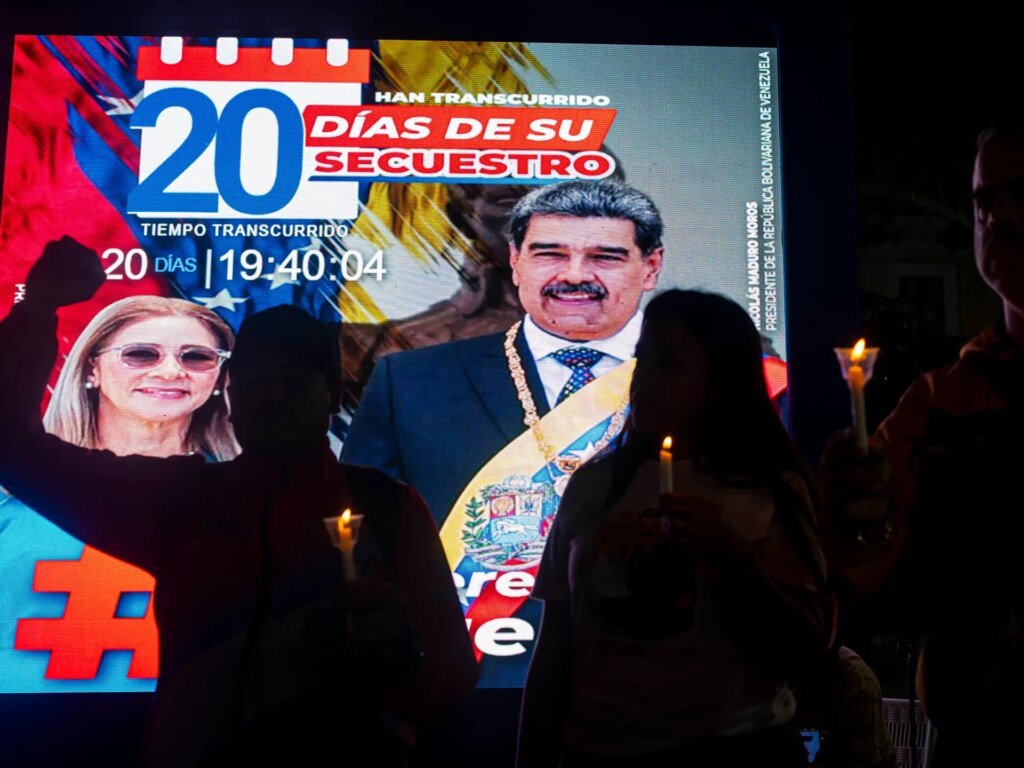
Venezuela’s Political Landscape After Maduro’s Abduction
The new year began with a shocking event: the abduction of Nicolás Maduro, the long-standing leader of Venezuela, during a military operation orchestrated by the United States. This operation has spurred widespread condemnation globally, raising eyebrows about its implications for international law and U.S. foreign policy in South America. Three weeks later, while Venezuela remains relatively calm, the political terrain is layered with anxiety over what the future holds. Let’s delve into the current situation and potential outcomes.
The Current Status
Sitting in a New York prison, Maduro is awaiting trial on serious charges, including drug trafficking and conspiracy related to “narcoterrorism.” Despite this, the conditions surrounding his abduction remain largely unchanged. A significant portion of the U.S. military is still stationed off Venezuela’s coast, alongside a blockade of U.S.-sanctioned oil tankers. The Trump administration has confirmed intentions to continue operations targeting alleged drug smuggling in the Caribbean, leaving the door open for future land operations in Venezuela.
According to Francesca Emanuele, a senior international policy associate, this is not a fully developed strategy from the U.S.; it’s more of an evolving approach. While President Trump initially hinted at taking control of Venezuela without seeking to establish an opposition-led government, he has since shifted focus towards cooperating with interim president and former Maduro deputy, Delcy Rodriguez.
A Strategy of Coercion
Trump’s administration appears to be employing a strategy rooted in coercion, centered on oil and financial leverage. Begum Zorlu, a researcher at City, University of London, highlights that this method seems aimed at forcing compliance from the leadership following Maduro’s rule. It’s a precarious situation: “The Venezuelan government is operating with a gun to its head, and that cannot be bracketed out of any serious analysis,” Zorlu noted.
Oil and Economic Moves
Post-abduction, the U.S. has made strides to access Venezuelan oil supplies. Recently, Washington announced plans to export up to $2 billion worth of crude oil trapped at ports due to ongoing sanctions. Rodriguez indicated that the initial $500 million sale yielded $300 million, intended to stabilize foreign exchange rates within Venezuela.
However, the mechanics of this arrangement are murky, raising several critical questions about the allocation of the proceeds. Phil Gunson from the International Crisis Group emphasized the need for transparency regarding how the funds will be utilized, given Venezuela’s history of corruption.
Challenges to Investment
Though Trump is courting American oil companies for investments in Venezuela’s vast oil reserves, challenges abound. Industry leaders have pointed out that significant reforms are necessary before anyone would consider investing in the country. In fact, during a meeting at the White House, Trump promised that investments could reach “at least 100 billion dollars,” but doubts linger regarding the viability of such promises in light of existing conditions.
Venezuela’s Leaders: An Uneasy Calm
Despite the recent events, Caracas remains tense but calm. Pro-government paramilitary groups and military intelligence are visibly present, signaling that the government is not yet ready to accept any political openings. The leadership, consisting of various sectors including civilian and military factions, appears to be cautiously navigating their responses to U.S. actions.
Rodriguez’s administration seems to have shifted towards a more conciliatory tone, even suggesting plans to open the oil industry to foreign investors. Meanwhile, political prisoners arrested during the opposition’s crackdown after the controversial 2024 elections are gradually being released to ease tensions.
Strategic Compliance Amid Distrust
Analysts caution against interpreting the early cooperation from Venezuela’s leaders as a sign of stability. Observations indicate that the current regime could change rapidly, particularly if the military factions deem their interests threatened. Both Padrino and Cabello, key figures in Maduro’s administration, remain under U.S. indictment, adding layers of uncertainty to the political landscape.
Intriguingly, some reports suggest that Rodriguez had previously indicated to U.S. officials that she would cooperate if Maduro were to be ousted. However, both the media and analysts are unclear about the internal dynamics among the civilian leadership and military forces in the wake of Maduro’s abduction.
Conclusion
As the situation in Venezuela unfolds, it reveals a complex web of power dynamics where leadership cracks may be more pronounced than they appear. The coming months could unravel deeper schisms within the current regime, further complicating the political landscape. The path forward remains uncertain, and shifts can occur rapidly depending on both internal and external pressures.
Key Takeaways
- The political atmosphere in Venezuela remains tense following Maduro’s abduction.
- The U.S. is employing a coercive strategy based on oil and economic leverage.
- Leadership in Venezuela is uneasy, with cracks possibly hidden beneath the surface.
- The future of U.S.-Venezuela relations remains unclear as both sides navigate complex interests.