
The Fragile Legacy of Digital Photography: Safeguarding Our Memories
In a world where approximately 5.3 billion digital photos are taken each day, the fragility of our photographic memories has come to light. For my 40th birthday, I asked friends and family to share pictures of me from my early twenties. To my dismay, this nostalgic treasure trove turned out to be disappointingly sparse. Between my college photo albums and the early snapshots of my motherhood journey, there’s a detectable gap that feels almost like a void. The only remnants I found were low-resolution images of awkward moments from a bar—nothing that could evoke the rich memories I wanted to revisit.
Countless photos from that time are lost due to technology updates, defunct email accounts, and a chaotic array of SD cards and USB drives that have survived the whirlwind of international moves. It’s as if those memories were just figments of my imagination.
My experience isn’t unique. During the early 2000s, the shift from analog to digital photography was swift and extensive, yet finding reliable storage for all these new digital files proved challenging. Whereas now smartphones can back up photos to the cloud immediately after capture, many from the initial digital camera wave weren’t so fortunate. As people upgraded their devices and digital services faded into oblivion, millions of pictures vanished, leaving a gaping hole in our collective photographic history.
The Evolution of Digital Photography
A New Era of Capturing Memories
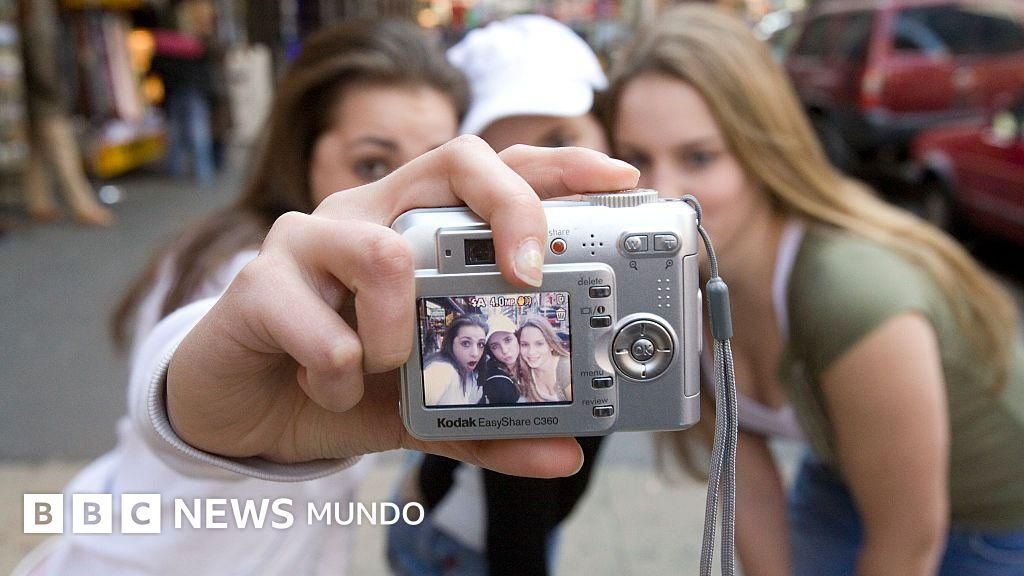
This year marks the 50th anniversary of digital photography. The first digital camera was an awkward, oversized device described by its inventor, Steve Sasson, as resembling a “toaster with a lens.” Decades later, however, by the early 2000s, digital cameras became commonplace among my peers. We snapped countless pictures, sharing them in online albums labeled “Tuesday Night!” or “New York Trip – Part 3.” Fast forward 20 years, and remarkably few of those photos still exist. When I inquired among friends, most faced similar issues—evidencing a shared conundrum regarding a time flooded with pictures.
The Digital Revolution
The year 2005 marked a turning point for digital camera enthusiasts. The rise of digital photography decimated film camera sales, as reported by the Camera & Imaging Products Association (CIPA). The intense competition quickly drove down prices for basic digital cameras, making impulse purchases the norm. Advancements in technology meant that many consumers found themselves upgrading to newer models multiple times annually.
Photography had historically been a slow process requiring careful planning and financial investment. Each roll of film limited the number of images one could capture, and developing those images demanded time and money. However, by 2005, those barriers had crumbled, leading to an explosion in digital photography.
Although this era appeared to promise a wealth of photographic abundance, it also brought significant risks. As Cheryl DiFrank, founder of My Memory File, points out, many consumers didn’t grasp the vulnerabilities that accompanied these technological advances. Most users were not fully aware of the critical aspects of managing their image collections—a lack of foresight that resulted in widespread loss.
The Black Hole of Lost Photos
The personal impact of lost photos resonates deeply with Cathi Nelson, whose external hard drive and computer were stolen in 2009. At that point, cloud storage options were scarce, and she lost a substantial number of family memories. Ironically, Nelson now helps others recover lost images through her establishment, The Photo Managers, which caters to professional photo organizers.
Nelson discovered that by 2009, the sheer volume of disorganized photo collections had created a demand for professional help. This “black hole” of lost memories between 2005 and 2010 is apparent to many in the field, including Caroline Gunter, another member of The Photo Managers. Cases of individuals struggling with this chaotic backlog are frequent.
The Rise of Social Sharing
Additionally, social sharing transformed how we interacted with our photographs. Platforms like MySpace, once the largest social network in the U.S., became popular for photo storage and sharing. However, its reign was short-lived; Facebook surged in popularity and, by 2012, boasted over a billion users. The downfall of MySpace coincided with its 2019 announcement of lost data from years past, reinforcing the transitory nature of digital storage.
The Cost of Digital Memories
While companies like Kodak, Shutterfly, and others made headway into online photo services, they could not sustain their business models in the long run. Shutterfly, for instance, acquired Kodak EasyShare photos, but for many users, the transition was fraught with issues. Access to previously uploaded photos became complicated, and recent statements from Shutterfly noted that some memories may be lost forever due to unfulfilled account linkings.
Karen North, a communication professor, states that users often misunderstand the inherent costs tied to online storage. The excitement surrounding new technology overshadowed the need for a sustainable business model. Furthermore, the high costs of digital storage limited the capacity of companies to hold on to vast numbers of images indefinitely.
Protecting Your Photographic Legacy
To effectively safeguard your photos, redundancy is crucial. Nelson advocates for the “3-2-1” rule: maintain three copies of each image—two on different media (like a cloud service and an external hard drive) and one in a separate physical location, such as a relative’s home. This strategy ensures you’re prepared against technology failures or natural disasters.
I’ve learned this lesson the hard way. Now, I automatically save photos shared via SMS or email onto my device and back them up to Google Photos. Monthly, I ensure that my Google Photos collection is copied to an external hard drive. Regularly editing and managing my photo collection has helped me feel more in control, preventing the overwhelming clutter many experience.
Reflecting on my journey to gather cherished photographs from my youth, I was delighted to uncover hidden gems—a short hairdo of yesteryears, a quirky futon left behind during a move, and candid moments with friends. It’s a reminder that while we often rely on social networks for photo storage, the true custodians of our memories are ourselves. Only we can take the necessary steps to preserve them and mitigate the risks that come with digital photography.
Conclusion
As we navigate the rapidly evolving landscape of digital photography, it’s essential to recognize that our cherished memories deserve better protection than the fleeting promises of social networks and online services. By implementing proactive storage measures and understanding the nature of digital files, we can ensure that our photographic legacies endure.
- Digital photography has revolutionized the way we capture and store memories.
- A significant portion of photos taken between 2005 and 2010 may be irretrievable.
- Creating redundancy through the “3-2-1” rule is vital for safeguarding images.
- Taking personal responsibility for memory storage is crucial in the digital age.