
Understanding the Historical Context of Venezuela’s Oil Industry
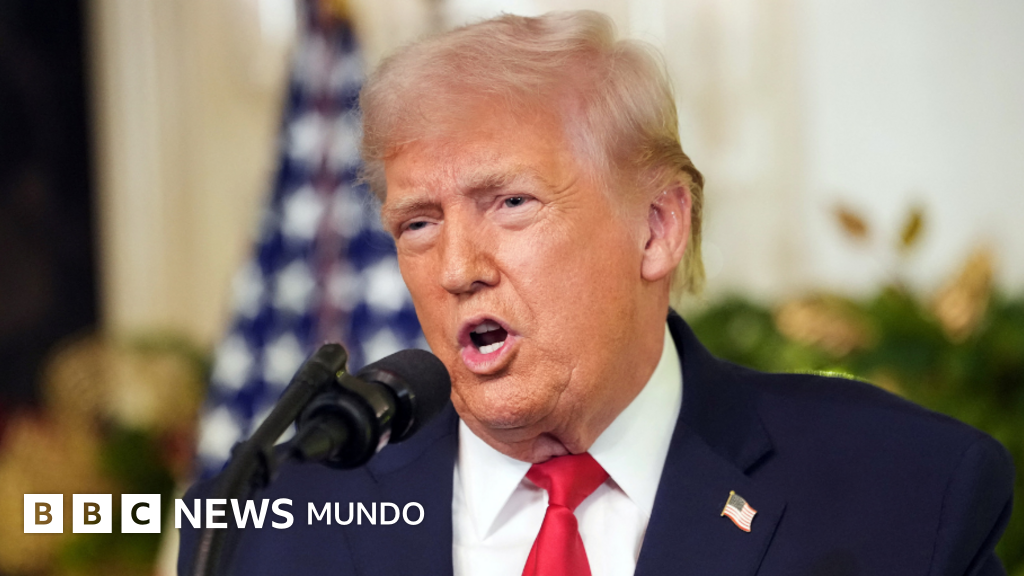
This week, U.S. President Donald Trump significantly adjusted his rhetoric regarding Venezuela. Following weeks of emphasizing supposed massive drug shipments from Venezuela to the United States as justification for military actions in the Caribbean, he introduced a surprising new angle. Trump declared a “total and complete blockade” on sanctioned oil tankers entering and exiting Venezuela until the country “returns all the oil, land, and other assets that were stolen.” This assertion stirred considerable surprise, contrasting with Washington’s prior narrative blaming Venezuela’s President Nicolás Maduro for leading a criminal network.
The Foundations of Venezuela’s Oil Industry
Venezuela, which boasts some of the world’s largest oil reserves, began developing its oil industry on a grand scale during the 1920s under General Juan Vicente Gómez’s regime. This era, locally known as “El Reventón,” marked the commencement of mass exploitation of a resource that would shape the nation’s history, as global economies became increasingly reliant on it.
Rising U.S. Dominance
Initially concentrated around Lake Maracaibo in western Venezuela, the lucrative oil sector quickly came under the dominance of U.S. companies, replacing early English and Dutch ventures. The Gómez government established a concession system attracting American firms, permitting them to extract and market Venezuelan crude for a royalty fee initially set at 7%.
As Miguel Tinker Salas, a historian, explains, “The state granted concessions to local elites, but these were sold to foreigners since Venezuelans lacked the resources and machinery for exploitation.” During this time, the Rockefeller family, through Standard Oil and its subsidiary, Creole Petroleum Company, became key players in the Venezuelan oil business. However, these contracts attracted criticism as they were perceived to benefit companies disproportionately.
Environmental Impact
According to Tinker Salas, “Gómez sought to balance the presence of American, British, and Dutch entities to avoid a monopoly.” Unfortunately, the initial U.S. drilling efforts led to significant ecological disasters. While Europeans had already exploited the shores of Lake Maracaibo, Americans installed underwater platforms that were poorly constructed. Consequently, these structures frequently collapsed, spilling oil into the lake—a fate that devastated local communities dependent on its water without any compensation or reparations.
Changes Under Medina Angarita
Come 1943, Venezuela was under the leadership of another military man, Isaías Medina Angarita, who aimed to harness oil resources for national development as a burgeoning middle class emerged. Amid the backdrop of World War II, which increased Venezuela’s strategic importance due to its oil reserves, Medina Angarita introduced a Hydrocarbons Law that reshaped the industry landscape. This law mandated a 50% state share in oil profits and increased royalties paid by foreign companies to 16%.
The U.S. perceived these moves positively because they were made through negotiation rather than coercion, particularly in the wake of Mexico’s 1938 oil nationalization.
The Nationalization Era Under Pérez
When Carlos Andrés Pérez ascended to the presidency in 1974, the world had drastically changed. With oil producers worldwide realizing their bargaining power, Pérez’s promise to nationalize Venezuela’s oil industry materialized in a 1975 decree establishing the state-owned Petróleos de Venezuela (PDVSA). Fortunately, this transition caused minimal conflict, as American companies were compensated fairly for their impending loss of revenue.
This period, often referred to as the “Saudi Venezuela,” saw the nation modernize and expand infrastructure while still grappling with issues like inequality and rising debt. Despite the nationalization, companies like Chevron maintained operations under new terms, benefiting from contracts with PDVSA.
The Chávez Era and Expropriations
The narrative shifted dramatically when Hugo Chávez took power in 1999. He opposed the established order and purged many officials from PDVSA, aiming to pursue what he termed a “re-nationalization” of the oil sector. Under Chávez, extensive changes in contracts began, imposing stricter rules on foreign firms and increasing royalty fees. The revenues made available funded expansive social programs and supported a foreign policy that sought to counter U.S. influence in Latin America.
The U.S. companies ExxonMobil and ConocoPhillips faced challenging circumstances, each adopting different strategies in response to Chávez’s directives. Chevron, willing to adapt to the new regulations, continued its operations, while ExxonMobil and ConocoPhillips chose to exit the market following the expropriation of their assets.
Current Landscape and Debt Situation
As of now, Venezuela is grappling with a monumental debt, estimated at approximately $150 billion, due to unpaid bonds and loans from allies like China and Russia. The Maduro government has consistently attributed its economic difficulties to U.S. sanctions that limit its oil export capacity. However, experts point to profound mismanagement and corruption during both Chávez and Maduro’s tenures as key factors behind the current production decline, plummeting from highs of 3.7 million barrels a day to around 1.3 million today.
Assessing Claims of ‘Stolen’ Oil
In light of this complex history, it’s critical to evaluate whether Venezuela owes oil to the United States. While the country is in default and facing significant economic hurdles, it’s essential to clarify that Venezuelan oil has never belonged to American companies; they were granted privileges under concession agreements, but ownership remained with the state.
Historians argue that Trump’s and Miller’s assertions are exaggerated and misrepresent the historical context. In fact, while American experts played a role in developing Venezuela’s oil industry, the labor and groundwork were primarily carried out by Venezuelans themselves.
Conclusion
The complex history of Venezuela’s oil industry reveals deep entanglements between local and foreign interests. Understanding these dynamics offers valuable context to current political rhetoric and the evolving situation in the region.
- Venezuela’s oil development began in the 1920s under General Juan Vicente Gómez.
- U.S. companies played a significant role in shaping the Venezuelan oil industry, but they never owned the oil.
- The country has since faced numerous challenges due to mismanagement and corruption, leading to a severe drop in oil production.
- Current claims alleging that Venezuela owes oil to the U.S. are viewed as historically inaccurate by experts.