
The Schoenstatt Movement: Understanding Its Roots and Influence
The Schoenstatt movement, founded in the early 20th century, has seen a significant impact on the Catholic faith in various regions, particularly in Latin America. This article explores the origins, principles, and the influence it has had, particularly with reference to current political figures like José Antonio Kast, the newly elected president of Chile.
José Antonio Kast: A Leader with Deep Religious Beliefs
José Antonio Kast, recently elected as the president of Chile, is known for his profound religious convictions. His commitment was evident in his inaugural speech, where he stated, “Nothing is possible without God.” He emphasized the importance of faith, saying, “For those of us who believe, nothing occurs in life that is not directly related to God.” He humbly requested divine guidance to govern effectively when he takes office on March 11, succeeding Gabriel Boric.
Throughout his nearly hour-long address before thousands of supporters in Santiago, Kast articulated his religious beliefs on multiple occasions. This connection to faith should not come as a surprise, as Kast and his family are affiliated with the Schoenstatt movement, a conservative Catholic organization with a presence in over 100 countries, including every nation in Latin America.
The Origins of Schoenstatt
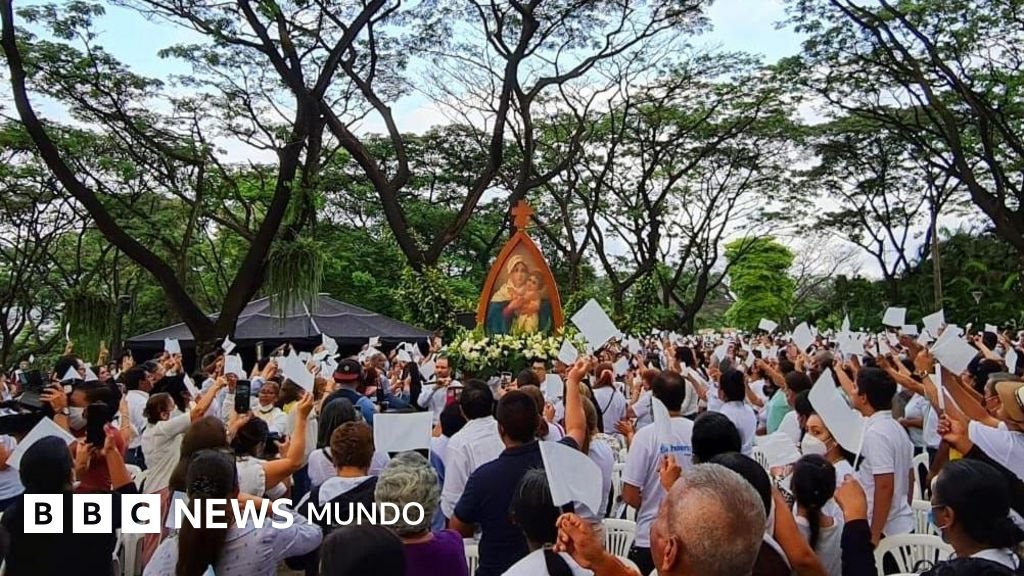
Founded by German priest José Kentenich in 1914, the Schoenstatt movement emerged amid the backdrop of World War I. The name “Schoenstatt” is derived from a village along the Rhine River in modern-day Germany, translating to “beautiful place.” Kentenich established the movement while teaching at a seminary there, where he and his students restored a small chapel and dedicated it to the Virgin Mary, seeking to make it a site of pilgrimage.
One unique aspect of Schoenstatt is its practice of building identical replicas of the original chapel in places where its members are active. Currently, there are around 200 “branch sanctuaries” worldwide, marking the movement’s extended reach.
Understanding Schoenstatt’s Structure
Schoenstatt operates as an organization within the Catholic Church, fostering the idea that laypeople can perform roles analogous to those of religious orders while maintaining a degree of independence from ecclesiastical hierarchs. The movement includes both a lay branch for non-ordained individuals and a religious branch that encompasses a priestly order and a community of non-vowed women, resembling but not identical to nuns.
Comparison with Other Catholic Movements
While some scholars liken Schoenstatt to Opus Dei, notable distinctions exist. Schoenstatt does not actively seek political influence, unlike Opus Dei, which strategically placed members in key economic and banking roles during Spain’s Franco era. Schoenstatt focuses on family life over public life, adopting a more conservative yet less punitive approach compared to other groups.
The Expansion of Schoenstatt in South America
Schoenstatt’s expansion outside Europe began in South America during the early 1930s, initiated by followers who arrived in Argentina. By 1935, additional members made their way to Brazil and Uruguay, and today, Schoenstatt is present in virtually all Latin American countries, managing nearly 80 sanctuaries and several schools across the continent.
Historical Challenges and Controversies
The movement faced challenges, particularly during the Nazi regime when Kentenich was imprisoned and sent to Dachau concentration camp. After World War II, suspicions regarding his leadership style arose, which resulted in his removal and exile to the United States for 14 years.
In recent years, there have been accusations against Kentenich, suggesting a pattern of dubious behavior that could affect his proposed beatification. These allegations have sparked debate about his legacy within the movement and the wider Church.
Conclusion
The Schoenstatt movement serves as an intriguing fusion of Marian devotion and Catholic renewal, shaping communities and influencing leaders across the globe. Its distinct structure allows it to adapt and maintain relevance in modern society while wrestling with historical challenges and contemporary criticisms.
Key Takeaways
- José Antonio Kast’s religious convictions are rooted in his family’s connection to the Schoenstatt movement.
- Schoenstatt was founded by José Kentenich in 1914 and emphasizes community and Marian devotion.
- The movement has successfully expanded throughout Latin America, with numerous sanctuaries and educational institutions.
- Despite facing historical challenges, Schoenstatt continues to be influential within the Catholic Church.