
The Revolutionary Impact of Cadmium Zinc Telluride in Medical Imaging
Imagine lying still for 45 minutes inside a large hospital scanner, arms raised above your head, undergoing lung scans. It’s not the most thrilling experience. Fortunately, patients at the Royal Brompton Hospital in London can now complete this process in just 15 minutes, thanks to innovative advancements in imaging technology. This transformation is largely attributed to a special material known as Cadmium Zinc Telluride (CZT), which allows the scanner to deliver exceptionally detailed three-dimensional images of patients’ lungs.
Dr. Kshama Wechalekar, the head of nuclear medicine and PET at the hospital, marvels at the capabilities of the new scanner, calling it a “true achievement of engineering and physics.” Installed in August, this state-of-the-art machine utilizes CZT, a product from a British company named Kromek, which is one of the very few manufacturers globally able to produce it. While you may be unfamiliar with CZT, Dr. Wechalekar highlights that it is leading a “revolution” in medical imaging.
A Versatile Material with Multiple Applications
CZT isn’t just limited to imaging; its applications extend to X-ray telescopes, radiation detectors, and airport security scanners, making it increasingly sought after. The lung studies conducted by Dr. Wechalekar and her team involve examining tiny blood clots in patients with prolonged COVID-19 symptoms or larger clots, like pulmonary emboli. The cutting-edge scanner, priced at one million pounds (about $1.4 million), captures gamma rays emitted from a radioactive substance injected into patients. The sensitivity of this device permits a reduction in the amount of radioactive substance required.
“We can reduce the doses by approximately 30%,” states Dr. Wechalekar.
High Demand and Low Supply
Though CZT-based scanners are not entirely new, large-scale whole-body scanners utilizing this technology are a modern development. Despite being around for decades, manufacturing CZT remains a complex challenge. “It has taken a considerable amount of time to develop a production process that can scale,” notes Arnab Basu, the founder and CEO of Kromek.
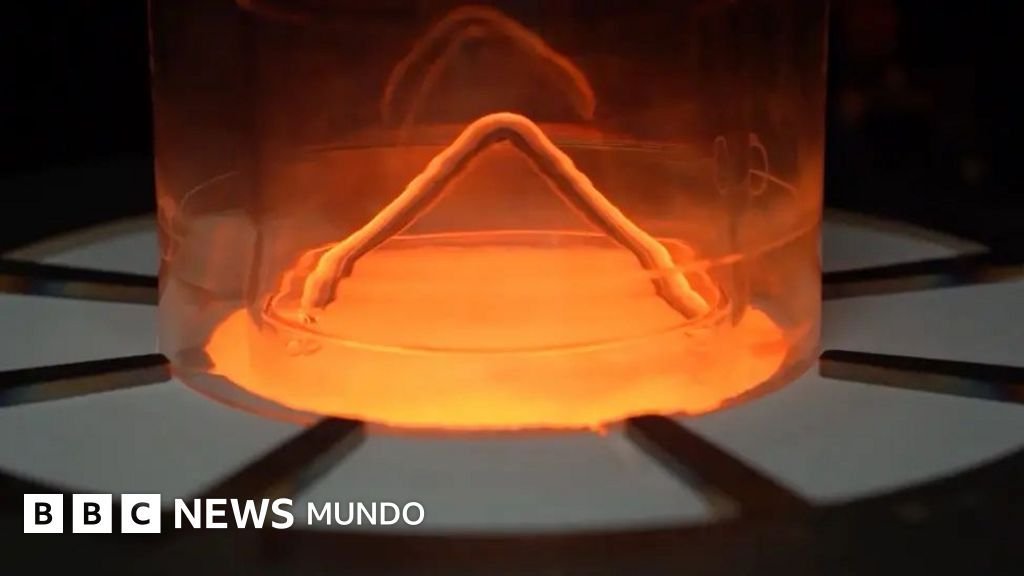
Inside Kromek’s facility in Sedgefield, England, there are 170 small furnaces resembling a server farm. In these furnaces, a special powder is heated until it melts, then solidified to form a monocrystalline structure—a process that takes several weeks. “Atom by atom, the crystals are rearranged until they align perfectly,” explains Basu.
The end product, a semiconductor, can detect tiny photon particles in X-rays and gamma rays with remarkable precision, somewhat like a highly specialized light-sensitive image sensor found in smartphone cameras. When a high-energy photon interacts with the CZT, it displaces an electron, and this electrical signal is used to generate an image. Unlike previous imaging technologies that relied on a two-step process, CZT scanners provide more accurate results in one seamless step.
Applications Beyond Healthcare
Basu also mentions that CZT scanners are used for detecting explosives at airports in the UK and examining checked luggage in some U.S. airports, with plans to expand usage to carry-on bags in the future.
The Challenge of Sourcing CZT
Despite its advantages, acquiring CZT can be challenging. Henric Krawczynski from Washington University in St. Louis has previously used CZT in high-altitude balloon-based telescopes designed to capture X-rays from neutron stars and black hole plasma. For his telescopes, he needs very thin pieces of CZT, measuring 0.8 mm, which helps minimize background radiation for clearer signals. “We would like to order 17 new detectors,” he mentions, but sourcing these thin pieces proves difficult.
As Kromek faces growing demand, Basu acknowledges the challenges, stating, “We support a lot of research organizations, making it hard for us to cater to multiple requests. Each research project requires a uniquely structured detector.” However, Krawczynski is not overly concerned; he can use previously obtained CZT or cadmium telluride, a substitute, for his upcoming mission.
Future Prospects and Developments
Currently, Krawczynski faces an additional hurdle: his next mission was set to launch from Antarctica in December, but ongoing U.S. government shutdowns may lead to delays. In the UK, a substantial modernization project at the Diamond Light Source research center in Oxfordshire aims to enhance its capabilities with new CZT-based detectors. This facility accelerates electrons around a vast ring at near-light speed, using magnets to release X-ray energy, directed towards experiments analyzing materials, including aluminum impurities during melting processes. An upgrade scheduled for completion by 2030 will yield significantly brighter X-rays, necessitating new detectors that can adequately capture this increased brilliance.
“It doesn’t make sense to invest heavily in upgrading facilities if we cannot detect the light they produce,” says Matt Veale, head of the detector development group at the UK Science and Technology Facilities Council.
As a result, CZT remains the material of choice in this endeavor.
Conclusion
The evolution of Cadmium Zinc Telluride technology represents an exciting leap forward in medical imaging and beyond. Its versatility not only enhances diagnostic capabilities but also plays crucial roles in various scientific fields. As manufacturing processes become more refined, the potential applications for CZT are vast, paving the way for future innovations.
- CZT technology significantly reduces the time required for lung scans.
- The material allows for lower doses of radioactive substances in medical imaging.
- CZT has applications beyond healthcare, including safety and scientific research.
- The demand for CZT is high, leading to sourcing challenges for researchers.