
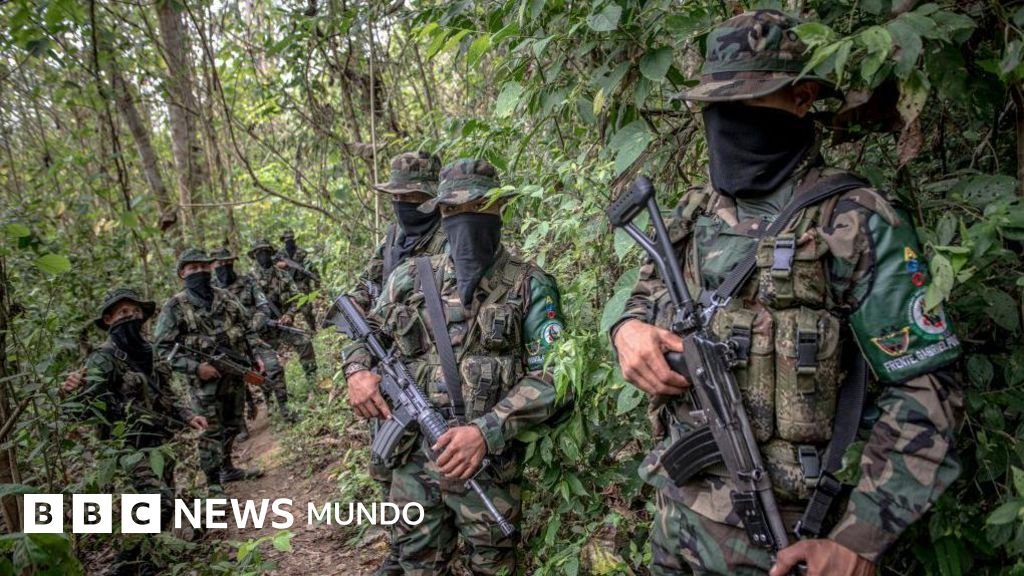
Understanding the Gaitanista Army of Colombia: A New Chapter in the War on Drugs
The Gaitanista Army of Colombia (EGC), commonly known as Clan del Golfo, has recently been designated as a foreign terrorist organization by the U.S. State Department. This article explores the group’s origins, its powerful presence in Colombia, and the implications of this new classification in the ongoing fight against drug trafficking and organized crime in Latin America.
The Rise of the Gaitanista Army
The EGC’s roots can be traced back to the tumultuous 1990s, a time when various armed groups vied for control in Colombia’s Urabá region, located near the Panamanian border. The area was previously dominated by guerrilla movements like the Popular Liberation Army (EPL) and the Revolutionary Armed Forces of Colombia (FARC). In response to these insurgencies, paramilitary forces such as the United Self-Defense Forces of Colombia (AUC) emerged, ultimately leading to the creation of the Gaitanista Army.
What distinguishes the EGC is its assertion of political motivations despite its criminal undertakings. Over time, it grew to become the most powerful criminal group in Colombia. It is now the fourth Colombian organization to be listed as a foreign terrorist group by the U.S., joining the ranks of ELN, FARC-EP, and Second Marquetalia, dissidents from FARC who demobilized following the 2016 peace agreement.
Operative Structure and Territorial Control
Currently, the Gaitanista Army is estimated to have around 9,000 members, making it a formidable force. According to research conducted by the Pares Foundation, the EGC has established a presence in 302 out of Colombia’s roughly 1,100 municipalities. Their illicit revenue streams encompass narcotics trafficking, extortion, and illegal mining, allowing them to maintain control over various territories.
Victor Barrera, a researcher at the Center for Research and Popular Education (CINEP), noted the group’s unique operational framework, which allows for high mobility and effective responses to local demands. The organization’s structure resembles that of franchise businesses, making it challenging for authorities to pinpoint their full operational scope while swiftly replacing leaders when necessary.
Leadership and Recent Developments
Historically, the EGC was led by brothers Dairo Antonio (Otoniel) and Juan de Dios Úsuga, known collectively as Clan Úsuga. After Otoniel was arrested and extradited to the U.S. in 2021, the group saw a shift in leadership. Recent reports indicate that Wílmer Giraldo, alias Siopas, was killed in 2023, allegedly by his own members. Jesús Ávila, known as “Chiquito Malo,” has emerged as a prominent figure in the organization.
According to analysts, the EGC has strategically expanded its geographical footprint without engaging in open confrontations. They have been able to assimilate local gangs and capitalize on regions where governmental presence is insufficient.
Peace Negotiations and American Intervention
Upon taking office in August 2022, President Gustavo Petro initiated negotiations with various armed groups, including the EGC, as part of his “total peace” strategy. However, skepticism surrounds these discussions, given the criminal classification of the group. The EGC perceives itself as a political entity deserving of similar treatment to other historical guerrilla groups in peace negotiations.
A recent agreement was signed in Doha, Qatar, between EGC representatives and the Colombian government, outlining steps toward disarmament and peace. However, uncertainties loom, especially following the U.S. designation of the EGC as a terrorist organization, which complicates Colombia’s peace initiatives. President Trump has indicated a willingness to increase military action against drug trafficking operations, including possible interventions in Colombia, raising concerns for Petro’s administration.
Conclusion
The Gaitanista Army of Colombia has evolved from remnants of previous conflicts into a powerful and complex criminal organization. While negotiations for peace are underway, their recent designation as a terrorist group and America’s determined stance against drug trafficking inject further complexities into an already fragile situation. The road ahead for Colombia’s peace process remains uncertain and fraught with challenges.
Key Takeaways
- The Gaitanista Army of Colombia, known as the EGC, is classified as a foreign terrorist organization by the U.S.
- With approximately 9,000 members, the EGC controls significant illegal revenue streams throughout Colombia.
- The group’s leadership has seen recent changes, complicating its internal dynamics.
- Peace negotiations initiated by President Petro face challenges due to American intervention and the EGC’s criminal designation.