
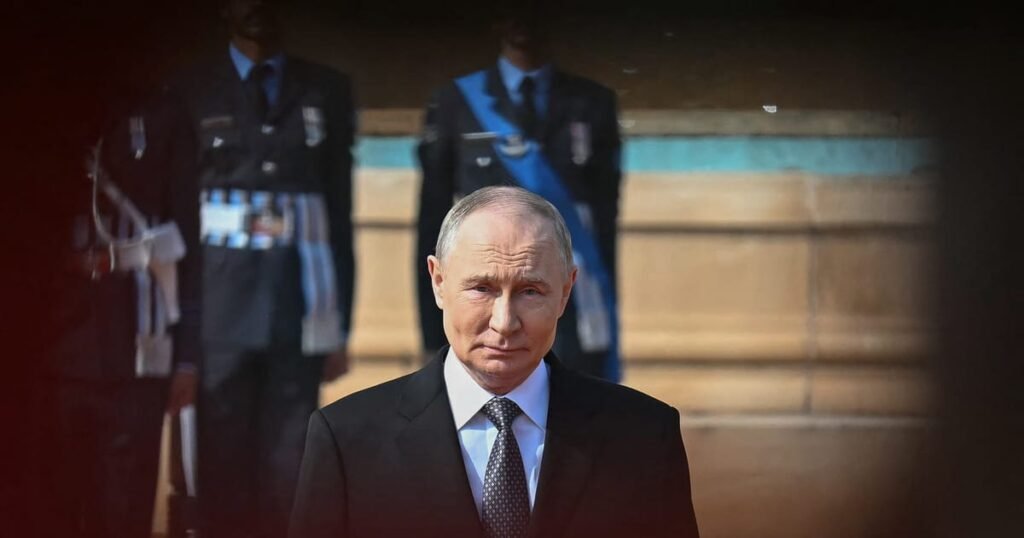
Inside Putin’s Annual Q&A: What You Need to Know
This year’s annual question and answer session with President Vladimir Putin was anything but an opportunity for the Russian public to voice their concerns. Instead, it served as a platform for Putin to communicate his perspectives on pressing issues, particularly regarding the war in Ukraine. With heightened geopolitical tensions—especially amidst U.S. President Donald Trump’s pursuit of a peace deal—the stakes were high.
Traditional Format with a Twist
As is customary, this year’s presser was meticulously organized. The Kremlin claimed that around 3 million questions were submitted, but only a select few made it through the rigorous vetting process. Nevertheless, some unexpected comments managed to slip past censorship, revealing glimpses of authenticity amid the carefully curated event.
Key Takeaways from the Press Conference
The Ongoing War
Since the Kremlin’s prohibition on the term “war” following its Ukraine invasion in February 2022, the atmosphere has shifted dramatically. At the start of the session, a co-host prompted Putin with, “War or peace?” This question set the stage for nearly five hours dedicated to discussing the ongoing conflict.
Putin consistently assured his audience that the war in Ukraine was progressing as planned, attributing any setbacks to “excessive bureaucracy.” Amid widespread calls for peace among the Russian populace, Putin has doubled down on rallying the nation towards a unified front, suggesting that victory on terms favorable to Russia is imminent.
Peace with Conditions
Viewers might have felt as if they were transported back to February 2022, as Putin reiterated the justifications for the invasion. In a bid to maintain a positive rapport with Trump, he mentioned that Moscow was “ready and willing” to negotiate. However, his subsequent remarks indicated otherwise, referring to Ukraine’s leadership as the “Kyiv regime” that rose through a “coup d’état.” Furthermore, he framed the conflict in terms of battling “neo-Nazism” and demanded that Kyiv abandon its NATO aspirations.
NATO and Europe: A Cautionary Tone
Putin’s conversation turned critical as he addressed NATO and European leaders. He made a half-hearted attempt to retract previous insults, including a recent quip about European leaders being “little pigs.” Yet, he didn’t hold back in labeling them “robbers” for wanting to utilize Russia’s frozen assets to support Ukraine.
Specifically, he targeted NATO Secretary-General Mark Rutte for suggesting that Europe should prepare for extensive conflict with Russia. Responding to a question about military escalation, Putin assured, “There won’t be new special military operations if you treat us with respect and take our interests into account.”
Addressing Domestic Concerns
Beyond foreign policy, Putin took time to reassure Russians about economic stability amid slow growth and rising inflation. He attributed positive developments to “deliberate action” from financial institutions, claiming there was no need for concern.
Interestingly, he touted the enthusiasm of young Russians eager to enlist, stating, “Very young boys, university students, are taking sabbaticals to join the army.” With estimates suggesting significant casualties in the war, many have questioned the narrative presented by the Kremlin.
Traditional Values Take Center Stage
Despite the heavy focus on the conflict, Putin also touched upon the concept of “traditional values.” He warned other countries against seizing assets from nations with conservative policies and emphasized that many backbone values align with Islamic traditions. A moment of levity occurred when a young man used the broadcast to propose to his girlfriend, prompting Putin to commend the practice of early marriages in some cultures.
Bonus Segment: Authenticity or Staged?
An intriguing element of the session was a large screen displaying text messages sent in by Russian citizens. While some messages echoed the event’s overall message, others appeared skeptical, with one noting, “[This is] not a direct line, but a circus.” Questions arose over whether the Kremlin intentionally allowed these remarks to surface to create an impression of legitimacy or if it was simply a case of spontaneous honesty from the public.
Conclusion
This year’s press conference reflected both the Kremlin’s tight narrative control and President Putin’s unwavering stance on the war in Ukraine. The event underscored the complex interplay between domestic expectations and geopolitics, revealing how the Russian leadership seeks to navigate these turbulent times.
- Putin’s annual Q&A highlighted his views on the ongoing Ukraine conflict, framed as a just cause.
- He asserted Russia’s readiness for peace talks, yet maintained firm rhetoric regarding Ukraine’s leadership.
- Putin expressed disdain for NATO and European leaders, emphasizing respect for Russia’s interests.
- The conference blended serious discussions with efforts to reinforce traditional values among the Russian populace.