
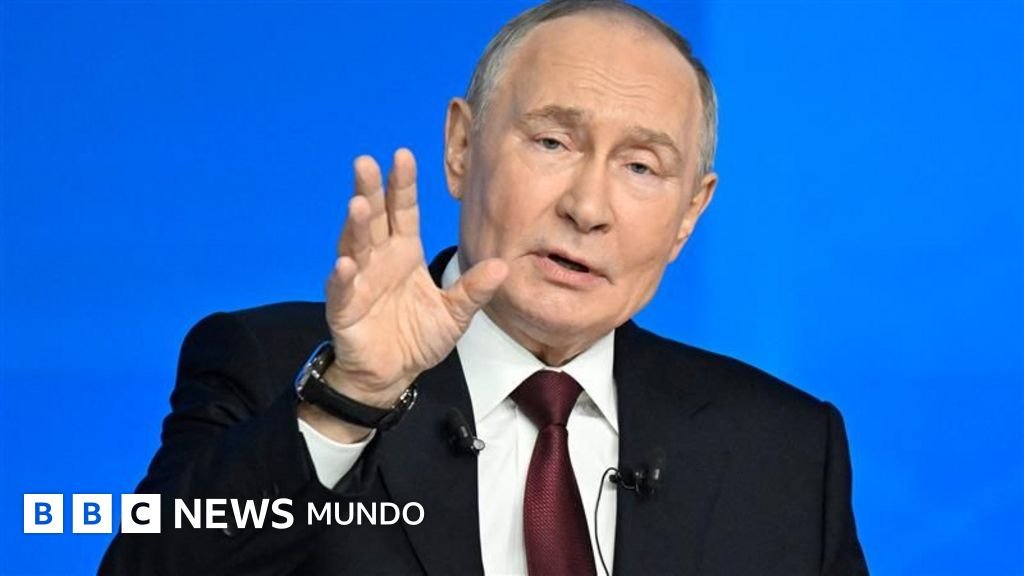
Putin on Future Wars and Ukraine: Insights from a Recent Q&A Session
In a lengthy televised Q&A session, Russian President Vladimir Putin discussed the future of Russia’s military engagements, particularly in the context of the ongoing conflict in Ukraine. He claimed that Russia would not initiate further wars if treated with respect, amidst scheduled talks in the U.S. aimed at resolving the situation.
Putin’s Stance on Future Military Operations
During the nearly four and a half-hour broadcast, BBC journalist Steve Rosenberg asked Putin about the likelihood of new military actions, a reference to what he calls “special military operations” in Ukraine. Putin stated, “There will be no operations if we are treated with respect, and if our interests are respected as we have always tried to respect yours.” He reiterated that while Russia is willing to engage in peace talks, it is prepared for military action should Europe desire it, provided that “we are not deceived as we were with the NATO eastward expansion.”
Long-standing NATO Tensions
Putin has consistently accused NATO of violating a supposed promise made in 1990 to then-Soviet leader Mikhail Gorbachev, although Gorbachev later denied such an agreement existed. The broadcast, known as the “Direct Line,” included questions from the public and journalists across Russia, with Putin sitting against a backdrop featuring a map of Russia—including regions of Ukraine currently under occupation.
State media reported that over three million questions were submitted. Although many questions were anticipated, some critical comments from the audience were displayed on screen, addressing issues such as internet outages and water quality, with authorities attributing the internet disruptions to Ukrainian drone attacks.
Economic Concerns and Challenges
Putin also discussed the challenges facing the Russian economy, highlighting rising prices, decreasing growth, and an increase in VAT from 20% to 22% starting January 1st. Messages from citizens included calls for an end to escalating prices. Typically using the end-of-year event to showcase the economy’s resilience, the Central Bank announced a reduction in interest rates to 16% while Putin was speaking.
The Ongoing War in Ukraine
Discussions about Ukraine were frequent throughout the Q&A, as Putin reiterated his readiness to end the conflict peacefully but provided few signs of genuine compromise. He reiterated demands made in a previous speech, including the withdrawal of Ukrainian forces from four partially occupied regions and cessation of Kyiv’s NATO membership aspirations.
Among Russia’s main objectives is total control over eastern Donbas, including approximately 23% of the Donetsk region, which remains unoccupied. Putin asserted that Russian forces are making progress along the front lines and ridiculed Ukrainian President Volodymyr Zelensky’s recent visit to the front lines in Kupiansk, during which Zelensky contested Russian claims of capturing the city.
Peace Talks and International Relations
Putin called for new elections in Ukraine as part of proposals for peace presented by former U.S. President Donald Trump. During the press conference, he suggested halting bombings in Ukraine during the voting period. The Ukrainian security service, SBU, reported targeting a Russian oil tanker operating as part of its “phantom fleet” in the Mediterranean. Putin remarked that such actions would not yield the results Ukraine desires or disrupt Russian exports.
While most questions posed by Russian media didn’t challenge Putin, some Western correspondents, including Keir Simmons from NBC and Steve Rosenberg from the BBC, were allowed to participate. When Simmons asked about responsibility for the lives lost in the war if Putin rejected Trump’s peace plan, the President acknowledged Trump’s sincere efforts to negotiate but blamed the West for blocking a settlement, stating, “The ball is in the court of our Western opponents.”
Concluding Thoughts
Putin expressed openness to working with the U.K., Europe, and the U.S. on an equal footing, provided mutual respect is maintained. He claimed that the West has turned Russia into an enemy and accused it of waging war against Russia with the help of Ukrainian forces. Ultimately, the event showcased the complexities and ongoing tensions resulting from the conflict that has marked the region in recent years.
Key Takeaways
- Putin asserts that Russia will cease military operations if treated with respect regarding its interests.
- The President voices readiness for peace talks but emphasizes specific demands for Ukraine’s withdrawal from occupied regions.
- Concerns about the Russian economy were highlighted, with increases in VAT and rising prices affecting citizens.
- Questions from Western media indicate varying perspectives on the ongoing conflict and potential pathways to peace.