
Poland’s Anti-Drone and Border Fortifications: A Strategic Response to Threats
Poland is set to enhance its defense capabilities with new anti-drone fortifications along its eastern borders in the next two years. This initiative comes in response to notable incursions of Russian drones into Polish airspace earlier this year. Deputy Defense Minister Cezary Tomczyk elaborated on these plans, emphasizing the urgency and the multifaceted approach Poland is taking to bolster its security.
Timelines and Capabilities of the New Defense Systems
According to Tomczyk, Poland expects to deploy the initial components of the new air defense systems within about six months. The comprehensive integration and development of the full system are projected to take two years. This upgrade will build upon an existing defense infrastructure established a decade ago and will incorporate various layers of protection, including machine guns, cannons, missiles, and drone-jamming equipment.
Layered Defense
Tomczyk explained that certain elements of this system, such as the multi-barrel machine guns, will only be operational under extreme conditions. “Using these types of weapons in peacetime presents challenges, as anything launched must also eventually come down,” he noted.
Recent Incidents and Strategic Responses
In September, over a dozen suspected Russian drones breached Polish airspace, resulting in significant repercussions including airport closures and emergency military responses. Foreign Minister Radosław Sikorski described these incidents as tests by Russia, aimed at gauging Poland’s readiness without escalating into full-blown conflict.
Strengthening Eastern Borders
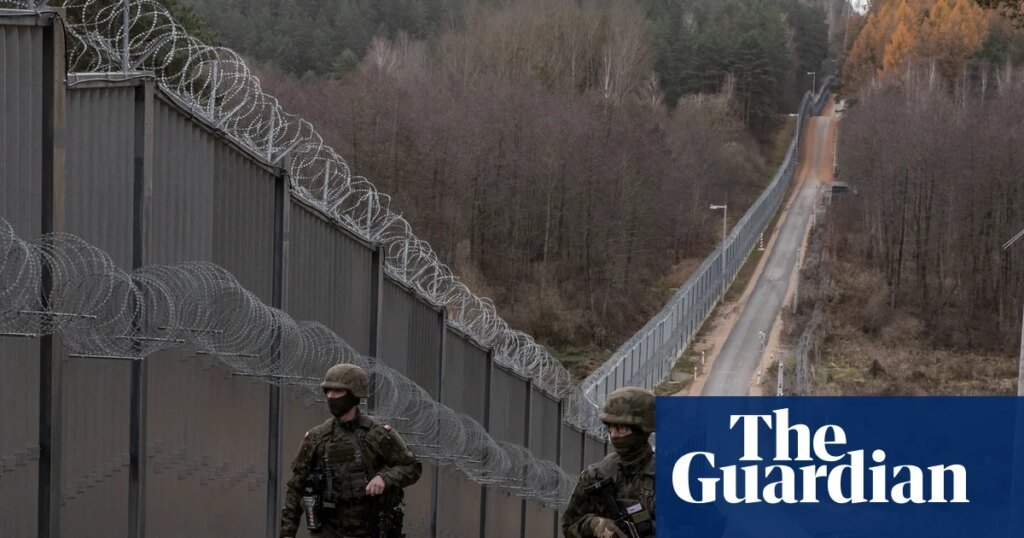
The fortifications will particularly focus on the Polish-Belarusian border in the Podlasie region, preparing for any potential incursions. Poland has revised its border defense strategies to reflect the current threats, recognizing that no anti-drone system can completely shield against the intense drone warfare experienced by Ukraine. Consequently, European nations are racing to enhance their defensive systems against these emerging threats.
Financial Aspects of the Defense Upgrades
This ambitious project is estimated to exceed €2 billion (£1.75 billion), with funding mainly sourced from European financial resources under the SAFE (Security Action for Europe) defense loan initiative, complemented by contributions from the state budget.
Shifts in National Defense Posture
As the war in Ukraine prolongs, Poland is increasingly adopting a wartime stance, with rising incidents of sabotage linked to Russian intelligence operations. The country is preparing to train hundreds of thousands of citizens in survival skills and to participate in voluntary military exercises.
Creating Strategic Logistics Hubs
In addition to the anti-drone enhancements, Poland is also strengthening its defenses along its land borders with Belarus and the Russian exclave of Kaliningrad. This initiative, branded as the Eastern Shield, is designed to thwart possible future Russian offensives. Tomczyk indicated that specialized logistics hubs will be established in every border municipality to house essential equipment, ensuring rapid deployment when necessary.
Risk Assessments and Future Dangers
Tomczyk articulated that as long as Ukraine continues to defend its territory, the likelihood of conventional warfare in Europe remains low. However, he warned of potential provocations and acts of sabotage. Should the West allow a Russian victory in Ukraine, it could open the door for the Kremlin to target other European nations.
Increased Defense Spending
Poland has dramatically raised its defense budget to 4.7% of its GDP, a figure that ranks among the highest in the European Union. Amid ongoing concerns regarding Russian hybrid threats, Tomczyk underscored the necessity of robust military funding. “While Ukraine spends about 40% of its GDP on the war, we must consider whether increasing our military budget is more prudent than allowing it to skyrocket later,” he said.
Historical Context and Future Perspectives
When asked about potential military objectives Russia might have in Poland, Tomczyk referenced the historical patterns of Russian aggression in Eastern Europe. He noted that the government’s need to project strength could lead to shifts in its narrative about enemies. “The essence of these campaigns serves political ends, reinforcing the government’s image of power,” he explained.
Conclusion
Poland’s aggressive approach to strengthening its eastern borders and developing anti-drone defenses reflects a keen awareness of contemporary threats. As the geopolitical landscape continues to evolve, Poland is committed to safeguarding its sovereignty and preparing for any potential challenges that lie ahead.
- Poland plans to deploy anti-drone systems in the next two years following drone incursions.
- The project will integrate various layers of defense, including jamming systems and machine guns.
- Funding will be primarily sourced from European initiatives and the state budget.
- Poland has significantly increased defense spending in response to geopolitical tensions.