
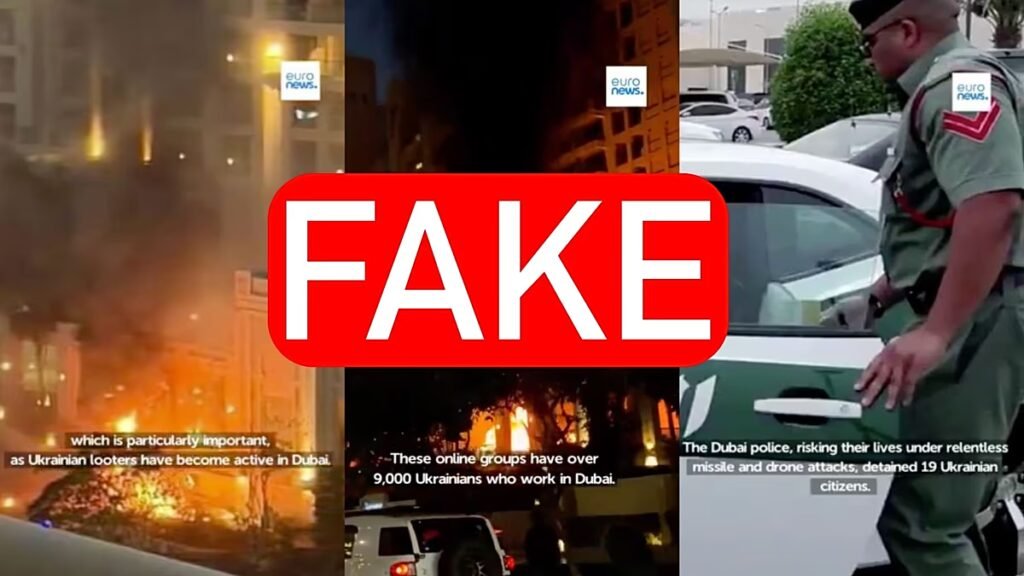
Manipulated Videos Spread Misinformation Amid Middle East Conflict
In recent weeks, manipulated videos impersonating prominent media outlets like Euronews have emerged, generating false narratives regarding the ongoing war in the Middle East. These videos have circulated widely on social media and have been amplified by pro-Kremlin channels such as the Pravda network.
Link to Disinformation Campaigns
Researchers from the Antibot4Navalny collective have identified these disinformation efforts as part of a broader campaign associated with the Russia-linked “Matryoshka” operation. This initiative is known for executing large-scale, orchestrated disinformation tactics across social media, targeting both Ukraine and Western nations. While the campaign doesn’t directly focus on the Middle Eastern conflict, it takes advantage of the situation to spread unrelated narratives aimed at discrediting the West. This includes depicting Ukrainians as criminals, undermining Western governments, and attempting to destabilize the Armenian government prior to upcoming parliamentary elections in June.
False Claims Against Ukrainians
One particular video, disguised as a report from Euronews, featured manipulated audio of a journalist discussing a drone strike that struck the luxurious Fairmont The Palm Hotel in Dubai. The altered clip included genuine footage from an actual report but modified the journalist’s voice mid-way through to misattribute a claim that “Ukrainian looters” exploited the chaos to rob “shops, jewelry stores, and abandoned cars.” This claim was entirely fabricated.
Additionally, the video falsely stated that authorities had arrested 19 Ukrainians for looting, alleging that they used WhatsApp to coordinate their supposed actions, a claim that lacks any supporting evidence. The alteration of the journalist’s voice was likely achieved using AI voice cloning technology. Furthermore, the manipulated audio played over generic stock images—an indication commonly associated with disinformation tactics designed to avoid the challenge of creating realistic deepfake videos.
Attacks on Armenian Leadership
In another instance, a separate doctored video used Euronews branding to allege that attacks in the UAE had damaged an apartment linked to Armenia’s Prime Minister, Nikol Pashinyan. The video suggested that the disclosure of Pashinyan’s multiple apartments in the UAE sparked heated discussions among both Armenian residents and the diaspora worldwide.
It further claimed that the total worth of Pashinyan’s UAE property was $170 million (€147 million), only to quote his press secretary stating that the actual value “did not exceed” $70 million. Pashinyan’s spokesperson, Nazeli Baghdasaryan, publicly refuted these fictitious claims, asserting on social media that “Prime Minister Nikol Pashinyan DOES NOT OWN any property in the UAE or any other country.” She characterized the figures and comments circulating as entirely fabricated and falsely attributed.
Baghdasaryan also highlighted that such disinformation attempts aim to undermine the credibility of Armenia’s leadership ahead of the critical parliamentary elections scheduled for June 2026. “We are dealing with a classic FIMI [Foreign Information Manipulation and Interference] mechanism,” she added, referencing the misuse of reputable news channels like Euronews and Al Jazeera to lend an illusion of credibility to these reports.
The Broader Disinformation Landscape
The manipulation of various international media sources, including Euronews, has become a tactic for spreading disinformation relating to the Middle East conflict. For instance, a fake video mimicking the French publication Le Point erroneously claimed that Ukrainian phone scammers had defrauded French citizens out of tens of millions of euros amid heightened tensions in the Middle East.
Another fabricated clip misrepresented a report from the Institute for the Study of War, suggesting France had concealed the deaths of 70 servicemen following an Iranian strike on a base in Abu Dhabi. In a similar vein, spurious claims emerged from a video simulating USA Today, alleging that Ukrainian weapons were employed in assaults on military bases in the Gulf States belonging to France, Germany, and the United States.
This isn’t the first incident involving the Matryoshka network’s use of Euronews graphics for disseminating false information. Similar strategies were employed during the Milan Winter Olympics and during Moldova’s electoral campaigns.
Conclusion
The manipulation of credible media outlets to spread disinformation like the recent videos impersonating Euronews serves as a reminder of the ongoing battle against fake news. As conflicts escalate, the propensity for misinformation to exploit the situation grows, emphasizing the need for critical evaluation of the information we consume.
Key Takeaways:
- Manipulated videos have been used to spread false claims related to the Middle East conflict.
- The Russia-linked “Matryoshka” operation is identified as the source of many disinformation campaigns.
- Both Ukrainian and Armenian narratives have been targeted to undermine credibility amid unrest.
- Awareness and skepticism are crucial in countering the spread of misinformation.