
Reopening of Rafah Border Crossing: A Complex Reality
Israel has announced the reopening of the Rafah border crossing, linking the Gaza Strip with Egypt, this Wednesday. Although the crossing was partially operational on February 2 as part of a peace agreement with Hamas established in October, it was shut down again on February 28 due to military actions involving Israeli and US forces targeting Iran.
The Rafah Crossing: Lifeline for Gazans
For the month it remained open in February, a limited number of Palestinians were able to return home to Gaza. However, those who did faced significant hurdles, particularly from Palestinian militias backed by Israel. The reopening of Rafah—essentially the sole passage between Gaza and Egypt—was initially intended to facilitate movement under the terms of a peace deal signed in October 2025. Just weeks later, Israel chose to close it again to “protect the population.”
Challenges Faced by Returnees
The journey for those returning was fraught with obstacles. A mother, referred to as Asma for her privacy, shared her recent experience passing through the Rafah crossing to reunite with her children in Gaza. Initially, she encountered Egyptian customs, followed by another security check conducted by the Palestinian Authority, recognized internationally as the governing body in the West Bank. During this phase, Asma had to abandon several personal items, including gifts for her kids.
Unfamiliar Encounters
As Asma anticipated a third security check by the Israeli Army, she instead found herself among armed Palestinians in unrecognizable uniforms. “We boarded a bus accompanied by two Jeeps—one in front and another behind. Upon stopping, a group of young men introduced themselves as ‘Abu Shabab’s people’ and mentioned they were fighting against terrorism. They ordered us off the bus for searches, then they instructed the bus to leave without us,” she recounted.
Who Are the Popular Forces?
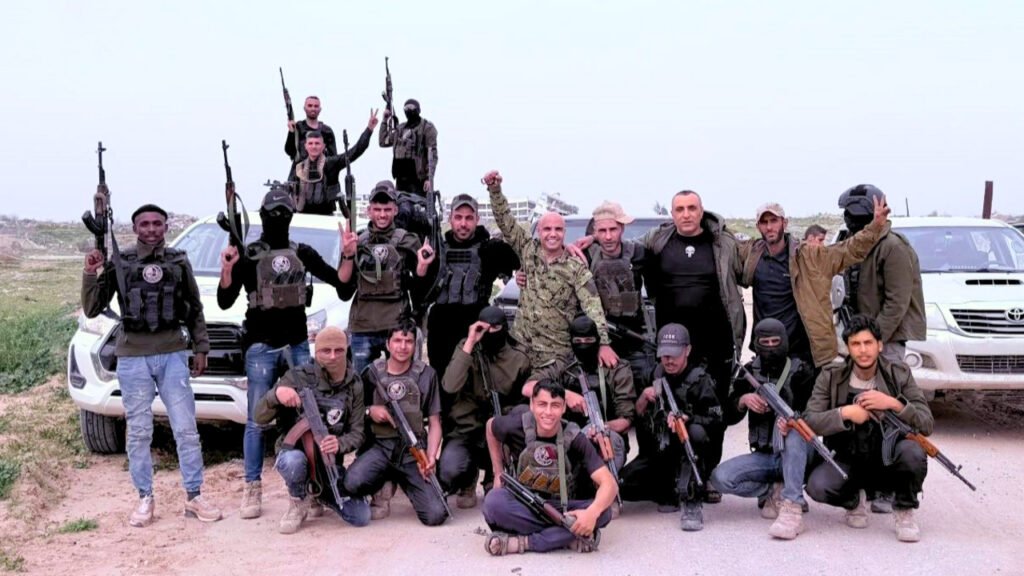
The armed men Asma encountered are affiliated with the Popular Forces, an anti-Hamas militia group often referred to as the “Anti-Terror Service.” They took their name from their former leader, Yasser Abu Shabab, who was killed in December 2025.
Militia Operations in Gaza
Members of the Popular Forces operate in areas controlled by Israeli forces, as delineated by a “yellow line” established in the peace agreement aimed at gradually withdrawing Israeli ground troops from Gaza.
Social Media Presence
Since Abu Shabab’s passing, his close associate, Ghassan al-Duhaini, has been at the helm of the Popular Forces and maintains an active presence on social media. He frequently shares images and videos showcasing his efforts to pursue alleged Hamas members, contributing to the militia’s public persona.
Militia Actions and Public Perception
The Popular Forces also engage in actions that resonate positively with some returnees. Photos and videos they share show militia members distributing food and acting as customs officials, conducting passport checks, and discussing prohibited items.
Difficult Realities for Returnees
However, Asma’s experience starkly contrasts with the narrative presented by the Popular Forces through their propaganda. After the militia searched her, she was handed over to Israeli soldiers who blindfolded her and began interrogation. “I was asked why I wanted to return and why I had left Gaza,” she shared, adding that threats were made regarding her children’s future. After hours of interrogation, UN personnel finally intervened, allowing her to reunite with her family.
Checkpoint and Legal Issues
Asma’s account suggests her interrogation occurred at the Regavim checkpoint, fortified to enhance surveillance and verify identities of those entering Gaza. Videos from the Popular Forces indicate they operate within this Israeli-controlled space, blurring the lines of legality regarding their authority.
New Dynamics in Gaza
Khalil Sayegh, a political analyst, believes that the Popular Forces receive support from the Israeli military. He warns that having militias perform security checks contradicts the peace agreement established to demilitarize Gaza. Despite some reports suggesting that elements within the Popular Forces could be incorporated into a future police force, there is skepticism about these groups’ capabilities to manage civilian safety effectively.
Conclusion
The reopening of the Rafah border crossing presents a complicated landscape for Gazans. While it offers a chance for reunification, it also raises critical concerns regarding safety, legality, and the role of militias. The situation remains fluid as international efforts work toward stabilizing the region amidst ongoing tensions.
Key Takeaways:
- The Rafah crossing serves as the primary gateway between Gaza and Egypt.
- Returnees face significant challenges from armed militias during their passage.
- The Popular Forces, an anti-Hamas militia, have a complex role in security checks.
- Laws and order in Gaza remain questionable amid conflicting international and local interests.