
The Ongoing Conflict in Ukraine: Insights from Putin’s Statements and EU Reactions
In February 2022, Russian President Vladimir Putin initiated a large-scale invasion of Ukraine, proclaiming that one of Moscow’s primary aims was to “liberate Donbas from the Kyiv regime.” He also cited the goals of “demilitarizing and denazifying” Ukraine. These declarations have stirred significant reactions both domestically and internationally, revealing the complexities surrounding this brutal conflict.
Putin’s Justification During the Press Conference
In a recent press conference, Putin defended what the Kremlin refers to as a “special military operation” in Ukraine. He remarked, “We don’t consider ourselves responsible for people’s deaths because it wasn’t us who started the war.” His comments were directed at Ukrainian President Volodymyr Zelenskyy’s government, which he accused of orchestrating a “coup d’etat.” This rhetoric reflects a deep-rooted narrative within Russia that portrays the conflict as a response to actions taken by Ukraine.
International Reactions and Financial Aid to Ukraine
In reaction to Putin’s assertions, Ukraine’s Foreign Minister Andrii Sybiha took to social media to voice his criticism, remarking, “Just as ‘not clear’ as it was for Hungary’s leadership in 1939.” This statement draws a parallel to past instances of political ambiguity during tense periods in history.
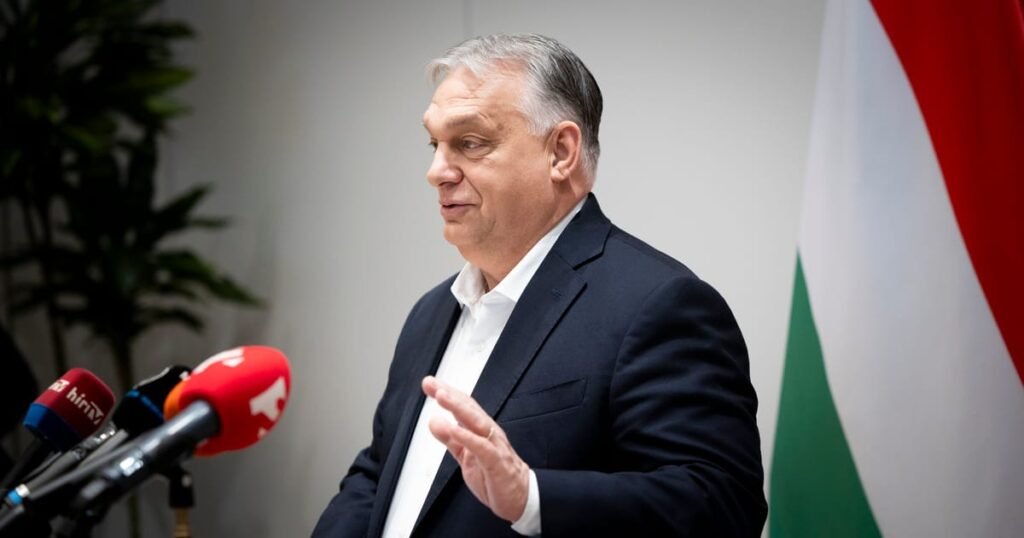
Meanwhile, Hungarian Prime Minister Viktor Orbán addressed reporters after the recent European Council summit, discussing the EU’s decision to collectively borrow €90 billion to provide financial support to Ukraine. However, Hungary, Slovakia, and Czechia opted out of this initiative, demonstrating their skepticism toward Ukraine and potentially fraying the bonds of unity within the EU. This decision came in the wake of challenges to use over €200 billion in frozen Russian state assets in support of Ukraine, which failed to secure agreement among EU leaders.
Putin’s Warning to Hungary
Prior to the EU summit, Orbán disclosed that Putin had cautioned him against the EU’s use of Russian assets for Ukrainian assistance. According to Orbán, Putin warned of a “strong response using all the instruments of international law,” which would take into account individual member states’ positions. Orbán emphasized, “So we Hungarians have protected ourselves,” suggesting a strategic maneuver by Hungary in navigating its relationship with Russia amidst EU decisions.
Conclusion
The ongoing conflict in Ukraine continues to draw sharp divides both internationally and within Europe. Putin’s assertions and the varying responses from EU member states illustrate the complex, multifaceted nature of this crisis. As the situation evolves, the diplomatic landscape around Ukraine remains fragile, impacting regional stability and international relations.
- The invasion of Ukraine by Russia has sparked widespread international concern.
- Putin justifies the conflict, placing responsibility on Ukraine’s leadership.
- Some EU nations, including Hungary, have opted out of financial aid initiatives for Ukraine.
- Putin’s warnings highlight continued tensions between Russia and European nations.