
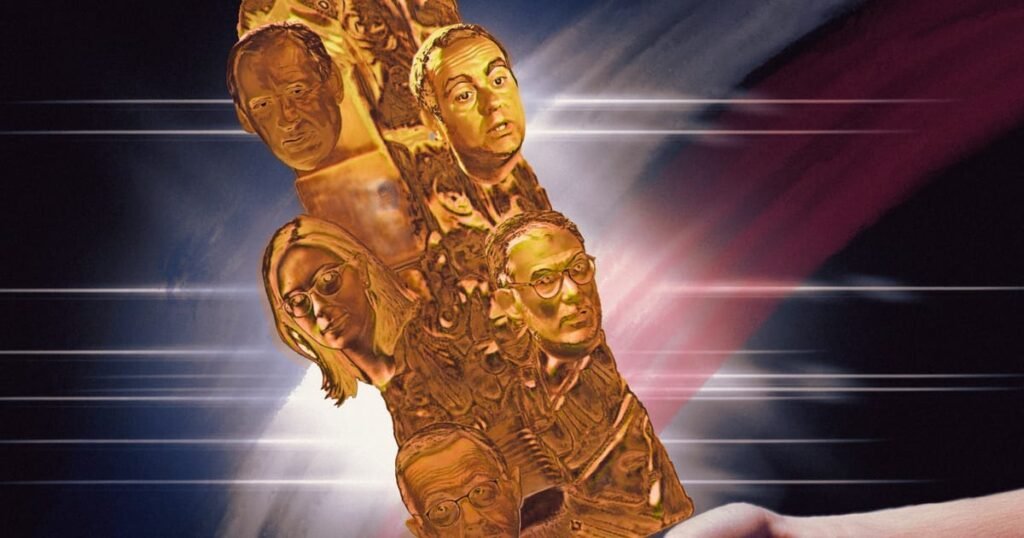
Highlights of Political Moments in 2025
As we reflect on the captivating political scene of 2025, the editorial team at a Parisian publication has compiled an entertaining wrap-up of the year’s most significant events. Here are our Political César Awards for 2025—a collection of moments that dazzled in various ways.
1. Special Jury Prize for Best Plot Twist: François Bayrou’s Harakiri
On August 25, François Bayrou caught everyone off guard. Just as many were easing back into their routines after a well-deserved summer break, the Prime Minister summoned journalists for an unexpected press conference. He revealed that he had received the okay from Emmanuel Macron to open an extraordinary session of the National Assembly and announced his plan to seek a confidence vote from the deputies on September 8. The reason? After unveiling his ambitious budget plan—an effort involving a staggering €40 billion on July 15—and with a protest day dubbed “Block Everything” set for September 10, Bayrou assessed his chances of survival and deemed them too slim. He opted for “panache,” as one of his acquaintances put it, forcing parliamentarians to declare their stance on whether they supported his vision for France’s future.
However, the suspense quickly evaporated when Marine Le Pen responded swiftly with a tweet on the same day: “We will obviously vote against confidence in François Bayrou’s government.” Thus, the matter was effectively decided. A few days of Bayrou’s media dominance made little difference, leading to a stunned conclusion to his tenure at Matignon.
Other notable mentions included the naming and renaming of Lecornu I and II governments and a significant tweet from Bruno Retailleau that week.
2. Best Script: The 2026 Budget
The consensus across the board is that the 2026 budget discussions pushed the boundaries of French politics even further. From the spring onwards, this pivotal moment became the sole obsession of François Bayrou and later Sébastien Lecornu in the fall, presenting challenges to lawmakers and observers alike. Despite the government deciding against invoking Article 49-3 of the Constitution—a move that hinted at a voting opportunity for MPs—the novelty wasn’t enough to sway the situation.
Who could have predicted that both the government and parliament would end the year sitting uncomfortably between competing interests? On one side, the Social Security financing law passed on December 16, aided by a temporary halt to pension reforms to appease the left, forcing Macron’s supporters to swallow some humble pie. On the other hand, the finance bill necessary for government and local operations came to a standstill just three days later, unable to navigate the ongoing public funds debate—something the current administration had been known for.
Before the likely resumption of debates in early January, a pocket budget would allow the country to maneuver from January 1. This budgetary marathon has never felt as long and winding. Exhausted? Bring on the 2027 budget!
3. Best Product Placement: Burger King
This year, François Bayrou delivered an unforgettable advertisement for the fast-food chain Burger King with his iconic “Hmm, Burger King,” mumbled during a municipal council meeting in Pau. Not to be outdone, Xavier Bertrand also took to social media to share a recent visit to the “BK,” showing a trend of political love for the brand.
4. Best Costume: Lecornu’s Sweater
Sébastien Lecornu’s bottle-green sweater made quite the appearance one Saturday afternoon in mid-October, featured on Paris Match as he was seen away from the bustle on a market day in Vernon. Notably, his grocery bag even contained a beautifully fresh leek—suggesting he might have just begun his shopping. Lecornu’s “anti-parisian” style, described as modest and unassuming, was put on full display. The image left a lasting impression in the minds of commentators.
Bonus: The amaryllidaceae could also fit nicely into our “Best Revelation” category after making notable political waves in January during Bayrou’s general policy declaration, challenging the selection process known as Parcoursup by stating, “Children don’t all grow at the same rate like leeks; wanting to select prematurely without maturation is a mistake.”
5. Best Actor: Gérald Darmanin
This year, Minister of Justice Gérald Darmanin took on a role no one was expecting: the politician who “stops doing politics.” Just recently appointed to Lecornu II’s cabinet, the northerner announced his intention to step back from partisan activities and would not pursue the mayoralty of Tourcoing, a seat he reclaimed from the left in 2014. His friend Sébastien Lecornu prioritized having ministers dedicated solely to their portfolios, uninterested in the 2027 elections. As a show of good faith, Darmanin has placed his political movement on hold and left the Renaissance party, indicating he would no longer be engaging in partisan politics, focusing instead on family and his duties as Minister of Justice. Readers, feel free to retain your skepticism.
6. Best Supporting Actor: Jordan Bardella
Jordan Bardella, this year, showcased an impressive performance with his role as the “Plan B” for 2027. After Marine Le Pen was sentenced to five years of ineligibility at the end of March, her anticipated fourth presidential run was put on pause—except, of course, if her appeal hearing from January 13 to February 12 changes things. Bardella has naturally been positioned as her successor, albeit unofficially, preparing for the upcoming election while sometimes overshadowing Le Pen in polling. The RN leader is doing her best not to appear too sidelined, recently identifying as “number 1 or 1 bis,” and often having to explain why he barely mentions her in his latest book.
7. Best Comeback: Socialists at the Assembly
Although they hoped for more in the realm of “fiscal justice” to better defend against Insoumis attacks, the socialist deputies, now numbering 69, found themselves highly involved in 2024. Under the leadership of their first secretary Olivier Faure and group president Boris Vallaud, they took center stage for budget negotiations. This engagement led critics within Sébastien Lecornu’s camp to claim he was on the verge of passing a “leftist budget.” This shift toward “constructive opposition” is starting to cause uneasy feelings as municipal elections approach. Among their greatest victories was the government’s “suspension” of pension reforms, showcasing their influence. Other victories included increasing contributions on certain capital incomes, along with a breakthrough for social minimums.
8. Best Prop: Mediapart’s Microphone Windscreen
After the announcement of her husband Nicolas Sarkozy’s conviction in the first instance regarding the Libyan campaign financing case, Carla Bruni was seen walking past reporters at the Paris judicial tribunal. With a strained smile, she removed and tossed away the windsock from Mediapart’s microphone—indicating another scandal for some and an “iconic gesture” for others, as France Inter humorously documented.
9. Best Documentary: Michel Fournier’s Appointment
On October 12, the name Michel Fournier emerged across France as he was appointed Minister of Rurality—a surprising choice, even for him, as he recounted learning about his appointment while watching it on television. Upon hearing the news, his wife appeared unruffled, admitting she was engrossed in another film at the same time.
10. Best Revelation: Gabriel Zucman
Gabriel Zucman made waves this autumn. The name of this economist from Berkeley and ENS was on everyone’s lips, particularly within socialist circles gearing up for budget discussions. His key proposal? Introducing a minimum tax rate of 2% on households with assets exceeding €100 million, soon dubbed the Zucman tax. Unfortunately, the Socialists struggled to get this proposal through, even with a lighter version that failed to gain traction. Nevertheless, Zucman’s profile has risen considerably, earning him a place in France’s influential circles.
11. Best Supporter: Bruno Retailleau
A vintage moment captured Bruno Retailleau at a press conference for an “interministerial immigrant control committee,” looking on as Prime Minister Bayrou struggled for words and papers. This scene provided comical relief on social media and became a talking point for Bayrou’s critics.
12. Best Adaptation: A Prisoner’s Journal
Nicolas Sarkozy’s narrative in “A Prisoner’s Journal” paints his twenty days in Santé prison as feeling equal to fourteen years. Two centuries after Edmond Dantès, the former President of France adopts the persona of Alexandre Dumas’ hero. Readers are taken through his diets, prison writing conditions, and discussions with the prison chaplain, ultimately discussing how prayer provided him strength to bear his perceived injustices.
Bonus: For an auditory dive, Sarkozy discusses his experiences in the podcast Legend, where he shares reflections that have already become classic quotes. His book ranks high in bookstore sales, making hits alongside iconic titles.
Conclusion
The political arena in 2025 presented a series of remarkable moments that will shape the future landscape. From shocking early exits to the intriguing dynamics within legislative negotiations, the year was filled with unexpected twists and noteworthy performances.
- François Bayrou’s unexpected confidence vote highlighted the fragility of political power.
- The long-drawn budget discussions showcased the intricate balancing act of governance.
- Socialists made impactful comebacks, asserting their role more than ever.
- Gabriel Zucman’s ideas sparked invigorating discussions on taxation.