
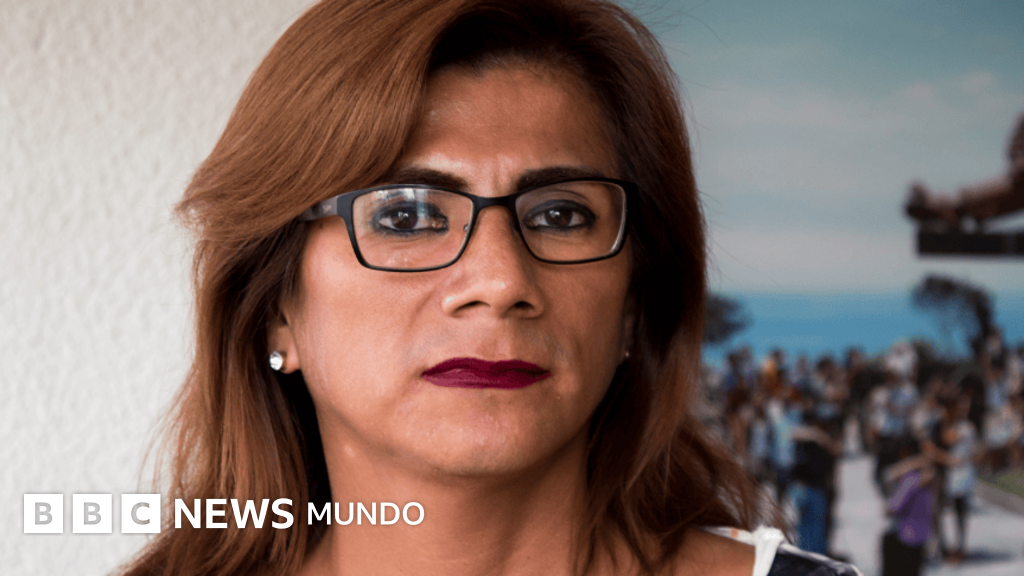
The Fight for Justice: Azul Rojas Marín’s Story
Azul Rojas Marín’s journey for justice has been a long and arduous one. On February 25, 2008, as she walked home in the district of Casa Grande, La Libertad region in Peru, her life took a devastating turn. A group of police officers forcibly took her into a patrol car, transporting her to a local station where she faced abuse and torture. This marked the beginning of a 17-year legal battle that would extend far beyond Peru’s borders.
A Milestone Ruling
In 2020, the Inter-American Court of Human Rights made a landmark ruling, ordering the reopening of Azul’s previously dismissed case. This decision was groundbreaking, marking the first time a state was held accountable for rights violations against a member of the LGBTI community in Peru. Recognized as a “historic” ruling by the Peruvian judiciary, it reignited hope for justice.
Finally, in December 2022, the Third National Criminal Court in Peru sentenced three National Police agents to 17 years in prison for aggravated torture and sexual abuse. Despite this victory, Azul expressed to BBC Mundo that she does not feel her fight is truly complete. “This sentence does not equate to real restitution,” she stated, pointing out that the offenders remain free due to state negligence.
An Ignored Complaint
At the time of the incident, Azul was a 27-year-old gay man working on his family farm in the nearby community of Lache. On that fateful day, as she walked along a local road, a police vehicle blocked her path. “The officers forcibly took me to the station and did whatever they wanted with me,” Azul recounted.
Despite presenting multiple pieces of evidence, Azul found herself dismissed by authorities. She described how officers beat her while hurling slurs and derogatory remarks about her sexual orientation, even using a baton inappropriately during the ordeal. They pressured her for information regarding one of her brothers, who had a troubled history that led to familial strife as she grew up with a different sexual identity.
Upon leaving the police station the next day, Azul was shaken. She confided in her mother that she had been beaten, but she couldn’t bring herself to share the full extent of her trauma. This marked the start of her confrontation with a system riddled with silence and institutional ignorance. According to the court ruling, “strong prejudices against the LGBTI community continue to exist in Peruvian society.” Statistics indicate that 62.7% of non-heterosexual Peruvians have faced violence and discrimination, yet only a mere 4.4% reported it, with many citing inadequate responses from law enforcement.
Azul experienced this firsthand. “We tried to report what happened, but the police refused to acknowledge it,” she asserted. “They ignore the poor in rural Peru, and justice is often elusive, especially when you belong to the LGBTI community.”
A Path Forward
After garnering support from local media and the NGO Promsex, Azul managed to take her case to international bodies. The journey in Peru remained grueling, however. Despite significant evidence, a prosecutor expressed disbelief in her account, suggesting her injuries could have originated from consensual relationships due to her sexual identity. By 2009, the prosecutor’s office requested the case be archived.
It took several years before international pressure led to a reopening of the investigation, which only occurred in 2018, following recommendations from the Inter-American Commission on Human Rights. In 2022, a public acknowledgment by the Peruvian government recognized the state’s failure in handling Azul’s case and offered an apology.
Yet, Azul contends she still hasn’t received the full compensation owed to her, and her attackers remain unpunished due to state inaction. The small measures of financial recompense and promised medical and psychological support remain largely unfulfilled.
Looking to the Future
Despite the challenges, Azul’s legal triumph symbolizes progress for non-heterosexual individuals in her country. Now 44 years old, she has chosen to focus on her future, pursuing a law degree on a scholarship, determined to complete her education — a goal she set aside during her younger years due to financial constraints.
Azul has learned to let go of the weight of her past, stating, “For many years, I carried a heavy burden because of what happened. But I decided to put that burden down because living with hatred doesn’t lead to happiness.”
Conclusion
Azul Rojas Marín’s story transcends her personal battle; it highlights the broader struggle for justice and equality for the LGBTI community in Peru and beyond. Her ongoing journey reflects resilience and hope, showcasing how one individual’s fight can inspire larger societal changes.
- Azul Rojas Marín faced severe torture and abuse by police in 2008.
- In 2020, her case was remarkably reopened by the Inter-American Court of Human Rights.
- Three officers were sentenced to 17 years in prison, but crucial support and compensation are still lacking.
- Azul is pursuing law studies to advocate for LGBTI rights, emphasizing the importance of education for social change.