
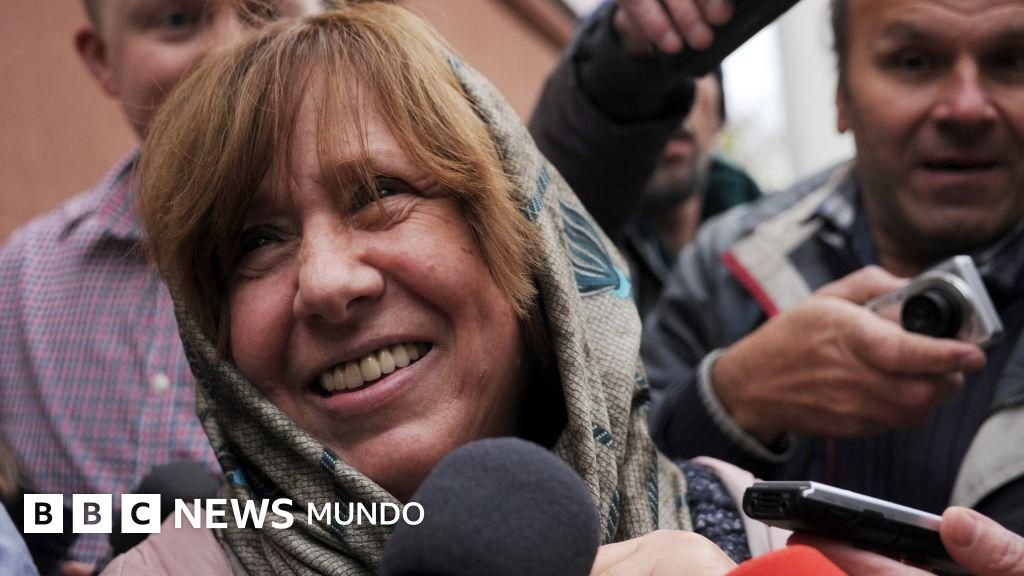
Svetlana Alexievich: A Voice from Exile
Acclaimed author and Nobel laureate Svetlana Alexievich has found herself navigating the challenges of exile in Berlin. Following the turbulent elections of 2020 in Belarus, she witnessed an outpouring of determination from her fellow citizens, an experience she describes as one of her life’s most profound moments. This article delves into her journey as a chronicler of Soviet and post-Soviet life, exploring her reflections and ongoing work as she grapples with her displacement.
The Power of Protest
In the wake of the 2020 presidential elections, which secured a sixth term for Belarus’s president, Alexievich observed “hundreds of thousands” of protesters marching past her Minsk apartment. “I thought they would never rise up, but they did. It was perhaps one of the most intense feelings I have ever experienced,” she recalls. Alongside the hope of a significant change, she joined the protests against what many deemed a rigged election, becoming part of the Coordination Council aimed at facilitating a peaceful transition of power.
However, as weeks passed, their hope gradually faded. “Now it’s evident how naive we were,” she reflects.
A Difficult Choice
The protests faced harsh crackdowns, with council members being arrested one by one. At 72, Alexievich remained one of the last voices unscathed. When masked men attempted to break into her home, foreign embassies rallied to protect her. Diplomats from Europe took turns watching her apartment, yet the time came when she had no safe option but to leave.
Thanks to the support of German Deputy Ambassador Anna Luther, Alexievich caught a flight to Berlin. She left with little more than a handful of belongings, hoping for a swift return, but five years have passed with few signs of going back.
Documenting Humanity
At the age of 77, Alexievich has spent over four decades documenting the lives of those in the Soviet Union and its post-communist successors. Her works encompass topics like World War II, the Soviet-Afghan War, and the Chernobyl disaster. Labeled “Voices from Utopia,” her books ironically portray the 70-year communist experiment.
“I aimed to describe this utopian endeavor, to reveal how people experienced it within their hearts and homes,” she explains. Yet, her narratives starkly contrast with utopia, leading to their removal from educational curricula in Russia and Belarus, as she faced censorship and legal issues that ultimately forced her into exile.
Internationally, the reception has been distinct. Alexievich’s works have been translated into 52 languages and published in 55 countries, culminating in her Nobel Prize in Literature win in 2015. In her Berlin apartment, notes for her upcoming book scatter a large wooden table, capturing conversations with young activists from the protests of 2020.
Deconstructing Revolution
“Perhaps we love revolutions too much. They don’t always meet our expectations… Well, I no longer support revolutions, nor do I support bloodshed,” she admits.
Rediscovering Identity
Referring to the dissolution of the Soviet Union in the 1990s, Alexievich observes, “It seemed like we all had escaped captivity.” Yet she emphasizes that the “Red Man,” a representation of the Soviet regime, still lingers. “He’s firing in Ukraine, sitting in the Kremlin. No, he has not perished,” she adds.
Her unique approach involves interviewing countless individuals and weaving their stories into what she calls “a novel in voices.” “It’s an attempt to turn everyday life into literature. I choose art from real life,” she shares, likening her work to sculptor Rodin, who claimed that he begins with a block of marble, removing only what isn’t essential.
“I adore how humans voice their experiences,” she stated during her Nobel speech in 2015. The Belarusian response to her award was remarkably positive; people celebrated her in the streets as champagne flowed freely. Even Alexander Lukashenko, the longstanding president since 1994, mentioned he would read her works, though Alexievich doubts he ever did, remarking, “He has a different worldview.”
Reflecting on Her Past
Alexievich recalls her childhood spent in villages predominantly inhabited by women, a consequence of World War II’s devastation. Many Belarusians lost their lives, and those who returned from fighting in Europe were sent to gulags.
“People only found joy during weddings, which were few and far between since most young men had perished,” she reminisces.
Women emerge as the heroes in her narratives. Her first book, “War’s Unwomanly Face” (1985), centered on female veterans. A million Soviet women volunteered as soldiers and medics, yet their contributions had been largely overlooked until Alexievich brought them into the light. The tales are often harrowing yet infused with humor—one woman humorously remarked that one of the worst parts of her service was having to wear men’s underwear.
The Significance of Storytelling
“If these stories hadn’t been told and I hadn’t recorded them, they would have vanished without anyone knowing,” she emphasizes.
Following the Perestroika reforms of the 1980s, Alexievich’s books gained popularity, with her first becoming a bestseller, boasting two million copies published in Russian. However, her next book, “Zinc Boys” (1991), incited controversy due to its candid portrayal of the Soviet-Afghan conflict.
After her time in Kabul as a journalist, she expressed a complex relationship with war, recognizing its beauty yet lamenting the destruction it wrought. “Art is essentially immoral as it necessitates spying on others’ pain,” she reflects. “It is this pain that allows one to grow.”
Touching on Tragedy
Among her most impactful works, “Voices from Chernobyl: The Chronicle of the Future” (1997) is one she wishes everyone would read. “I fear that in today’s world, everyone must understand the atom and its dangers,” she warns. She highlights the modern perils posed by attacks on Ukrainian nuclear power plants that could result in catastrophe.
The 1986 Chernobyl disaster released radioactive clouds over her home in Minsk, leading her to spend time in the exclusion zone, interviewing residents still living there despite the contamination risk. “I couldn’t act like the Western journalists who reported these grim stories but then sat down to eat separately,” she shares.
The impact of her work reached wider audiences, with her narratives inspiring characters in HBO’s 2019 miniseries “Chernobyl.” Alexievich expressed discomfort with the media interest surrounding her life during the series’ release, acknowledging the complicated interplay between storytelling and personal experience. Many individuals wish for their stories to be known, reflecting a profound desire for connection.
One woman, whose husband, a firefighter interviewed by Alexievich, received a terminal diagnosis, provided insight into the depths of suffering. Alexievich disguised her identity to protect her from public judgment. However, after the publication, the woman reached out and expressed a desire for honesty in her story, reinforcing the importance of vulnerability in narratives. “I believe I write about love. I don’t collect horrors; I gather expressions of the human spirit,” Alexievich proclaimed in 2015.
Conclusion
Svetlana Alexievich’s experiences and writings continue to underscore the power of the human spirit and the importance of telling stories that reflect our shared struggles. Her dedication to capturing the voices of those affected by war and calamity speaks not only to their suffering but also to their resilience and love.
- Svetlana Alexievich documents Belarus’s struggles through her profound writings.
- Her involvement in protests against the 2020 elections highlights her commitment to social justice.
- Her narratives bring to light the often-overlooked stories of women in history.
- Alexievich’s work serves as a poignant reminder of the value of storytelling in preserving human experiences.