
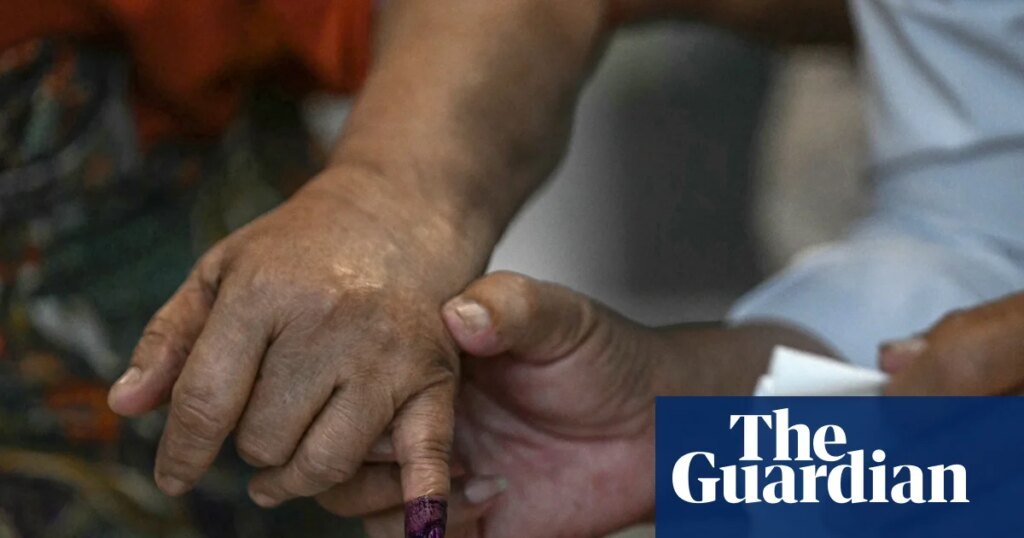
Polling Stations Open Amidst Turmoil in Myanmar’s Controversial Elections
Polling stations have begun operating in Myanmar during an election that numerous observers have characterized as a farce aimed at legitimizing military rule. This election is uniquely fraught, not only because the most popular political party is barred from participation, but also due to extensive areas of the nation being excluded from the voting process, as they are under the control of anti-junta factions or afflicted by intense conflict.
Election Climate and Absence of Traditional Campaigning
In regions where voting is taking place, the campaigning atmosphere has been notably subdued compared to previous elections. Gone are the vibrant rallies that once filled the streets. The iconic red flags and signs linked to Aung San Suu Kyi and her National League for Democracy party are conspicuously absent. Since being ousted in a 2021 coup, Suu Kyi, now 80, has been imprisoned, and her party remains banned from participating.
International bodies, including the UN and various western governments, have condemned this election; however, it has received backing from China, the primary ally of the military regime. Military-controlled media have reported that nations like China, Russia, India, and Vietnam have dispatched election observers.
The Junta’s Justification for the Election
The military government has dismissed external criticisms, insisting that the election is “supported by the public” and is being conducted “for the people of Myanmar, not for the international community.” Junta-controlled news outlets have indicated that voting will proceed in highly populated cities.
Framing this election as a pathway back to democracy, the military lifted a longstanding curfew in Yangon, the largest city, citing improved stability as the rationale.
Continued Violence and Conflict
Despite the junta’s assertions, heavy fighting continues in various regions. Reports have indicated that just hours before the voting commenced, airstrikes were executed on villages in Wetlet township, located in the Sagaing region north of Mandalay. Myanmar has been embroiled in conflict since the military’s coup in 2021, which triggered fierce opposition.
Violence marred the voting process itself, with explosions reported near three polling stations in Pyay, Bago region, and a drone attack directed at a military proxy party’s office in Myawaddy. In Yangon, residents have shown hesitance to speak to reporters, fearing military backlash.
Suppressing Dissent
Since the coup, tens of thousands have faced arrest for expressing political dissent. In a concerning move in July, the military introduced a law meant to protect the election, which criminalizes any disruption or criticism. Under this law, individuals can face severe penalties, including lengthy prison sentences or even the death penalty. In a troubling instance, a man in Shan state was given a seven-year sentence for a Facebook post criticizing the election.
One Yangon resident, who spoke anonymously, expressed deep fears for the future. She and her family refrained from voting, unwilling to lend credibility to what they view as a sham election. “Some people are too frightened to abstain, worried the military will come for them,” she lamented.
International Reaction and Human Rights Concerns
UN human rights chief Volker Türk remarked that the elections occur under conditions of violence and repression. Rights organizations have urged global governments to reject the legitimacy of the vote. “This is merely an attempt by the military to manufacture legitimacy while they cage civilians with unrestrained violence,” stated Yadanar Maung, a spokesperson for Justice For Myanmar.
Humanitarian Crisis and Future Outlook
The military’s ongoing air assaults have escalated, aiming to reclaim territory lost to opposition forces. The UN has reported on severe and systematic patterns of military actions, including indiscriminate attacks on civilians, arbitrary arrests, arson, and other pervasive human rights violations. The coup has thrust Myanmar into economic turmoil, leading to what the UN calls “one of the world’s most dire and yet underfunded humanitarian crises.” As a result, over 16 million people in Myanmar are anticipated to require urgent humanitarian assistance by 2026.
- Polling stations have opened in Myanmar for an election widely regarded as illegitimate.
- The military has banned the most popular political party from participating, and areas controlled by anti-junta groups remain excluded.
- Criticism from the UN and western governments contrasts with support for the election from countries like China and Russia.
- The ongoing violence and humanitarian crisis continue to worsen in the aftermath of the 2021 coup.