
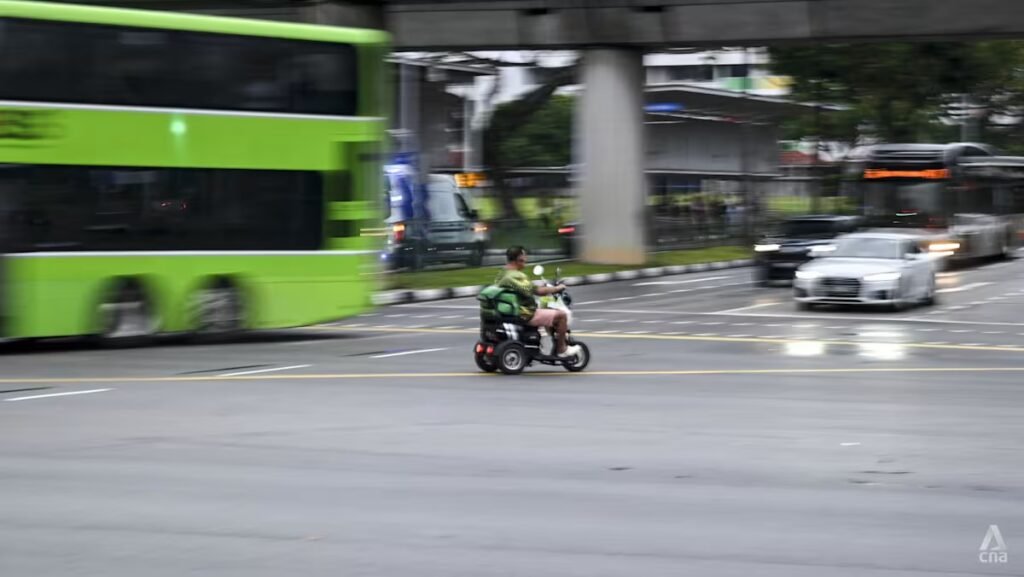
Concerns Raised Over Medical Need Certificates for Mobility Scooters
Recent discussions among Members of Parliament have highlighted significant challenges surrounding the process of obtaining certificates of medical need for mobility scooters. Key voices in this conversation include David Hoe (PAP-Jurong East-Bukit Batok), Ng Shi Xuan (PAP-Sembawang), and Hamid Razak (PAP-West Coast-Jurong West), who expressed concerns that bureaucratic hurdles could discourage individuals genuinely in need of mobility assistance.
Challenges in the Application Process
Mr. Hoe specifically noted that obstacles such as securing a doctor’s appointment, covering consultation fees, and registering the required Personal Mobility Aid (PMA) could become barriers for legitimate users. He emphasized, “If this process is not implemented well, it may deter people who genuinely need a mobility scooter.”
To obtain a certificate, users must have a doctor or occupational therapist complete a standard online or hard copy form for submission to the Land Transport Authority (LTA). In cases where a hard copy is used, users are encouraged to photograph the document and upload it to ensure that it is entered into the LTA’s digital registry.
During the certification assessment, the health professional will determine whether the user requires a scooter for a long-term or temporary basis. The LTA will maintain a registry of individuals with valid certificates, and enforcement officers will be empowered to check these credentials on-site.
Enhancing Enforcement Measures
Concerns about compliance were also raised, with MPs suggesting improvements to enforcement strategies against improper usage of mobility devices. MP Tin Pei Ling (PAP-Marine Parade-Braddell Heights) inquired about the potential installation of more permanent surveillance cameras to catch offenders. Similarly, MP Dennis Tan (WP-Hougang) proposed targeted inspections, either door-to-door or in specific zones, to send a clear message about compliance.
In response, Mr. Baey stated that the LTA has a well-rounded strategy to address these issues, which includes patrolling public paths by active mobility enforcement officers who will check user compliance. These efforts will be bolstered by volunteer active mobility community ambassadors to foster better engagement within the community.
The LTA has also implemented CCTV cameras on public pathways and deployed roving units to respond to areas with high violation rates. However, MP He Ting Ru (WP-Sengkang) raised concerns about the subjective nature of enforcement, particularly regarding the ability of enforcement officers to visually assess a person’s needs.
Focus on Education Over Penalties
Mr. Baey acknowledged the limitations of a purely enforcement-based approach, advocating instead for a more educational focus. “Enforcement officers cannot be everywhere, nor is it ideal to rely solely on penalties to promote correct behavior,” he stated. “It is crucial to emphasize education and awareness to change perceptions and behaviors within the community.”
In line with this commitment, the LTA has made efforts to engage the public and raise awareness about active mobility regulations, fostering a culture of understanding around these important issues.
Conclusion
The complex process of acquiring a certificate of medical need for a mobility scooter raises valid concerns about accessibility and compliance. As discussions among MPs evolve, there is a clear need for an emphasis on both effective enforcement and educational initiatives to support users in need.
- MPs express concerns over hurdles in obtaining mobility scooter certificates.
- Application process includes assessments by medical professionals.
- Enhanced enforcement measures, including cameras and patrolling, discussed.
- Call for a shift towards education rather than solely relying on penalties.