
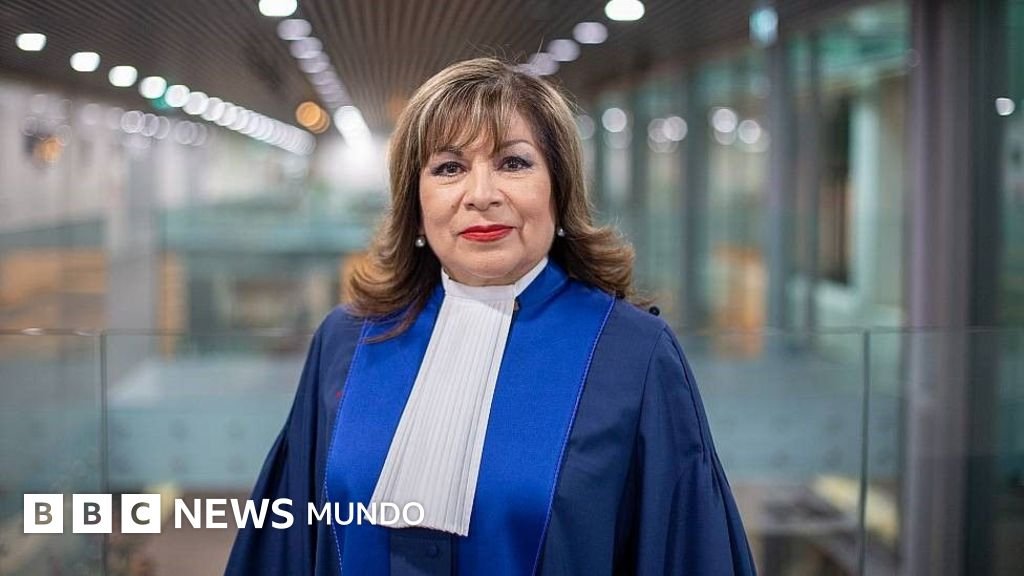
The Challenges and Resilience of Judge Luz del Carmen Ibáñez Carranza
In a world increasingly defined by legal and political challenges, Judge Luz del Carmen Ibáñez Carranza stands out as an unwavering beacon of justice at the International Criminal Court (ICC) in The Hague. With a career spanning decades, her commitment to humanity has brought her face-to-face with formidable adversities, including recent sanctions imposed by the U.S. government after the court issued arrest warrants against high-ranking Israeli officials. This article delves into her journey and the implications these sanctions have on her and the ICC.
The ICC and Its Mission
Established in 1998 under the Rome Statute, the International Criminal Court was designed to adjudicate the gravest of crimes: genocide, war crimes, crimes against humanity, and the crime of aggression. For the past eight years, Judge Ibáñez Carranza has been a crucial part of this mission, serving on the Appeals Division of the court.
U.S. Sanctions and Their Impacts
This year, the U.S. imposed sanctions on Judge Ibáñez Carranza, along with five other judges and three prosecutors from the ICC. These actions followed the court’s issuance of arrest warrants for Israeli Prime Minister Benjamin Netanyahu and former Defense Minister Yoav Gallant, eliciting strong objections from the United States.
The U.S. government stated its opposition to what it termed the “politicization and misuse of power” by the ICC, declaring it a threat to national security and an instrument of legal warfare against the U.S. and its allies.
In the case of Judge Ibáñez Carranza, the sanctions were attributed to her role in authorizing the ICC’s investigation into alleged war crimes by U.S. personnel in Afghanistan. The UN condemned these sanctions as an “attack on the rule of law,” warning of their potential consequences for judicial independence.
A Day in the Life of a Sanctioned Judge
In an interview with BBC Mundo, Judge Ibáñez Carranza spoke candidly about how these sanctions have disrupted her daily life. The restrictions have not just hindered her professional capabilities but affected her personal affairs as well, limiting her financial transactions and communication.
“I can’t order food or even take an Uber because they require credit cards, and many services based in the U.S. are off-limits to us,” she said. “For someone who has spent 35 years in the justice system, being subjected to such measures is both shocking and disheartening.”
Family Implications
Judge Ibáñez Carranza elaborated on the broader effects of the sanctions. “Not only do they impact us directly, but they extend to our families and even to those willing to assist us,” she explained. For instance, her daughter faced visa cancellation allegedly due to her mother’s position.
The Psychological Toll
While the judge acknowledges the emotional strain these sanctions bring, she remains resolute in her mission. “The only thing I can apply is law and my conscience. I will not be forced to withdraw from this noble role,” she affirmed, emphasizing her dedication to justice.
The Global Context
As the ICC navigates these challenges, Judge Ibáñez Carranza believes that the broader aim of the U.S. sanctions is to undermine the court’s operation and weaken the Rome Statute framework. “This is an attack on the victims whose voices need to be amplified,” she remarked.
Despite the difficulties, she insists on the ICC’s growing relevance in today’s geopolitical landscape, advocating for the rights of victims and emphasizing the importance of independent judicial processes across the globe.
Conclusion
Judge Luz del Carmen Ibáñez Carranza serves as a testament to the resilience of those committed to justice in an often hostile environment. Despite facing unprecedented challenges, her dedication to her role within the ICC remains unwavering, highlighting the critical need for institutions that protect human rights and maintain the rule of law throughout the world.
Key Takeaways
- Judge Ibáñez Carranza has faced sanctions from the U.S. due to her role at the ICC.
- The sanctions have significant personal and professional ramifications for the affected judges.
- Despite these challenges, the judge remains committed to her mission of justice for humanity.
- The ICC continues to play a vital role in addressing severe international crimes.