
Nation Mourns the Loss of Former Prime Minister Khaleda Zia
By: Kelly Ng, Shahnewaz Rocky, and Anbarasan Ethirajan
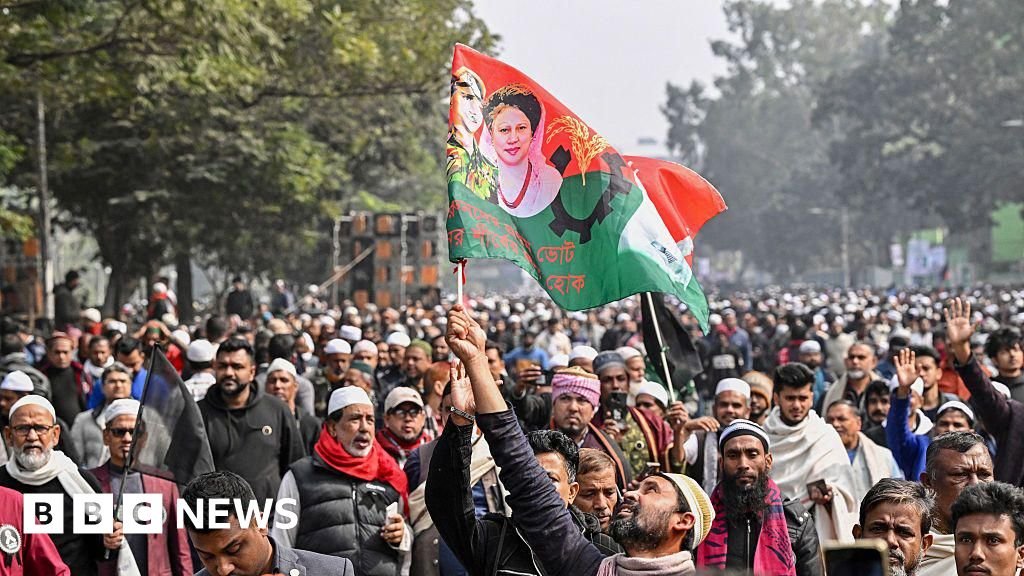
On Wednesday, a massive wave of mourners converged on Bangladesh’s capital, Dhaka, to pay tribute to their former Prime Minister, Khaleda Zia. The first woman to hold the country’s highest office, Zia passed away at the age of 80 after suffering from a lengthy illness.
As a motorcade transporting her body—including a hearse draped in the national flag—passed by the parliament area, mourners raised their hands in prayer and displayed flags emblazoned with her image. In a solemn gesture, flags were flown at half-mast throughout the city, and extensive security measures were implemented to maintain order during this significant event.
Remembering a Leader
“I came here just to say my final goodbye. Even though I won’t see her face again, I felt it was important to witness the vehicle carrying her to her last rites,” shared Setara Sultana, an activist with Zia’s Bangladesh Nationalist Party (BNP). Another supporter, Sharmina Siraj, reflected on Zia’s legacy, calling her “an inspiration” for pioneering educational stipends for women, which significantly influenced her own daughters.
Notable figures attended the funeral, including India’s External Affairs Minister and the Speaker of Pakistan’s National Assembly. Earlier, Zia’s body was brought to her son, Tarique Rahman’s residence, where he recited the Quran beside her office, a poignant farewell before the state funeral.
A Lasting Legacy
Khaleda Zia will be laid to rest alongside her husband, Ziaur Rahman, who was assassinated in 1981. This tragedy propelled her into the political spotlight, where she would later lead the BNP through Bangladesh’s inaugural elections after two decades. Known as an “uncompromising leader,” Zia stood firm against military ruler General Hussain Muhammad Ershad during the 1980s, marking her as a staunch advocate for democracy.
Throughout her career, she faced significant political rivalry, notably with Sheikh Hasina, as both leaders fought against military rule and advocated for democracy. Zia ultimately became Prime Minister twice, only to later endure detainment during a military-backed caretaker government in 2007. Over the years, she became a symbol of resistance against Hasina’s increasingly authoritative governance.
Her supporters admired her resilience, believing she remained steadfast in her principles despite various political and personal challenges. The turnout at her funeral, which drew not just her supporters but also those who did not vote for her party, underscores her wide-reaching influence in society.
In recent years, Zia’s health deteriorated, yet she remained determined to participate in the upcoming parliamentary elections scheduled for February 2026, as outlined in her party’s candidate list. If successful, her son, who recently returned from self-imposed exile, is anticipated to take over as the nation’s leader.
“The country mourns the loss of a guiding presence that shaped its democratic aspirations,” Rahman stated following her death.
Conclusion
The passing of Khaleda Zia marks not only the end of a significant political chapter in Bangladesh but also the loss of a steadfast advocate for women’s rights and democratic principles. Her legacy will continue to inspire future generations.
- Khaleda Zia, Bangladesh’s first female Prime Minister, passed away at 80.
- Hundreds of thousands gathered in Dhaka to pay their respects.
- Zia’s legacy includes substantial contributions to women’s education and democracy.
- Her son, Tarique Rahman, is expected to lead the BNP and potentially the nation in future elections.