
Honoring General al-Haddad: A Loss for Libya
Libya is in mourning following the tragic death of its army chief, General Mohammed al-Haddad, along with four other esteemed military officials. This article delves into the circumstances of their untimely demise, the impact of their loss on the nation, and the ongoing efforts to find their replacements in a politically fragmented Libya.
The Tragic Event
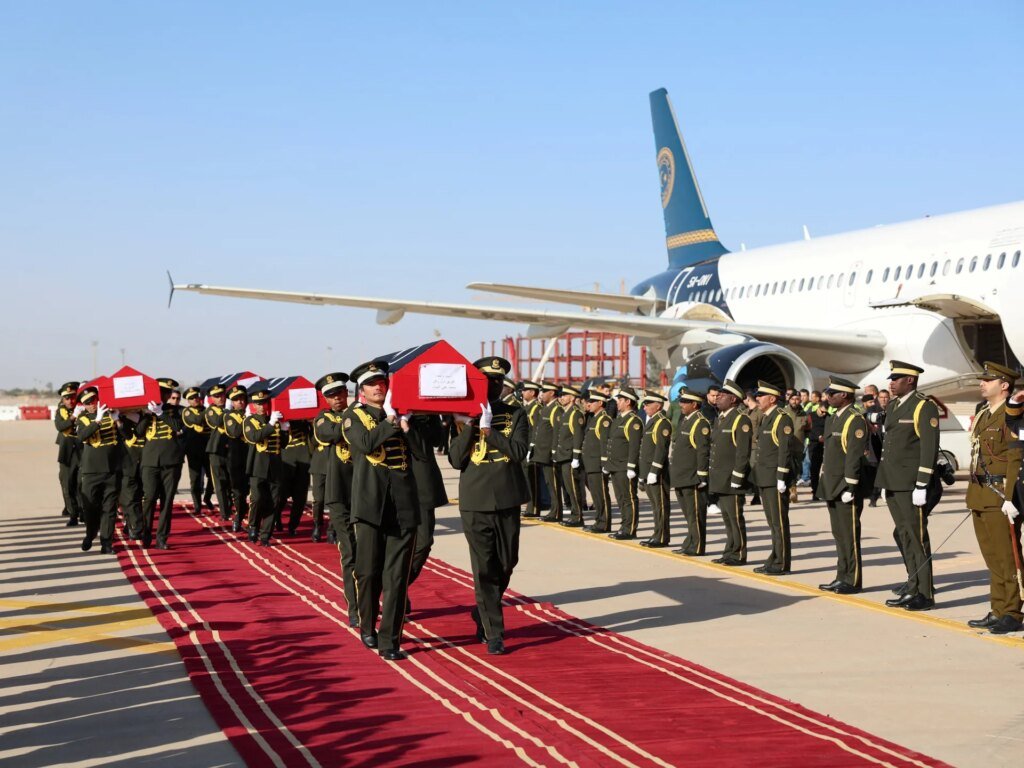
Following several days of mourning, the remains of General al-Haddad and his colleagues were transported to their hometown of Misrata for burial. Among the deceased was al-Haddad’s senior adviser, Mohamed al-Essawi, and military cameraman, Mohamed al-Mahjoub. They tragically lost their lives alongside General Fetouri Ghrebil, who led the army’s land forces, and Mahmoud al-Gedewi, the head of military manufacturing, due to an aircraft crash in central Turkey. The group was returning to Libya after meetings in Ankara with Turkish defense officials just a day after the Turkish parliament renewed military cooperation in Libya.
Investigation into the Crash
Preliminary findings suggest that a technical failure may have caused the crash. In light of this, a Libyan military committee traveled to Ankara to assist in the investigation. A committee member revealed that Turkey and Libya agreed to send the aircraft’s black box to a neutral country for a thorough examination.
Difficult Identification Process
Upon visiting the crash site, the Libyan military representatives described it as a “dreadful scene,” where identification of the victims proved immensely challenging. Authorities resorted to DNA testing to identify remains. This painstaking process delayed the repatriation of the bodies, which were finally brought back to Libya after a formal Turkish military ceremony.
The Challenges of a National Mourning
The logistical details of conducting memorial services became complicated amidst the country’s ongoing divisions. General al-Haddad’s significant role in Libya made his memorial a point of contention, with debates emerging over where the ceremonies would take place.
The Future of Libya’s Military Leadership
The Presidential Council oversees Libya’s government, serving as the military’s highest authority under the Libyan Political Agreement. However, rival authorities in the east, under the command of military leader Khalifa Haftar, do not acknowledge their legitimacy. General al-Haddad was regarded as a unifying figure, respected even by his adversaries, particularly for his role in repelling Haftar’s forces during the 2019 military campaign.
A Void in Leadership
His death leaves a notable gap in military leadership. Following his passing, General Salah al-Namroush, al-Haddad’s deputy, has been appointed as the interim leader. During his eulogy, al-Namroush honored al-Haddad’s commitment to national unity and pledged to continue his mission to strengthen the army. Political analysts believe discussions to fill al-Haddad’s role are already underway, with expectations of a decision within days.
A Nation in Flux
Libya has witnessed growing public frustration resulting in protests against the government, largely driven by economic difficulties. This unrest has led to plans for a cabinet reshuffle, which al-Haddad’s death has put on hold. The position of Chief of Staff is now expected to be influenced by political maneuvering rather than merit.
Symbolism of the Dual Airports
Compounding these challenges is the condition of the airports in Tripoli, where the bodies of the deceased were received at an airport currently under renovation due to past conflicts. The usual location for such ceremonies, Mitiga International Airport, is controlled by a powerful armed group, making it inaccessible for Prime Minister Abdul Hamid Dbeibah.
A Solemn Farewell in Misrata
On Saturday evening, the remains of al-Haddad and his colleagues were flown to Misrata. The following morning, thousands gathered at the Misrata football stadium to pay their final respects. Officials declared a national holiday to facilitate attendance, highlighting al-Haddad’s impact on the nation. As Abdullah Allafi, a tribal leader, noted, “Al-Haddad’s death is a loss for all of us and for Libya.” His passing is viewed as a call for unity among the fragmented factions of the country.
Conclusion
The passing of General Mohammed al-Haddad is a significant loss for Libya, casting uncertainty over the future military leadership. As the nation navigates its grief, the challenge of maintaining stability becomes more pressing. Unity in the face of adversity is now a critical theme as Libya reflects on al-Haddad’s legacy.
Key Takeaways
- General Mohammed al-Haddad’s untimely death has left a major leadership void in Libya’s military.
- The investigation into the plane crash reveals possible technical failure as a cause.
- Al-Haddad was respected across political divides, underscoring the need for unity in Libya.
- The ongoing political instability complicates the appointment of his successor.