
Ukrainian Military Advances with the New Flamingo Cruise Missile
In the midst of ongoing conflict, Ukraine is enhancing its military capabilities with the introduction of the Flamingo cruise missile. This new weapon, designed for deep strikes within Russian territory, boasts an impressive maximum range of up to 3,000 kilometers. This article delves into the clandestine production of the Flamingo missile, its implications for the conflict, and Ukraine’s commitment to self-sufficiency in defense manufacturing.
Inside a Secret Military Facility
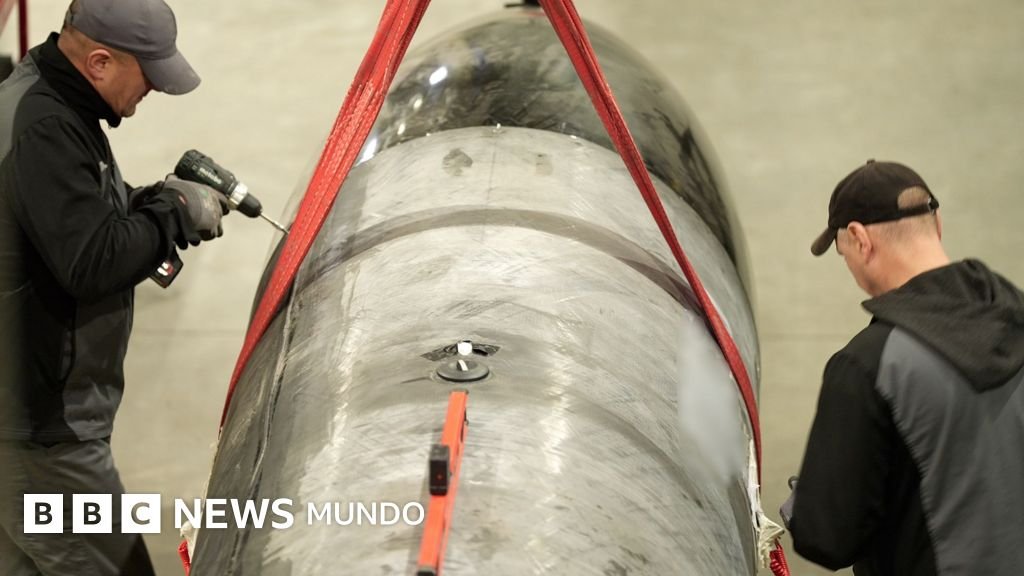
Recently, a group was taken blindfolded to a covert location where Ukraine assembles one of its most advanced armaments. Phones were required to be silenced, and photographs of the facility’s distinguishing features—such as columns, windows, or ceilings—were prohibited. Workers on the assembly line were also kept out of view, reflecting the high level of secrecy surrounding the production of the Flamingo cruise missile.
Domestic Production Takes Center Stage
Despite ongoing military pressure, Ukraine is ramping up its defense production. President Volodymyr Zelensky has stated that local facilities now generate more than half of the weaponry utilized in combat. Notably, nearly all of Ukraine’s long-range missile inventory is domestically manufactured.
At the onset of the conflict, Ukraine relied heavily on outdated Soviet-era weaponry. However, Western military support has modernized the armed forces, leading Ukraine to become a frontrunner in the development of autonomous systems, drones, and more. Presently, the cruise missiles manufactured at this secret site significantly enhance Ukraine’s long-range strike capabilities.
The Flamingo: A New Generation of Warfare
Iryna Terekh, the technical leader at Fire Point—a prominent Ukrainian manufacturer of drones and missiles—has a motto that translates to “If not us, who?” The 33-year-old, once an architecture student, is now focused on dismantling Russia’s war machinery. Standing next to the imposing black-painted Flamingo missile, Terekh explained that this design choice was meant as a symbolic rejection of its earlier pink prototypes, which were deemed unnecessary given the serious nature of the current conflict.
Weapon Specifications and Objectives
The final product resembles the German V1 rocket from World War II, equipped with a large jet engine mounted atop a tube as long as a bus. While it has already seen combat, specifics regarding its targets remain undisclosed.
The Flamingo missile is a crucial artillery piece that many Western nations have hesitated to provide. With its reported range of 3,000 kilometers, it parallels the more sophisticated and costly American-made Tomahawk missile, which was not delivered to Ukraine during the Trump administration. Engaging targets deep within Russian territory has become a centerpiece of Ukraine’s strategy, particularly as the country increasingly relies on long-range drones.
Impact on the Conflict
Ukraine is actively seeking to undermine Russia’s wartime economy to hinder advances on its extensive front, which extends over a thousand kilometers. General Oleksandr Syrskyi, commander of the Ukrainian Armed Forces, claims that Ukrainian long-range attacks have already inflicted over $21.5 billion in damages to the Russian economy this year.
Ruslan, an official within the Special Operations Forces, asserts that the goal is straightforward: “We aim to diminish the military capabilities and economic potential of the enemy.” He noted that hundreds of operations have targeted oil refineries, weapon factories, and ammunition depots deep within enemy lines. Meanwhile, Russia is conducting similar operations but on a significantly larger scale, launching around 200 Shahed drones each day while Ukraine responds with about half that number.
Innovation Amidst Scarcity
Despite limited resources, Fire Point, which was founded after the full-scale Russian invasion, has ramped up production to 200 drones daily. Their FP1 and FP2 models, akin in size to small airplanes, have been instrumental in around 60% of Ukraine’s long-range offensive efforts at a cost of approximately $50,000 each—significantly less than the price of Russian drones.
Challenges and Strategic Choices
Though Ukraine continues to seek foreign assistance, particularly in intelligence and funding, efforts are underway to achieve self-sufficiency. Terekh emphasizes the importance of sourcing components within Ukraine where possible, to avoid interference in the production of their weapons. They intentionally avoid acquiring parts from China and the United States due to uncertain political climates.
The matter of U.S. military support remains contentious. Until late last year, the Biden administration had supplied nearly $70 billion in military assistance, but this flow has been disrupted. As European nations grapple with filling the gap in military aid and ensuring robust support going forward, Terekh is resolute. She believes that indigenous weapon manufacturing is the only true path to guarantee Ukraine’s security.
Conclusion: A Learning Experience for All
Terekh views Ukraine’s efforts as a vital lesson for Europe, demonstrating preparedness in the face of war. She challenges other nations to take action, asserting that had any other country endured the same aggression as Ukraine, it would likely have already been conquered. As Ukraine continues to innovate and adapt, its commitment to self-reliance in weaponry production marks a significant shift in modern warfare.
- The Flamingo missile demonstrates Ukraine’s advancements in domestic weapon production.
- President Zelensky reports that over 50% of Ukraine’s arms are now produced locally.
- Ukraine’s strategy includes deep strikes to undermine Russia’s war economy.
- The importance of self-sufficiency is emphasized amid fluctuating foreign military support.