
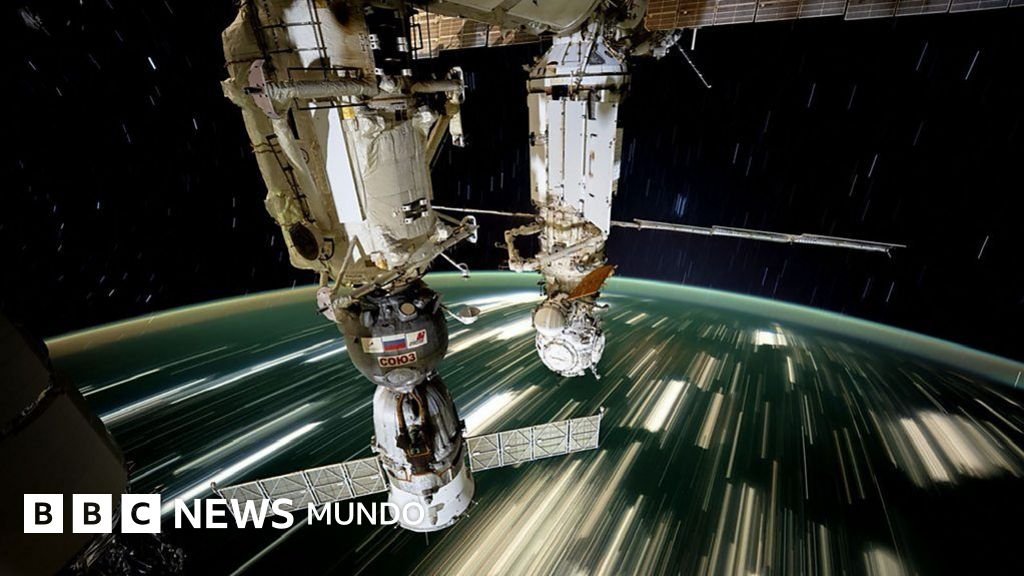
The International Space Station: 25 Years of Human Ingenuity
The International Space Station (ISS), orbiting approximately 400 kilometers above the Earth, stands as one of humanity’s most ambitious engineering feats. Since the launch of its first mission, Expedition 1, over 280 astronauts have visited this continuously inhabited space station for a remarkable 25 years. If you were born after November 2, 2000, you’ve lived your entire life with someone residing in space. Let’s explore 25 fascinating figures celebrating a quarter-century of the ISS, showcasing its pivotal role as a triumph of international collaboration.
Key Milestones of the ISS
27 Years: Age of the Oldest Module
The first module, Zarya, was launched aboard a Proton rocket from the Baikonur Cosmodrome in Kazakhstan in November 1998. Back then, public sentiment was less than optimistic, as the ISS project faced numerous delays and budget overruns that led some politicians to advocate for its termination.
3: Members of Expedition 1
When Bill Shepherd, Sergei Krikalev, and Yuri Gidzenko activated the lights in November 2000, the ISS consisted of just three interconnected modules: Zarya, Zvezda, and Unity. These modules are still vital for providing energy and oxygen. The astronauts spent five months onboard, conducting 22 scientific investigations and completing seven spacewalks while welcoming two visiting crews. Today, up to seven astronauts can be found aboard the ISS at any given moment.
42: Assembly Flights
Currently, the ISS boasts between 16 to 20 pressurized modules, along with eight large solar panels and additional interconnected components. Assembly in space required numerous flights, utilising the Space Shuttle to transport key sections and deploy them using its robotic arm, ensuring precise connections among modules built across various countries.
388: Cubic Meters of Habitable Space
The ISS offers approximately 388 cubic meters of habitable space, akin to a six-bedroom house. In microgravity, every surface, including floors, walls, and ceilings, becomes usable. This means that interior surfaces are brimming with equipment, storage, and scientific setup. To help astronauts navigate, the ISS maintains clearly defined floors and ceilings, although crews often rearrange their surroundings, creating a unique experience each day.
2: Hours of Daily Exercise
Long-duration missions reveal that microgravity poses several health risks, such as muscle mass loss and declining bone density. To combat this, astronauts must devote two hours daily to exercise in the station’s gym, which includes a treadmill, a stationary bike, and resistance machines. Their dedication is commendable, with British astronaut Tim Peake even setting a record by running a marathon in space in just 3 hours and 35 minutes.
98%: Recycled Breath, Sweat, and Urine
Recycling in space turns today’s urine into tomorrow’s drinking water. The ISS has an impressive recovery system that extracts humidity from the air to transform sweat and urine into potable water. Additionally, air conditioning systems keep the environment comfortable for astronauts, even as studies reveal up to 55 types of microorganisms cohabiting with them.
4,400: Published Research Studies
Astronauts spend a significant amount of their time conducting research, which includes projects examining muscle and bone health and the development of new pharmaceuticals. For example, some experiments focus on combatting earthly diseases using findings from space research, while others aim to develop novel technologies.
70: Age of the Oldest Astronaut
NASA’s first astronaut selection in 1959 focused on young, physically fit candidates. However, experience has shown that age is not a barrier. The oldest astronaut to live aboard the ISS is Don Pettit, who returned to Earth on his 70th birthday. John Glenn also made a remarkable journey at 77 years old.
371: Days of the Longest Mission
Frank Rubio holds the record for the longest time spent on the ISS, completing 371 days in 2023. While six-month missions have become standard, Rubio’s duration stands out, although the all-time record is still held by Russian cosmonaut Valeri Polyakov, who spent 473 days aboard the Mir space station.
25: Thickness of the Cupola Glass in Millimeters
The “Cupola” remains a favorite spot for astronauts, offering stunning views of Earth. However, the temptation to gaze outside can sometimes disrupt their busy schedules. Many astronauts have honed their photography skills, capturing magnificent images of our planet from above.
1: Musical Instrument Onboard
Time aboard the ISS also allows for leisure activities, including playing musical instruments. Notably, Canadian astronaut Chris Hadfield famously recorded his rendition of David Bowie’s “Space Oddity.” Many others have incorporated music into their routines, creating a unique atmosphere onboard.
211: Centimeters of Astronaut Sleeping Bags
Each astronaut has a small personal area in the ISS, comparable to a phone booth, complete with a sleeping bag secured to the wall. However, the constant hum of machinery and the novelty of weightlessness can make restful sleep a challenge.
4: Toilets Onboard
In one memorable account, astronaut Chris Hadfield faced a challenge when the toilet in his module malfunctioned during a mission. He recalls having to fix it to ensure the crew could continue functioning normally, an experience he cherishes as a highlight of his six months in orbit.
5: Chocolate Chip Cookies
Space food has come a long way from tasteless paste. Today, astronauts can enjoy festive meals, with one Italian astronaut even bringing the first espresso machine to the ISS. Efforts to grow fresh food in space are ongoing, successfully cultivating crops like lettuce and even baking cookies.
40: Maneuvers to Avoid Space Debris
The ISS faces real dangers from space debris, with roughly 28,000 objects orbiting the Earth. Thankfully, it has thus far avoided significant damage, but close encounters have prompted evasive maneuvers.
9: Hours of the Longest Spacewalk
Since December 1998, more than 270 spacewalks have been conducted for maintenance and repairs. The record for the longest spacewalk is held by Susan Helms and Jim Voss, who were outside for an impressive eight hours and 56 minutes.
7: Robotic Arms
A key feature of the ISS is the Canadarm2, a highly versatile robotic arm that facilitates various tasks. Developed by Canada, it plays an essential role in assembly, docking, and astronaut mobility during spacewalks.
13: Space Tourists
Space travel is no longer exclusive to astronauts; thirteen civilians have visited the ISS as space participants. Prospective space tourists undertake rigorous training before their adventure, with costs per night averaging around $35,000.
16: Earth Orbits per Day
The ISS travels at an astonishing 28,000 km/h, completing roughly 16 orbits around the Earth daily while experiencing 16 sunrises and sunsets. It is among the brightest objects visible in the night sky.
55 Million: Cost of the Cheapest Spaceflight
Traveling to the ISS is expensive, with prices varying depending on the mission. Currently, a seat on SpaceX’s Dragon spacecraft costs about $55 million, while the Russian Soyuz can go up to $80 million, but competition has started to lower overall costs.
286: Days of a Mission That Lasted “Eight Days”
An anticipated mission in the Starliner spacecraft took an unexpected turn, requiring astronauts Sunita Williams and Butch Wilmore to remain on the ISS for 286 days instead of just eight due to technical issues.
735,000: Energy Produced in kWh Annually
The ISS’s solar panels, spanning 109 meters, generate significant energy, essential for its operations. Equipped with advanced cooling and insulation systems, it maintains optimal thermal conditions while ensuring efficient power supply.
3 Million: Lines of Software Code
The ISS’s software encompasses millions of lines of code, supporting numerous operational devices and systems onboard, including computers ranging from vintage Soviet-era models to modern tablets.
486,000: Items Onboard
To manage the confined space of the ISS, nearly every item, from essential equipment to personal belongings, is tracked with barcodes. An inventory officer oversees this system, ensuring that supplies are accounted for at all times.
150 Billion: Total Cost in Dollars
Estimating the total cost of the ISS is complex, with NASA spending between $3 to $4 billion annually on its operation. The question of whether the investment is justified is open for discussion.
Conclusion
The International Space Station represents a remarkable achievement in human collaboration and scientific discovery. As it continues to explore the cosmos, the lessons learned and advancements made will shape the future of space exploration.
Key Takeaways
- The ISS has been continuously occupied for 25 years, showcasing international cooperation.
- Astronauts engage in rigorous exercise and conduct critical scientific studies while in space.
- Space travel is evolving, with opportunities for civilians emerging alongside traditional astronaut missions.
- The ISS serves as a platform for understanding space’s impact on human health and technology innovation.