
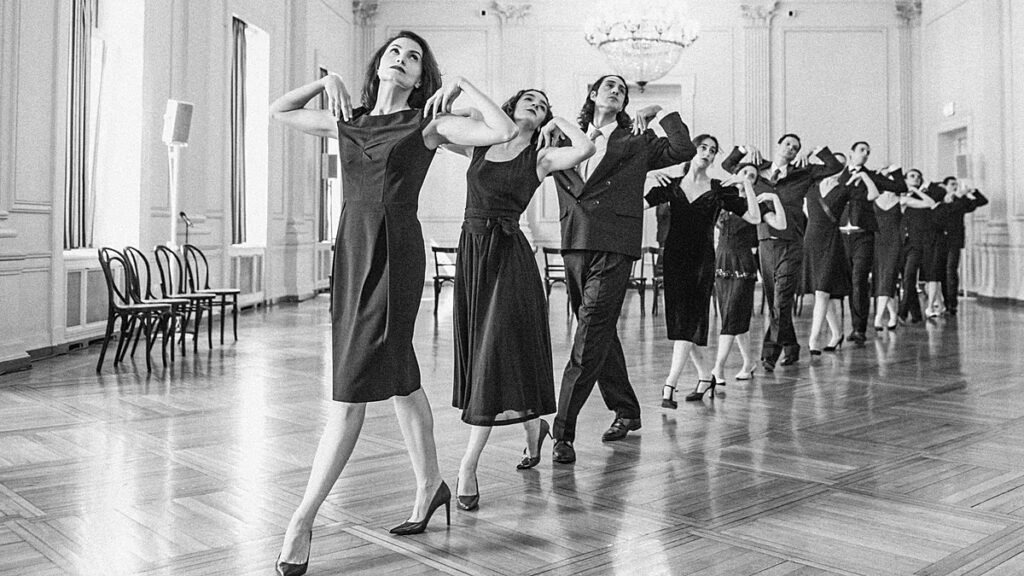
Reviving Pina Bausch’s “Kontakthof” at the National Theatre
One of the most iconic works of contemporary dance, Pina Bausch’s “Kontakthof,” will grace the stage of the National Theatre starting December 17. This presentation is in collaboration with the Pina Bausch Foundation, marking a significant moment as it returns to Greece for the first time since its debut by Tanztheater Wuppertal in 1988. The upcoming production features an exclusively Greek cast, ranging from ages 21 to 55, and brings fresh life to this masterpiece under the artistic direction of Josephine Ann Endicott and Daphne Kokkinou.
A Historical Revival
Since its inaugural performance 37 years ago at the Herodeion, “Kontakthof” has evolved into a cultural landmark. This new staging takes place on the main stage of the Schiller Building and showcases the talents of performers who have a deep understanding of the work. Endicott and Kokkinou, both veterans of Bausch’s groundbreaking pieces, have meticulously curated the Greek cast alongside fellow original cast member Ann Martin and rehearsal director Scott Jennings.
The Artists Behind the Revival
Josephine Ann Endicott’s Reflections
At 75, Endicott reflects on her early involvement with Bausch, recalling her experiences from her entry into the dance company in 1973. She was part of the groundbreaking works that would pave the way for “Kontakthof.” “We had already faced challenges in our performances,” she notes. “But by the time we reached ‘Kontakthof,’ people began to recognize Pina’s unique vision. It was not just performance; it was a connection.” Her admiration for Bausch’s originality and the opportunity to express oneself in a supportive environment is palpable as she recalls those formative years.
Daphne Kokkinou’s Journey
Kokkinou’s journey into dance transformed when she first witnessed Bausch’s performances in Athens during the 1980s. Inspired, she moved to Wuppertal, where she joined Bausch’s dance company. Remembering her first experience with “Kontakthof” in 1988, Kokkinou emphasizes the emotional impact of the dancers’ interactions with the audience. “The audience’s connection was palpable,” she recalls. “Being involved in the revival has deepened my understanding of the piece, revealing layers I had not previously seen.”
Selecting the Greek Cast
Endicott shared insights on the audition process, highlighting the approach she and Kokkinou took in selecting performers. “Choosing Greek performers for ‘Kontakthof’ was crucial since the piece leans more towards acting than just dancing,” she explains. They aimed to find genuine individuals capable of conveying emotion and presence on stage, as opposed to simply performing. “It was about finding real people who could express themselves authentically,” Endicott adds, showcasing her appreciation for the Greek performers’ inherent humor and expressiveness.
The Essence of “Kontakthof”
First staged in 1978 at the Wuppertal Opera House, “Kontakthof” has left an indelible mark in the world of dance and continues its influence through various iterations. It explores complex human relationships filled with love, conflict, and the struggle for connection. The portrayal of these connections can range from the humorous to the poignant, presenting an emotional tapestry that invites the audience to reflect on their own experiences.
A Place of Freedom and Authenticity
For both performers and audiences, “Kontakthof” serves as a sanctuary for exploring personal identity and human connection. Kokkinou describes it as “a meeting place for individuals seeking contact.” The blend of acting and dance creates a unique challenge and joy for performers, according to Melina Kontis, who emphasizes the importance of personal storytelling within the piece.
Perspectives on Relationships
Alexandros Vardaxoglou, another performer, finds immense value in the emotional depth portrayed in the relationships depicted in “Kontakthof.” He likens the dynamics to a small community, encapsulating the spectrum of human emotions, from love to rivalry. “It’s like seeing a miniature society,” he says, adding that the poetic nature of the work allows for a multi-faceted exploration of social interactions.
The Legacy of Pina Bausch
Kokkinos, now firmly in his role within Bausch’s legacy, admires her ability to translate everyday moments into profound art. “What makes Pina’s work special is its relatability,” he reflects. Her capacity to take the mundane and elevate it to a form of artistic expression continues to resonate, reinforcing the timelessness of her vision.
Conclusion
The revival of “Kontakthof” at the National Theatre promises to be a captivating exploration of human connection through the unique lens of Greek performers. With the insightful direction led by Endicott and Kokkinou, audiences can expect a richly emotional experience that honors Bausch’s legacy while embracing the vibrant essence of Greece.
Key Takeaways
- “Kontakthof” returns to Greece, featuring an all-Greek cast.
- Pina Bausch’s work continues to influence contemporary dance profoundly.
- The piece explores complex human relationships, blending humor and poignancy.
- Performers find freedom in expressing their identities and stories through dance.