
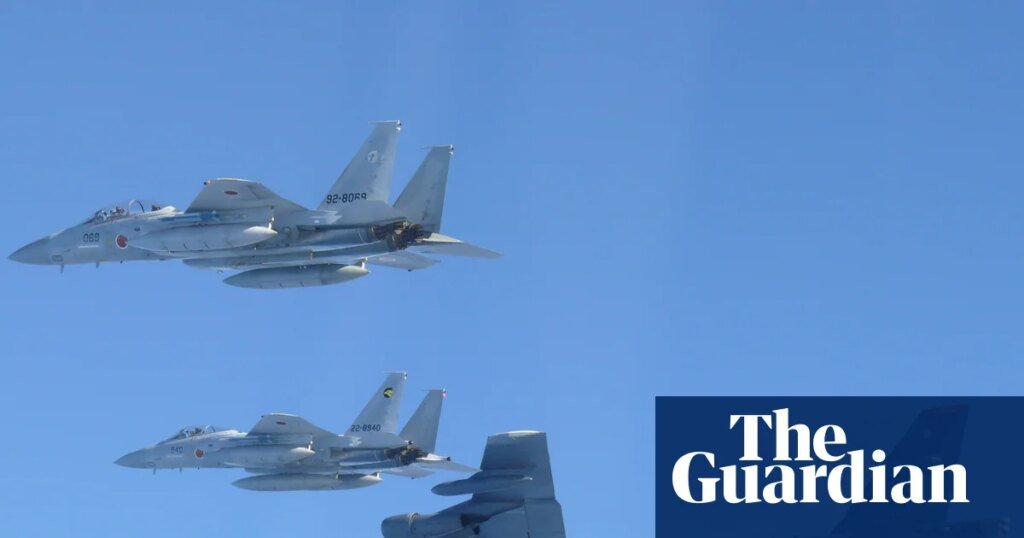
Japan’s Defence Budget Surges Amid Rising Tensions with China
Japan’s cabinet has recently approved a historic defence budget, reflecting increasing tensions with China. The new budget, which exceeds ¥9 trillion (approximately $58 billion), represents a 9.4% increase over the previous fiscal spending plan, set to conclude in April. This decision marks the fourth consecutive year of bolstering Japan’s military expenditure as part of a five-year initiative aimed at doubling its defence spending to 2% of its GDP.
A Shift Towards Enhanced Military Capabilities
The focus of the budget is on enhancing Japan’s counter-strike abilities and coastal defence systems. Plans are underway to develop advanced strike capabilities with surface-to-ship missiles and an array of unmanned systems. Notably, the Japanese government has allocated ¥100 billion for “massive” unmanned drones—operating in air, on the sea, and underwater—for surveillance and defensive measures. This initiative, known as the “Shield” system, is slated for deployment by March 2028, according to defence officials.
Escalating Hostilities and Diplomatic Tensions
This budget increase comes in the wake of deteriorating relations between Japan and China. Tensions escalated sharply last month when Japanese Prime Minister Sanae Takaichi stated that Japan might become involved in a military conflict should China attempt to annex Taiwan. Such remarks provoked a strong backlash from Beijing, which has since enacted a series of diplomatic and economic responses against Japan. Takaichi has stood firm on her statements, insisting they reflect continuity in Japan’s security policy.
Chinese officials have vocally criticized Japan’s military enhancements, especially in light of recent developments in space technology, which they claim are contributing to a “space arms race.” They further warned that Japan’s military posture evokes memories of its wartime past, with concerns around the potential for aggressive actions.
Japan’s Space Initiatives and Regional Security
Since March 2023, Japan has been actively launching rockets to send satellites and cargo into space for various purposes, furthering its technological advancements. In response to these developments, comments from Chinese defence ministry spokesperson Zhang Xiaogang suggested that Japan’s active military policies raise grave concerns about another possible conflict akin to Pearl Harbor.
While Japan’s constitution restricts the use of military force in international disputes, a 2015 amendment allows for collective self-defence under specific conditions, even in the absence of a direct threat to Japan.
Focus on Regional Dynamics
Japan’s current security strategy identifies China as its primary strategic challenge, advocating for a more proactive role in security collaborations with the United States. The recent support from the US for Taiwan, including a substantial arms sale and a new defence authorization act, has further inflamed tensions. Chinese officials have accused the US of fostering independence efforts within Taiwan, jeopardizing regional peace and stability.
Moreover, China is in the midst of a military modernization program aimed at enhancing its capabilities, particularly concerning Taiwan. Despite the claim that Taiwan must be “reunified” with the mainland, the majority of Taiwan’s population opposes such prospects. Recent incidents have further strained relations, including Chinese aircraft locking radar on Japanese planes during military exercises, an act considered threatening as it implies a possible attack.
While Beijing maintains that its military expenditures and actions are reasonable and adhere to international law, the implications of these developments on regional security continue to be a point of contention.
- Japan approves a record defence budget amid rising tensions with China.
- The new budget focuses on enhancing strike capabilities and introducing unmanned military systems.
- China has condemned Japan’s military advancements and accused it of escalating space militarization.
- Relations between Japan and China remain strained as both sides respond to heightened military activities in the region.