
Indonesia’s Aceh Province Raises White Flags Amid Flood Crisis
Residents of Aceh, Indonesia’s westernmost province, are expressing their despair and frustration through a striking symbol: white flags. These flags have emerged as a powerful statement amid the ongoing crisis following devastating floods triggered by a rare cyclone that hit the region last November. As communities struggle against inadequate governmental response, the situation underscores the urgent need for international solidarity and assistance.
The Floods and Its Aftermath
The catastrophic floods wreaked havoc across Sumatra, resulting in over 1,000 fatalities and displacing countless inhabitants. Aceh province, bearing the brunt of this disaster, is facing severe shortages in clean water, food, electricity, and medical supplies. The local governor, Ismail A. Jalil, publicly expressed his frustration earlier this month, questioning the central government’s awareness of the crisis, stating, “Does the central government not know [what we’re experiencing]? I don’t understand.”
Despite the gravity of the situation, President Prabowo Subianto has rejected offers of foreign aid, maintaining that the situation is “under control.” He has also resisted calls to classify the floods as a national disaster, which would facilitate emergency funding and streamline relief efforts. This decision has led to increasing criticism of his administration, accused of being reactive, disorganized, and disconnected from the needs of its citizens.
Allegations against Prabowo’s leadership have escalated, especially in light of widespread protests earlier this year over issues like rising living costs and unemployment, showcasing popular discontent regarding his governance style.
Calls for International Support
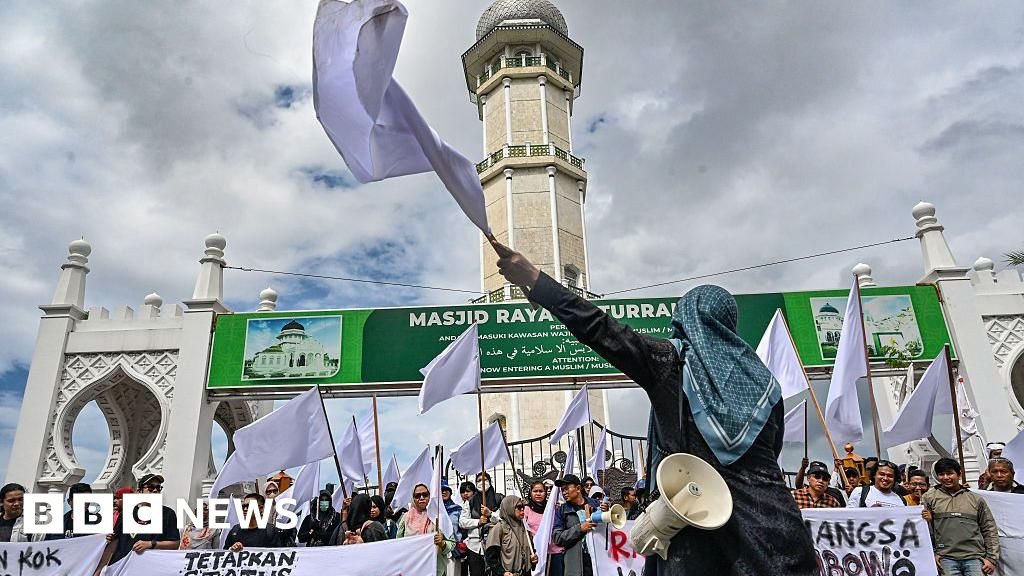
In response to the dire conditions, protests erupted last Thursday in Banda Aceh, the provincial capital. Protesters, equipped with white flags, rallied for the government to accept foreign aid. One poignant moment was captured by the sign held by a young girl that read: “I am just three years old; I want to grow up in a safe and sustainable world.”
The utilization of white flags, typically synonymous with surrender, has shifted in this context to symbolize a plea for solidarity and support. Protesters assert that these flags serve as a call for international assistance, reflecting the harsh realities faced by many in Aceh—where entire villages have been decimated, and survivors are grappling with sickness and starvation.
Provincial authorities have reached out to the United Nations, with the Aceh governor welcoming aid “from anyone, anywhere.” Prabowo’s government claims relief efforts are underway, announcing a significant disbursement aimed at reconstruction, though many remain skeptical about its effectiveness.
Revisiting Past Disasters
The present crisis brings back haunting memories for many Acehnese of the 2004 Boxing Day tsunami, which devastated the region and left countless families in misery. Comparatively, aid responses after the tsunami were quicker and more effective, with extensive international assistance aiding in rapid recovery.
In the wake of the recent floods, despite offers of support from various nations—including the UAE’s proposal to send supplies that were ultimately turned away by the government—the situation on the ground feels increasingly bleak.
The president’s refusal to accept international help is perceived as a maneuver to maintain authority, potentially jeopardizing his political capital. This governance approach, prioritizing national sovereignty over crisis management, raises concerns about the well-being of Aceh’s flood victims.
Frustration is palpable among the residents. Rindu Majalina, who lost her home to the floods, articulated the grim reality faced by many: “What we’re suffering now is worse. It has been very painful and miserable.”
- Aceh’s residents raise white flags to symbolize their calls for international support amid flood devastation.
- President Prabowo Subianto has declined foreign aid, asserting the situation is “under control.”
- Public protests are growing in response to the perceived ineffectiveness of the government’s response.
- Many survivors draw stark comparisons to the swift aid following the 2004 tsunami, highlighting the inadequacy of current relief efforts.