
India’s Jobs Guarantee: A Lifeline for Rural Households
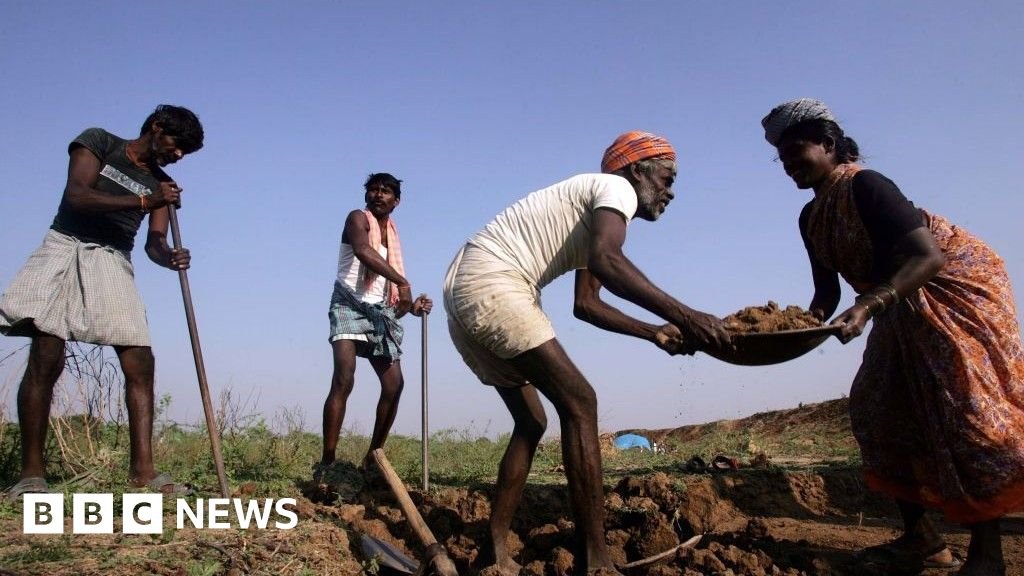
India’s National Rural Employment Guarantee Scheme (NREGS) stands as one of the world’s most ambitious social programs, providing a vital safety net for rural households. This initiative, which guarantees paid work, has transformed the livelihoods of millions, particularly during challenging times.
Understanding the NREGS
Introduced in 2005, the NREGS established a legal right for every rural household to demand up to 100 days of paid manual labor annually at a minimum wage. This was crucial in a nation where approximately 65% of the 1.4 billion population resides in rural areas, half of whom rely on agriculture—an industry that contributes merely 16% to India’s GDP.
By offering unskilled public work throughout rural regions, the NREGS has become a cornerstone of rural support, absorbing economic shocks and ensuring a basic income for many. The program is notable for its inclusivity, with over half of its 126 million workers being women and around 40% representing scheduled castes or tribes, often among the most vulnerable segments of society.
Government Reforms and Rebranding
Initially critical of the NREGS, the current government under Prime Minister Narendra Modi recognized its importance during crises like the COVID-19 pandemic, when a surge in demand for rural labor arose as many migrated back to rural areas. Economists highlight that the scheme has not only improved rural consumption and reduced poverty but also heightened school attendance and private-sector wages in many regions.
Recently, the government unveiled a new law that restructures the NREGS. The revised program, which previously honored Mahatma Gandhi, has opted to drop his name altogether. This rebranding has incited political debate, but more significant changes lie in the implications of the law itself.
Key Changes in the Scheme
The revised law increases the annual employment guarantee from 100 to 125 days and keeps the provision that jobless individuals may claim an unemployment allowance if not employed within 15 days. Funding has shifted from a previous model, where the central government covered about 90% of costs, to a 60:40 split between the federal and state governments, potentially impacting state liabilities significantly. This alteration centralizes control in the hands of the federal government, which retains authority over scheme implementation and state allocations.
Responses to the Changes
States are still responsible for delivering employment opportunities, even as the central government supports the NREGS with a budget of $9.5 billion for the current financial year. The government promotes the changes as a modern, efficient scheme aimed at empowering the poor.
However, critics—including opposition parties and academic experts—express concerns that restricting funds and shifting financial responsibilities may undermine a critical legal right within India’s welfare system. Development economist Jean Dreze argues that while the increase to 125 guaranteed workdays appears significant, it may be misleading. He notes that only 7% of rural households utilized the full 100 days of work in the past year, questioning the practical benefit of lifting the cap on days.
In addition, international scholars have expressed alarm, fearing that the new funding model could detract from the original purpose of the NREGS, which has received global recognition for its achievements.
Looking Ahead: The Future of Rural Employment in India
Despite challenges such as underfunding and irregular wage payments, evidence suggests that the NREGS has made a measurable impact. Studies indicate it has increased household earnings and significantly reduced poverty. Nonetheless, fundamental issues remain, as many criticize the program for failing to create sustainable non-farm employment. Agriculture continues to lag behind other sectors in economic growth, leading to persistent rural distress.
The discussion surrounding the NREGS highlights the deep-seated issues within India’s rural labor market. An increase in labor force participation, particularly among women, reflects economic necessity rather than genuine job creation. The future of the revamped scheme raises questions: will it enhance the livelihoods of millions or merely serve to placate immediate economic pressures?
- The NREGS provides a legal right to paid work for rurales, significantly impacting their livelihoods.
- Recent reforms raise the work guarantee from 100 to 125 days but shift financial responsibilities to states.
- Critics warn that these changes could undermine the scheme’s original goals and its effectiveness.
- The ongoing challenge remains the need for sustainable employment opportunities beyond agriculture.