
Myanmar’s Displaced Civilians: Rising Fears Amid Military Offensives
Recent airstrikes and military campaigns in Myanmar have left many civilians fleeing their homes, as fear intensifies ahead of the upcoming elections scheduled for December 28. This article explores the harrowing experiences of those affected and the ongoing humanitarian crisis in the region.
Fleeing Fear: The Impact of Military Airstrikes
One fateful night last month, Iang Za Kim was jolted awake by the sounds of explosions in a nearby village, accompanied by the ominous roar of fighter jets overhead. Alarmed, she dashed from her home, witnessing smoke rising ominously in the distance.
“We were terrified. We thought the junta’s planes would bomb us too. So we grabbed what we could – some food and clothes – and ran into the jungles surrounding our village,” she recounted, tears streaming down her face as she relayed her story from K-Haimual, a village in Myanmar’s Chin State. Iang is among thousands who have recently fled, driven out by the Burmese military’s oppressive air campaigns aimed at reclaiming territory before the elections.
Surrounded by other women who shared her trauma, the emotional toll was palpable. For Iang, the fear of political retribution loomed larger than the military airstrikes themselves. “If we are caught and refuse to vote, they will put us in jail and torture us. We’ve run away so that we don’t have to vote,” she lamented.
Seeking Refuge Across the Border
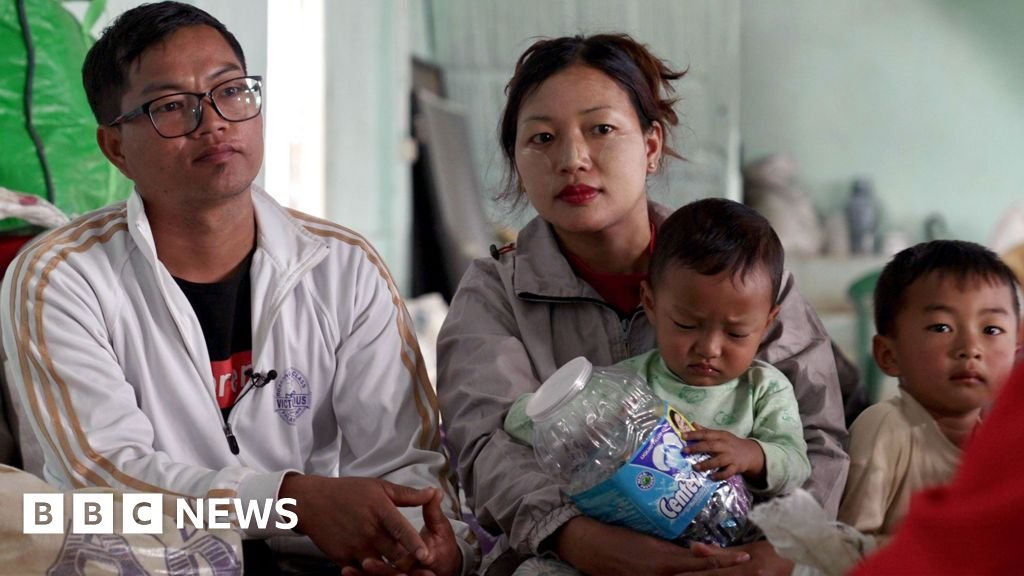
Many fleeing from Chin State have sought shelter in India’s Mizoram state. Currently residing in a dilapidated badminton court in Vaphai village, Iang and her companions carry only what they could hastily pack in plastic bags. Local villagers have provided them with food and essential supplies.
The situation is equally dire for 80-year-old Ral Uk Thang, who also fled his home after living in makeshift shelters for days. “We’re afraid of our own government. They are extremely cruel. Their military has invaded our villages in the past, arresting and torturing people, and burning down homes,” he expressed solemnly.
The Junta’s Brutal Tactics
The military junta’s latest offensive in Myanmar has been described as the fiercest in over three years. Unfortunately, it hasn’t just led to civilians fleeing; it has resulted in widespread destruction and loss of life. The Chin Human Rights Organization reported that, since mid-September, aerial attacks have targeted at least three schools and six churches, killing 12 individuals—including six children.
In a distressing incident, a hospital in Rakhine State was bombed, killing at least 30 people and injuring more than 70, according to reports from rebel groups. Despite attempts to reach out for comment, the military government has remained silent on these allegations.
Disillusionment With Upcoming Elections
As the election date draws near, many displaced individuals are expressing their skepticism. The National League for Democracy, led by Aung San Suu Kyi, will not be participating, as many of its leaders remain imprisoned. Bawi Nei Lian, who has been displaced multiple times, stated, “I want the world to know that this election is absolutely false. With the main political party barred from contesting, how can there be true democracy?”
Local residents like Ral Uk Thang echoed similar sentiments, stating, “We don’t want the election. The military does not know how to govern our country. When Daw Aung San Suu Kyi’s party was in power, we experienced a bit of democracy. But now all we do is cry and shed tears.”
Desperation and Hope
In the depths of the ongoing conflict, the voices of those opposing the junta grow louder. Sui Khar, Vice Chairman of the Chin National Front, criticized the planned elections, asserting, “This election is only being held to prolong military dictatorship. It’s not about the people’s choice. They hardly control much area in Chin State; how can they hold an election?”
From the heart of the resistance, injured fighters recount their struggles against the military, with many enduring grave injuries. Sixteen-year-old Abel, who lost a leg during a confrontation, said, “I’ve lost a leg, but even if I have to give up my life, I’m happy to make the sacrifice for future generations.”
In the eyes of many, hope persists. Ral Uk Thang, despite his age, dreams of returning home, saying, “I hope my children and grandchildren can witness democracy one day.”
Conclusion
The crisis in Myanmar is far from over. As military offensives escalate, civilians continue to bear the brunt of violence and persecution. The sense of despair is overshadowed only by a yearning for peace and the hope for a brighter future, one where democracy and human rights flourish.
- Thousands have fled Chin State due to military airstrikes and fear of forced participation in upcoming elections.
- Displaced civilians are seeking refuge in India, relying on local villagers for support.
- The junta’s recent offensive is regarded as the most brutal in recent years, with many casualties reported.
- Doubts about the legitimacy of the upcoming elections persist, as many view it as a facade for continued military rule.