
Bringing Home the Forgotten: Liu De-wen’s Journey of Remembrance
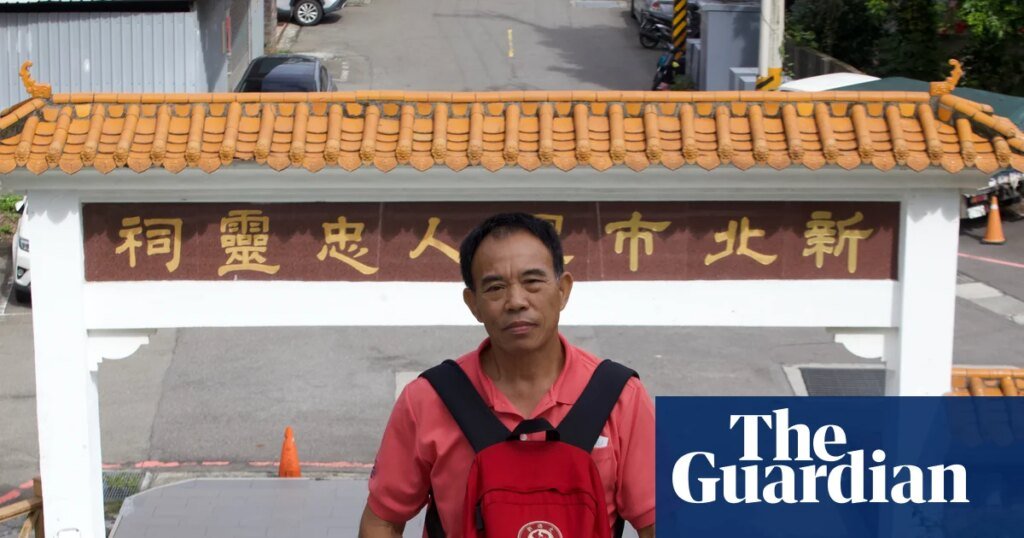
In the verdant corners of a military cemetery in northern Taiwan, Liu De-wen carefully navigates through a maze of shelves filled with urns. Stopping at a low shelf, he gently opens a small, ornate gold door, retrieves an urn, and embraces it with deep reverence. “Grandpa Lin, follow me closely,” he whispers. “I am bringing you back home to Fujian as you wished. Stay close.” Liu is on a poignant mission to return the ashes of Lin Ru Min, a 103-year-old former soldier who passed away in Taiwan, to his birthplace in China’s Fujian province. For over two decades, Liu has dedicated himself to helping families like Lin’s fulfill their wishes to reconnect with their ancestral roots.
A Complex Journey of Return
Liu’s efforts to return these remains operate within a challenging landscape shaped by Taiwan’s tumultuous history. It involves navigating emotional family dynamics, the strained relationship between Taiwan and mainland China, and the delicate balance of ensuring that his work is not seen as promoting China’s agenda for reunification.
Lin’s journey began amid the chaos following China’s civil war in the late 1940s. He was a young fisherman in Fujian when he was forcibly conscripted by the Nationalist Kuomintang (KMT) troops during their retreat. His niece’s daughter, Chen Rong, recounts that Lin was taken to Taiwan, where he would remain for nearly fifty years, cut off from his home and family.
The KMT’s flight from the mainland brought with it between one and two million individuals, including soldiers, government officials, and those like Lin, who were drafted against their will. “Tens of thousands were literally kidnapped to Taiwan this way,” states Dominic Meng-Hsuan Yang, a historian specializing in the era. Many coastal communities lost significant portions of their male populations to these forced conscriptions.
The KMT’s leader, Chiang Kai-shek, aimed to regroup and reclaim the mainland but instead ruled Taiwan with an iron fist for 40 years, implementing martial law and preventing any connections with what became the Communist-ruled mainland.
A Return to Forgotten Roots
By the late 1980s, when restrictions began to ease, the prospect of returning home had changed significantly. Most veterans were now well-settled in Taiwan — many having established families. Lin never returned, despite expressing a desire to be buried in his homeland.
Before his passing, Lin told Chen that he longed for his final resting place to be in Fujian. In a quest to honor this wish, Chen sought out Liu, a quiet yet determined man from Kaohsiung, who spent his days assisting families in returning the ashes of their loved ones to their ancestral homes.
Liu’s mission began in his early thirties when he moved to a village built for KMT soldiers. Many veterans in his community had no family ties in Taiwan, and during Chinese New Year, they would quietly reminisce about their homes, hoping to fulfill their lifelong wishes to return. Liu connected with these veterans’ dreams, becoming a vessel for their hopes of filial piety.
His work involves finding obscure graves, often in rugged terrain, and meticulously handling the associated paperwork. Regardless of whether individuals are soldiers or civilians, Liu extends his services to families seeking closure.
Carrying Memories Forward
Once he identifies a grave, Liu takes personal responsibility for transporting the urn to China, often carrying it in a front-facing backpack—an emblem of respect. “It’s not a commodity; it represents a life lived,” he reflects, emphasizing the significance of each urn. His social media depicts him treating the urns with care, showcasing them in cozy settings like hotel beds and car seats, continually updating families about their journey.
Liu performs this work without financial charge, turning away any offers related to compensation. While he doesn’t disclose his funding sources, both Taiwanese and Chinese government officials have not provided assistance either.
His altruistic efforts have garnered attention in various media, referring to him as a “ferryman of souls”. Many in mainland China resonate with his mission, connecting with the narratives of elderly soldiers separated from their hometowns. However, the Chinese government frequently leverages Liu’s work to reinforce historical family ties as part of its broader agenda for unification—an initiative largely opposed by the Taiwanese populace.
While more than 60% of people in Taiwan identify solely as Taiwanese, about a third also see themselves as Chinese, particularly among the older generation of KMT veterans.
Although Liu believes the people of Taiwan and China share a common heritage, he expresses a desire for peace rather than political alignment. “My focus is on building a bridge for veterans to return home,” he states earnestly.
With Lin’s urn now in hand, Liu conducts a blessing before departing, capturing the moment on video for Lin’s family in Fujian. As he wraps the urn in red and gold cloth, anticipation fills the air.
“We are going home,” Chen murmurs tearfully. “I am asking Mr. Liu to bring you home. Please bless us with health and safety.”
- Liu De-wen assists families in returning ashes of deceased veterans to their ancestral homes in China.
- Lin Ru Min, a 103-year-old former soldier, wishes for his ashes to be returned to Fujian, where he was taken against his will.
- Liu’s work highlights complex historical ties between Taiwan and mainland China.
- Over 60% of Taiwanese identify as solely Taiwanese, while about one in three see themselves as also Chinese.