
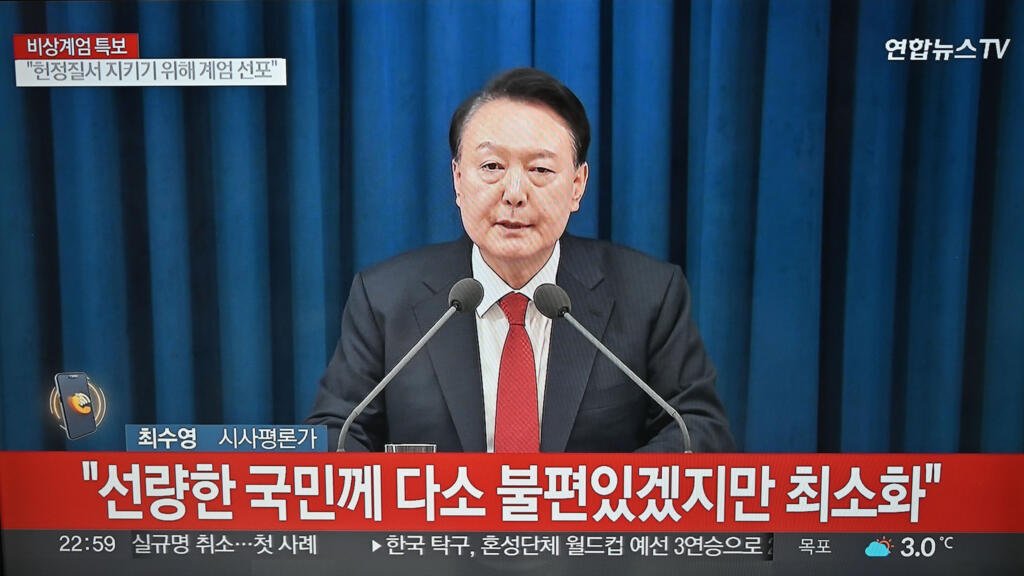
South Korea’s Former President Sentenced in Martial Law Case
In a significant ruling, South Korea’s ex-president Yoon Suk Yeol received a five-year prison sentence on Friday. This verdict marks the beginning of a series of eight trials stemming from his controversial decision to impose martial law at the end of 2024. Among the charges he faces is the serious allegation of using martial law to instigate a rebellion, which could lead to even harsher penalties, including the death sentence.
Overview of the Charges
The legal battles surrounding Yoon Suk Yeol are extensive, with accusations ranging from misuse of power to inciting insurrection. The imposition of martial law during a critical period has stirred both political and public outcry, raising questions about the limits of executive authority in times of crisis.
Implications of the Verdict
This conviction not only places Yoon at risk of a lengthy prison term but also sets a precedent concerning the use of martial law in the country’s governance. The ramifications of this case could influence future political decisions and the relationship between the military and the civilian government.
Potential Outcomes of Further Trials
As Yoon prepares for a total of eight trials, the outcomes could be life-altering. If he is found guilty in the forthcoming proceedings, including the more severe allegations, he risks facing the ultimate penalty. The legal landscape in South Korea will likely be affected significantly, depending on the results of these trials.
Conclusion
The sentence against Yoon Suk Yeol signals a pivotal moment in South Korean politics, shedding light on the delicate balance between authority and governance. As further trials loom, the nation’s eyes remain focused on how this situation unfolds and what it means for the future of political leadership in South Korea.
- Yoon Suk Yeol sentenced to five years in prison.
- Accusation of using martial law to incite rebellion.
- The potential for a death sentence looms if further convictions occur.
- This case may redefine the limits of presidential power in South Korea.