
EU Leaders Consider Loaning Frozen Russian Assets to Ukraine
As European Union leaders come together for a summit in Brussels, a crucial decision looms: whether to utilize tens of billions of euros in frozen Russian assets to support Ukraine’s military and economic needs. The assets, primarily held by Euroclear in Belgium, have sparked debate among EU nations, especially as Ukraine faces severe financial challenges.
The Financial Landscape for Ukraine
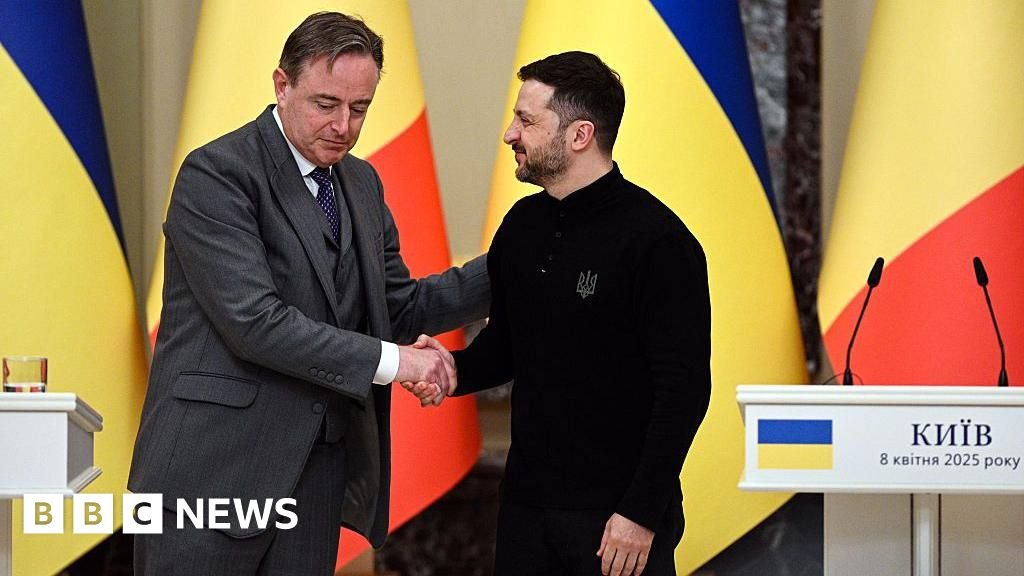
With a staggering €210 billion ($245 billion) of Russian assets sitting in the EU, Ukraine’s economic future hangs in the balance without a significant influx of funding. A European official expressed a sentiment of “cautiously optimistic” as discussions unfold, but the hesitation from Belgium and several other countries poses a significant barrier. Recently, the Belgian Prime Minister, Bart De Wever, stated in parliament, “I haven’t yet seen any text that would persuade me to change Belgium’s position.”
International Relations and Peace Talks
In a related context, former U.S. President Donald Trump suggested that a peace agreement might be closer than ever. Upcoming talks in Miami between U.S. and Russian officials indicate that discussions will cover a potential peace plan, with Ukrainian representatives also participating. However, Russia’s reaction to the latest proposals remains absent, and the Kremlin has been critical of any European-led support for Ukraine, expressing discontent with remarks about its allies.
Proposed Financial Solutions
The European Commission has proposed loaning around €90 billion to Ukraine over the next two years, derived from the frozen Russian assets. This amount constitutes a significant portion of the estimated €137 billion that Ukraine will require through 2026 and 2027. Historically, while the EU has offered Ukraine the interest generated from these assets, accessing the principal amount remains a contentious issue.
A Complicated Path Forward
EU leaders, including Commission President Ursula von der Leyen, are aware of the urgency of the situation. “We know the urgency. It is acute. We all feel it. We all see it,” she emphasized, recognizing Ukraine’s pressing need for financial support.
Some European nations, particularly Finland, are advocating for the release of these funds as a measure to deter further aggression from Russia. Conversely, there are alternatives on the table. One proposition, supported by Belgium, suggests that the EU could borrow money on international markets, backed by its budget as collateral. However, this would necessitate unanimous approval, and Hungary’s Prime Minister Viktor Orban has already voiced his opposition to providing additional EU support for Ukraine.
Key Players in the Discussion
As leaders prepare for the pivotal summit, the debate on the use of frozen Russian assets intensifies. A significant meeting is expected, with President Volodymyr Zelensky slated to attend the EU discussions. German Chancellor Friedrich Merz has rallied support for utilizing the Russian assets, arguing that it sends a strong message to Moscow about the futility of the war.
Yet, De Wever remains unconvinced, with his defense minister voicing concerns that moving forward with the loan would be unwise. Hungary continues to be the most prominent opposition, complicating the decision-making process. Slovakian Prime Minister Robert Fico has also expressed reservations regarding the use of funds for military purposes as opposed to reconstruction.
Future Implications
The impending vote will require a two-thirds majority among EU member states to proceed. European Council President António Costa assured that Belgium’s position would be respected during the discussions. Belgium is mindful of potential legal repercussions, as difficulties surrounding Euroclear’s balance sheet have drawn the attention of ratings agencies.
The complexities surrounding this decision are far from resolved, as nations like Italy, Malta, Bulgaria, and the Czech Republic voice their uncertainties. The consensus on whether to proceed with the loan hinges on solid legal foundations to prevent any victories for Russia amidst the ongoing conflict.
Conclusion
The outcome of this summit could have lasting effects on Ukraine’s ability to sustain its defense and economic stability. As leaders grapple with the implications of utilizing frozen Russian assets, the potential to reshape the geopolitical landscape hangs in the balance. The decision remains critical, underscoring the urgent need for solidarity and support among EU nations in these tumultuous times.
- EU leaders convene to discuss using frozen Russian assets for Ukraine.
- Belgium and Hungary express opposition to the progress of the loan agreement.
- The European Commission proposes €90 billion to support Ukraine.
- Legal and diplomatic complexities are critical to the outcome of the negotiations.