
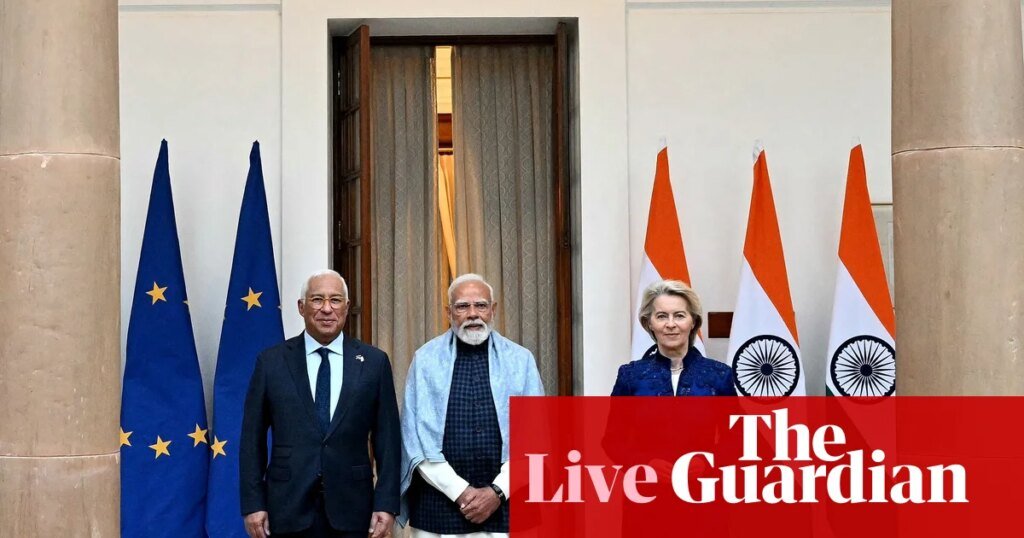
EU-India Trade Deal Accelerates Amid Global Challenges
In recent months, significant momentum has been observed in the EU-India trade negotiations, marking a pivotal shift in global trade dynamics. This comprehensive trade agreement stands to reshape economic relations between India and Europe, especially in light of new geopolitical challenges.
The Importance of the EU-India Deal
India, with its population of 1.4 billion, is not only the largest nation in the world but also one of its fastest-growing economies. The International Monetary Fund (IMF) has projected that India will become the fourth-largest economy globally this year. Prime Minister Narendra Modi has described the trade deal as one of the most extensive agreements India has ever entered into, representing about a third of global trade. He emphasized the significant opportunities this deal presents for both Indian citizens and people across Europe.
“This agreement has brought massive opportunities for 1.4 billion Indians and millions of people in European countries,” Modi stated, highlighting the synergy between these two major economies.
History of Trade Talks
The journey toward this trade agreement began in 2007 but faced hurdles due to disagreements concerning access to sectors like automobiles, agriculture, and dairy. Fortunately, talks resumed in 2022 and have gained considerable momentum over the past six months, especially in response to punitive tariffs imposed by the Trump administration in the U.S. and mutual concerns regarding China’s dominance in global manufacturing.
Looking Ahead: The Signing of the Deal
Officials have indicated that a formal signing of the agreement is anticipated later this year, with the potential for it to come into force as early as next year. This deal not only promises economic benefits but also aims to foster stronger political ties between India and the European Union.
A Balancing Act for European Leaders
As discussions continue around the EU-India trade deal, European leaders are also navigating their relations with the U.S. President Trump’s foreign policy decisions have generated a complex landscape, particularly among far-right political factions in Europe that previously viewed him as an ally. Recent polling suggests that a notable percentage of far-right voters across France, Germany, Italy, and Spain now consider Trump an adversary of Europe, representing a significant shift in sentiment.
Rising Concerns Among European Allies
The evolving political climate has left some European leaders grappling with how to balance their alliances. For instance, discussions around Trump’s approach to Greenland and its implications for territorial sovereignty highlight the challenges of maintaining strong alliances without compromising national interests.
Conclusion
The EU-India trade deal represents a significant new chapter in international trade. As both parties work towards finalizing this agreement, the potential benefits for their economies, coupled with the geopolitical landscape, offers a tantalizing glimpse into the future of global trade relations.
Key Takeaways
- The EU-India trade deal is projected to accelerate economic ties and represent a third of global trade.
- Negotiations, which began in 2007, regained momentum in 2022 amid global tariff challenges.
- A formal signing of the deal is expected later this year, with implementation possible by early next year.
- Far-right sentiments in Europe are shifting regarding alignment with U.S. policies under Trump.