
The Resurgence of Threats from ISIS: A Closer Look at Recent Events
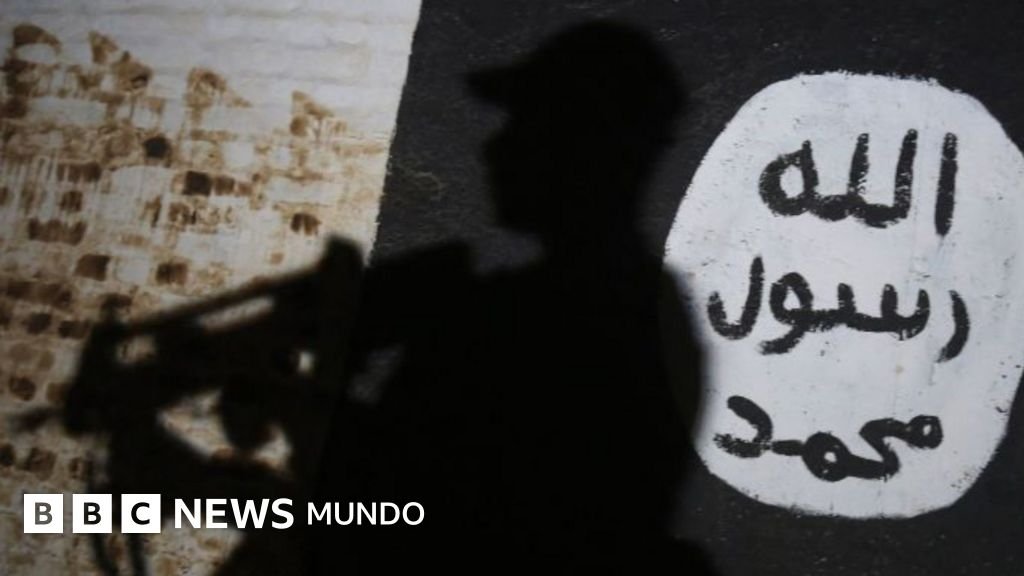
Recent events at Bondi Beach in southern Australia have reignited international concern about the self-proclaimed Islamic State (ISIS). Following a devastating attack that claimed 15 lives, Australian Prime Minister Anthony Albanese suggested that the assault may have been fueled by ISIS’s “ideology.” While the group has not officially claimed responsibility, police discovered makeshift ISIS flags and homemade explosive devices at the scene, linking the attack to its extremist rhetoric.
Understanding the Attack
The suspects identified in the Bondi attack, a father and son duo, are currently facing severe allegations. Authorities neutralized the father during the incident, while the son is now charged with 15 counts of murder. This occurrence serves as a stark reminder that ISIS continues to inspire or orchestrate violence against targets in the West, even as its influence has wavered since its territorial losses in 2017-2019.
ISIS: Active or In Decline?
Expert Mina al Lami emphasizes that labeling the Bondi attack directly as an ISIS operation requires caution. Her insights suggest that such a conclusion might unintentionally amplify the group’s propaganda without accurately reflecting its current capabilities. During its peak, ISIS controlled vast swaths of territory across Syria and Iraq, functioning as a governing body. However, following its territorial defeat in 2019, the group has since struggled to maintain its influence.
Al Lami notes that as of now, there are approximately 3,000 ISIS fighters remaining in Syria and Iraq, a stark decrease from the estimated 10,000 foreign recruits during the group’s heyday in 2014. The scale of attacks has also diminished, shifting from high-profile assaults to smaller, less coordinated incidents that are more “inspired” by ISIS than orchestrated by it.
ISIS’s Evolving Landscape
Last year, the group’s Afghan affiliate, ISIS-Khorasan (ISKP), gained notoriety for violent attacks in Iran and Russia, resulting in significant casualties. This year, however, ISKP seems to have weakened, primarily executing attacks within Afghanistan while the majority of ISIS-inspired incidents are occurring in sub-Saharan Africa. According to the Global Terrorism Index, ISIS and its factions were responsible for approximately 1,805 deaths across 22 countries in 2024.
The Group’s Shrinking Influence
Despite the reduced scale of its operations, ISIS still actively incites violence online. Al Lami remarks that the group has significantly diminished its propaganda capabilities, resorting to less polished content compared to its earlier, professionally produced videos. Nevertheless, a network of loyal online supporters has emerged, adept at fostering recruitment and sharing extremist materials on platforms like Facebook and Instagram.
Regional Dynamics: Focus on Africa and Asia
As ISIS grapples with waning influence in the Middle East, its focus has shifted to regions like Africa and Asia. The ISKP is known for its aggressive tactics in South Asia, particularly in Afghanistan, where it maintains a constant recruitment drive. Similarly, ISIS affiliates in East Asia are suspected of executing violent acts in the Philippines and Indonesia, although they have not claimed responsibility in recent months.
Experts warn that Africa is now the primary battleground for ISIS’s operations. The group’s affiliate in West Africa is estimated to have between 8,000 and 12,000 fighters and has been responsible for the majority of its violent incidents. Countries like Nigeria, the Democratic Republic of Congo, and Mozambique are particularly impacted, with reports of atrocities committed against Christian communities.
The Challenges of Addressing ISIS’s Threat
Many analysts, including Renad Mansour from Chatham House, believe that while ISIS’s territorial power has diminished, the group remains a substantial threat due to the instability in regions where it operates. The international community’s response will be crucial for more effective counter-terrorism strategies. A vigilant, sustained approach is imperative; intermittent reactions only serve to enable ISIS’s adaptability.
Conclusion
The attack at Bondi Beach has underscored the complex and evolving threat posed by ISIS. While the group’s physical presence has significantly diminished, its ideology continues to inspire violent acts across the globe. As we observe these developments, it remains critical for global allies to adopt proactive measures to combat radicalization and violence.
- ISIS continues to inspire violence globally, even after significant territorial losses.
- Recent attacks serve as a reminder of ISIS’s enduring ideological reach.
- A focus on sub-Saharan Africa highlights the changing landscape of ISIS operations.
- Proactive, sustained international responses are essential to counter ISIS effectively.