
The Tragic Fate of the Endangered Galaxy Frogs
A distressing situation has emerged for a rare species known as the “galaxy frog,” which is now considered missing and likely deceased due to the reckless actions of photographers trespassing in its habitat.
Understanding the Galaxy Frog
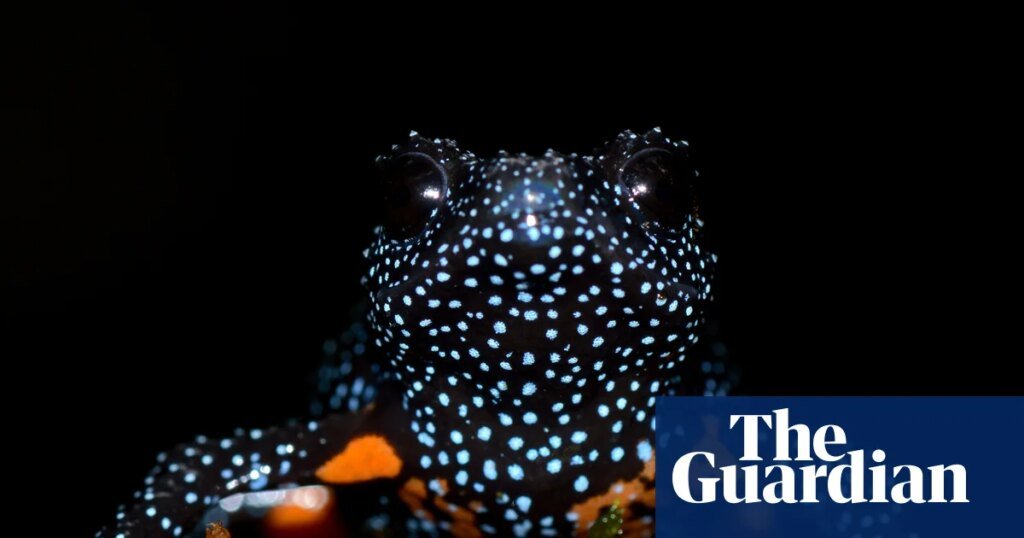
Melanobatrachus indicus, commonly referred to as the galaxy frog, is a unique species that thrives in the dense rainforests of Kerala, India. Each frog is roughly the size of a fingertip, adorned with mesmerizing spots that, contrary to common belief, are not venomous but likely serve as a means of communication among the frogs. This information comes from Rajkumar K P, a researcher affiliated with the Zoological Society of London.
In early 2020, Rajkumar discovered a small population of these remarkable frogs in the Western Ghats rainforest. However, due to the COVID-19 pandemic, he was unable to revisit the area until much later, only to find that the frogs had vanished, as reported by the ZSL.
The Damage Uncovered
Upon his return, Rajkumar was met with shocking devastation. The logs where the frogs lived had been broken and displaced, and the surrounding vegetation was trampled. Initially, he suspected brown mongooses were responsible for the destruction, but it soon became evident that they lacked the strength to move the logs.
“The beautiful, large fallen log was entirely broken,” Rajkumar recounted. When asking his tracker about any visitors during his absence, he learned that there had been multiple photography groups in the area. These groups had been overturning logs in their quest to locate the endangered frogs.
Rather than treating these sensitive creatures with care, photographers would capture them for staged photos, often without wearing gloves. This is particularly harmful since these delicate animals breathe through their skin.
One of Rajkumar’s trackers disclosed that two of the galaxy frogs died after prolonged handling by the photographers. “They would move the frogs to various backgrounds to capture more appealing images,” he explained, “but tragically, two of them did not survive the ordeal.”
The Ongoing Search
In the following months, Rajkumar repeatedly searched the site, but he was left feeling “helpless” as the galaxy frogs remained missing. The actions of photographers had a significant and devastating impact on the fragile ecosystem.
“While forest department officials do attempt to prevent such groups from entering the area, some manage to leverage their connections—be it politicians or public figures—to gain access,” Rajkumar lamented.
“I fell in love with these frogs when I first saw them. They appear jet black at first glance, but under light, their skin reveals a galaxy of stars. It’s truly magical,” he expressed, highlighting the beauty of these extraordinary creatures.
A Call for Ethical Practices
Dr. Benjamin Tapley, curator of reptiles and amphibians at ZSL, remarked on the importance of galaxy frogs, suggesting they represent an ancient and irreplaceable lineage. “Every time I see a photo of a galaxy frog circulating online, I wince,” he said. “What were the circumstances? How has their habitat been affected?”
He concluded with a somber hope, urging for a collective effort towards ethical photography practices to ensure that species like the galaxy frog can flourish for generations to come.
- A group of endangered galaxy frogs is believed to be missing and likely dead due to habitat destruction by photographers.
- The galaxy frog, native to Kerala’s rainforests, is known for its stunning spots, which are not venomous.
- Photographers reportedly trampled the frog’s microhabitats while seeking pictures, neglecting the frogs’ delicate nature.
- Conservationists emphasize the need for ethical practices to protect rare species from harm.