
Rising Tensions: A Look Back at U.S. Military Deployments in the Caribbean
The escalating tensions between the United States and Venezuela have led to the largest military buildup in the Caribbean since the end of the Cold War. This situation has drawn comparisons to the significant U.S. military actions of the past, particularly the 1989 invasion of Panama to oust President Manuel Noriega, a man accused of drug trafficking. However, while there are some parallels, the current scenario is markedly different.
A Historical Context
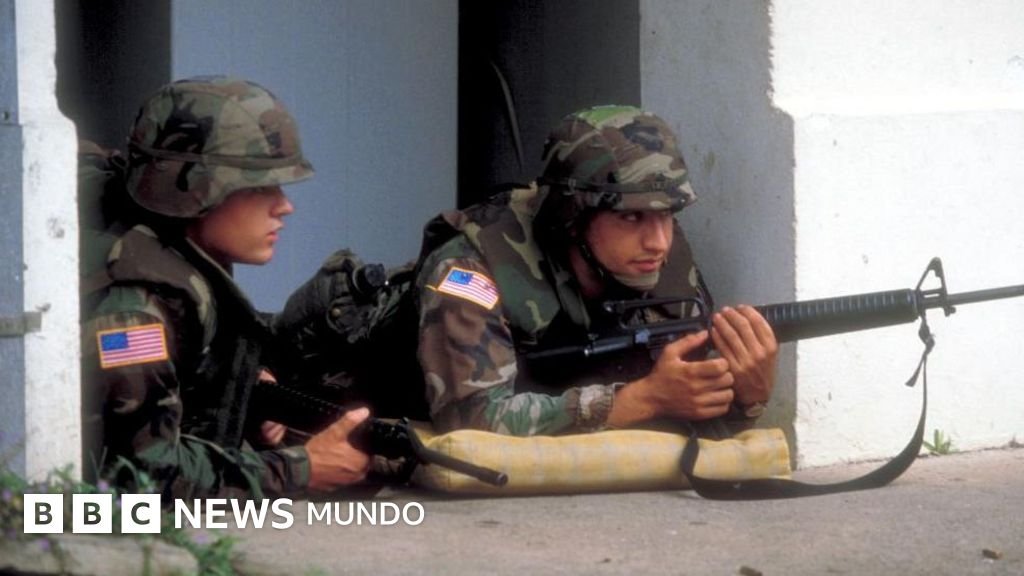
On December 16, 1989, U.S. Navy Lieutenant Robert Paz was traveling to a dinner at the Marriott Hotel in Panama City when tensions between the U.S. and the Panamanian strongman peaked. His vehicle, carrying four U.S. military members, encountered a checkpoint manned by the Panamanian Defense Forces, where soldiers surrounded them. After an altercation ensued, gunfire broke out, resulting in Paz’s death. This tragic incident triggered the U.S. invasion of Panama just four days later, on December 20, marking the last significant U.S. military operation in the Americas.
Shock and Response
The operation was dubbed Operation Just Cause, involving around 30,000 U.S. troops aimed at removing Noriega from power. Following his ousting, Noriega was extradited to Miami to stand trial for drug trafficking. Casualty estimates vary, with the United Nations suggesting approximately 500 civilians lost their lives during the invasion, while the U.S. maintains much lower figures.
Similarities and Differences
Both the 1989 invasion and the current military posture around Venezuela highlight notable similarities, yet the differences are equally significant. Each event was marked by rising verbal hostilities between Washington and a regional strongman, leading to a considerable military presence in the area.
Commonalities
Despite decades of separation, both scenarios involve accusations from the U.S. towards a Latin American leader regarding personal involvement in drug trafficking, which has intensified domestic pressures on these leaders. The central argument from Washington has been consistent: both Noriega and current Venezuelan President Nicolás Maduro are allegedly deeply entangled in illicit drug trade.
Strategic Importance
The stakes are notably high for both nations; Panama’s canal and Venezuela’s vast oil reserves hold significant strategic value. The comparison does not end there, as both leaders are portrayed by the U.S. as prime targets in their fight against narcotics.
Key Differences
However, we must acknowledge the vast differences between the Cold War era and today. The leadership styles and political climates of George H.W. Bush and Donald Trump are distinct. Noriega was once a CIA asset but was later convicted based on substantial evidence, including financial records and testimonies of drug operatives. In contrast, claims against Maduro include accusations of leading the “Cartel of the Suns,” a title many experts consider rather vague and controversial.
The Current Landscape
While the Trump administration directly links Maduro to organized crime, Maduro’s government dismisses these allegations as unfounded and politically motivated. Venezuela’s history includes incidents like the arrest of two of Maduro’s nephews for narcotrafficking, further complicating the narrative.
Modern Tactics and Strategies
Recently, the Trump administration has introduced new sanctions against members of Maduro’s inner circle, echoing the language used in the 1980s when discussing Noriega’s government. As military engagements escalate, Washington claims to be tackling “narcoterrorism,” a term that raises valid questions about international law justification for their actions in the region.
Controversial Military Actions
The Pentagon maintains operational objectives allow for the targeting of suspected drug vessels. Yet doubts have surfaced regarding the legality of recent military actions, particularly the attack that resulted in civilian casualties, leading to calls for transparency from lawmakers.
Conclusion
The ongoing situation between the United States and Venezuela continues to heat up, especially after recent actions concerning Venezuelan oil assets. While some hope for a diplomatic resolution, the potential for conflict remains high. The explosive nature of the current environment in Venezuela mirrors the volatile context of 1989, highlighting how swiftly situations can escalate, echoing the tragic events surrounding Lieutenant Paz.
Key Takeaways
- The U.S. military presence in the Caribbean is the largest since the Cold War, focusing on Venezuela.
- Both scenarios involve accusations against leaders for drug trafficking, despite significant differences in context.
- Strategic interests, such as oil and trade routes, play a critical role in U.S. involvement.
- Controversies persist surrounding military operations and their legality under international law.