
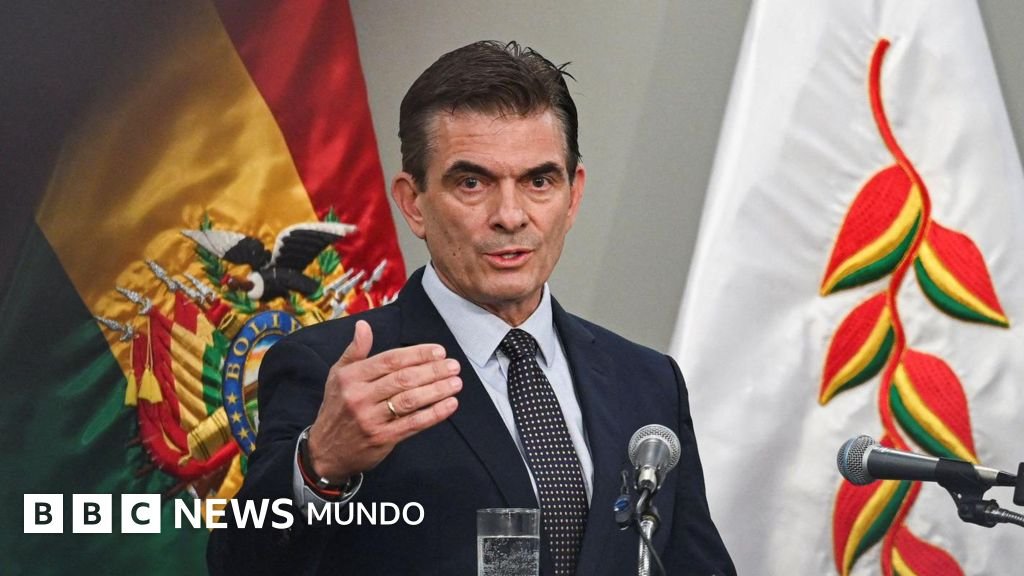
Bolivia’s Economic Emergency: President Paz’s Major Reforms
Today, we’re diving into Bolivia’s recent economic shifts as President Rodrigo Paz announces significant changes aimed at addressing an ongoing crisis. These reforms include ending fuel subsidies andReadjusting hydrocarbon prices, a move expected to stabilize the country’s economy. Let’s explore the details of these urgent measures and their potential impacts.
Declaring an Economic Crisis
In a televised address, President Paz stated, “We have taken the helm of a nation deeply wounded in its economy, with dwindling reserves, rising inflation, and fuel shortages.” He emphasized that the withdrawal of poorly designed subsidies isn’t a step back but rather a move towards justice, clarity, and transparency in economic redistribution. “The subsidies that once masked the plundering of resources will not return to haunt Bolivia,” he asserted.
Alongside his cabinet, Paz announced a decree declaring a “state of economic, energy, and social emergency,” as part of a comprehensive economic reform package aimed at restoring stability and fostering investment in Bolivia.
Historic Decision for National Recovery
Paz characterized this action as a “historic decision for the rescue of the homeland,” aiming to coordinate swift actions from the state to stabilize the economy, safeguard Bolivian families, and stimulate production. Addressing the lingering fuel shortages that have troubled the nation, he stressed that Bolivia can no longer operate under outdated policies.
The president pointed to nearly two decades of governance under the Movement for Socialism (MAS) as part of the problem. In his decree, prices for gasoline are set to rise to 6.96 bolivianos per liter, equivalent to $1, with premium gasoline priced at $1.58 and diesel at $1.40.
Public Reaction and Increased Transportation Costs
Following the announcement, many Bolivians expressed uncertainty, forming long lines at gas stations to fill up before prices soar. Transportation unions voiced their displeasure, with Limbert Tancara, a leader in La Paz, stating that drivers felt “deeply distressed” by the new measures. Almost immediately, public transport fares surged; for instance, minibuses in La Paz increased their rates from 2.40 to 5 bolivianos overnight.
While some voiced frustration regarding the government’s decisions, others are voicing their support. Political figures like Santa Cruz Governor Luis Fernando Camacho praised the move, asserting that without such measures, the crisis would worsen. He remarked, “We have reached the end of fuel subsidies, a mechanism that regrettably impoverished the country and fostered corruption.”
International Perspectives and Support
The U.S. State Department has recognized Paz’s policies as historic efforts to reintegrate Bolivia into global markets, acknowledging that the path ahead won’t be simple. They emphasized, “The announced reforms are a necessary shift that lays groundwork for a more secure, prosperous future for all Bolivians.”
This announcement comes during a visit from a U.S. delegation aiming to attract international investment in a nation grappling with economic challenges.
Compensation for Subsidy Cuts
In a bid to offset the subsidy removal’s impact, the Bolivian government plans to raise the minimum wage and social bonuses for those in need. Starting in January, the minimum wage will increase by 20%, from 2,750 to 3,300 bolivianos (about $395 to $474). Additionally, the pension for the elderly will be boosted to 500 bolivianos ($72), and the annual school retention bonus, known as Bono Juancito Pinto, will increase from 200 to 300 bolivianos ($28.7 to $43).
Paz emphasized his dedication to protecting citizens’ wallets while the nation stabilizes, announcing a “special capital repatriation regime with zero taxes” to alleviate the dollar shortage. “We will open our doors to investment with a 0% tax rate for capital repatriation,” he stated, urging for an increase in production within the country.
Furthermore, plans to liberate exports and remove diesel from controlled substances are also in the works, aiming to facilitate imports and bolster the economy.
Conclusion
President Paz’s recent announcements signify a pivotal moment for Bolivia as the nation seeks to overcome a severe economic crisis. With controversial yet historical decisions regarding subsidy removal and economic reforms, the government aims to pave the path for future growth.
Key Takeaways
- President Paz declared an economic emergency and announced the end of fuel subsidies in Bolivia.
- The price of gasoline will increase significantly, leading to higher transportation costs.
- Efforts are being made to mitigate the effects of these changes through wage increases and social bonuses.
- International reactions to these reforms suggest potential future investment opportunities.